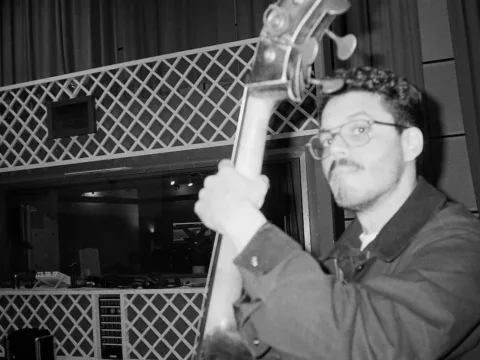
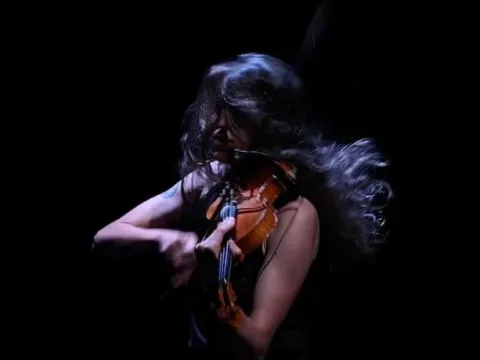
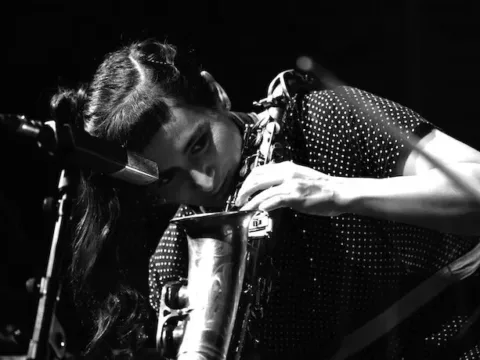
The liner notes for Tarabita Espiral (Relative Pitch Records, 2025) ground its sonic cartography in the long-distance friendships between Colombian saxophonist and clarinetist Maria Valencia, Puerto Rican born and NY-based double bassist Brandon López, and NY-based vibraphonist Matt Moran. It’s clear that locality figures significantly into the trio’s musical lineages and the current context for their thinking, and the improvisational spirit of their work aims to preserve the specificity of their place and history.
Each of these artists prioritizes the social aspect of their practice, so perhaps it should come as no surprise that friendship is mentioned right away in the album’s description. Indeed, connectivity functions as a kind of compositional conceit in this collaboration, noteworthy in a time where artistic relationships can range from transactional to unconditional. As a result, the marriage of extended techniques with fragments of tradition offers joint safety and thrill, echoing the dialectical natures of intertwined existences and synergetic improvisation.
With three tracks spanning a 50 minute runtime, the album invokes natural expanse and process: a flowing river, a liminal border on the abyss, dual accretion and erosion. However, these pastoral elements offer just one of many lenses through which the album can be heard. The tactile presence of the instruments, the room, and, at times, the players offers another more immediate and embodied point of contact.
Elemental shimmers of bowed vibraphone ripple around chittering bass and saxophone babbles in “Del río, las abejas y otras criaturas / From the river, bees and other creatures.” The trio pulls apart and snaps back with emphatic, nearly combative silences and unison lines that lumber and labor — it’s work and play in equal measure. About a third of the way in, Valencia’s serene drawl floats over López’s grounded pizzicato and Moran’s nervous pitter-patter before giving way to a composite drone. Amid the organized chaos, the unrushed, reserved moments drop us into the sublime.
Vigorous scrubbing and cleaning sounds open the lively “Pequeños pasos evitan el abismo / Small steps avoiding the abyss.” Each new section of this track begins its approach from a distance — softly plucked bass, key clicks, and wind emit from the expansive unknown. Thumping bass pizzicato and rattling keys send us back into the earth while Moran’s twinkling perpetuum mobile tumbles into a chorale played with clairvoyant intensity. Throughout, the ground hum of a speaker, played as an instrument perhaps with a finger tapping on the end of a cable, helps the track maintain a whimsical, gentle touch.
On “Viento, metal y llegada / Wind, metal, and arrival,” López takes the scrubbing from the previous tracks to a level that approaches scouring, this time in the use of bowed overpressure and tremolo. The sound of friction grows increasingly forceful as the album progresses, a portent for what follows. As the foreshadowing suggests, the final track carries a more extreme sonic range, with both scalding and dreamlike passages. Valencia’s breathy sputters join the purifying effort as Moran drags an implement, perhaps a chain, up the side of a vibraphone bar. The resulting sound resembles the jolt of an alarm clock, which, paired with López’s unceasing knocking and Valencia’s caterwaul, signals that the time is upon us. The textural web simplifies into mostly percussion, with a ferociously smacked tom and metallic clang joining the mix before vibraphone glissandi finish the affair off, as if to say it was all a dream.
With its improvisational explorations and dabblings across melody and texture, Tarabita Espiral lets each member of the trio shine. It’s easy for an artist to claim that they are going against the grain by subverting their roles in a traditional ensemble context, but this trio justifies the oft used phrase. The sheer volume of Valencia’s sax runs would ordinarily place her at the front of the group, yet here, she manages to settle into a supportive role with flair while still conveying the vitality of her instrument and the breath it requires. López does ground some of the more frenzied sections, but he interrupts and begins new sections just as often. And Moran wrests a caustic sharpness from the otherwise placid and mellifluous vibraphone. From their combination emerges a cohesive project whose experimentations hold the promise of further depth.
I CARE IF YOU LISTEN is an editorially-independent program of the American Composers Forum, and is made possible thanks to generous donor and institutional support. You can support the work of ICIYL with a tax-deductible gift to ACF. For more on ACF, visit composersforum.org.