“We hold these truths to be self-evident that all men are created equal.” This famous phrase comes with a lot of baggage. As we approach the 250th anniversary of the signing of the Declaration of Independence, many are preparing to reckon with the hope, hypocrisy, and reinvention that has defined this country known as the United States of America.
One such reckoning comes to us from Minnesota and features Indigenous responses to an anniversary that also symbolizes invasion, genocide, and failed promises as well as survival, preservation, and innovation. As a Dakota and Boricua man with Taino heritage, the Minneapolis singer-songwriter Rafael Gonzalez, aka Tufawon, is descended from peoples intimately familiar with colonialism, forced assimilation, and failed attempts at cultural repression. And while he intentionally incorporates key principles of Indigenous knowledge and being into his work, he is also cognizant of the push and pull between tradition and innovation that often follows Indigenous artists and artists of color.
“Our songs and our spirituality is — from what I’ve been taught — to be kept in its appropriate space,” he explained to me in our interview. “My mom grew up in the powwow. She was a Fancy Dancer, and she does beadwork and all of that… [But] I didn’t grow up singing powwow, so I would feel weird if I just started trying to sing powwow on an R&B record or hip-hop record. I feel like it’s more appropriate for somebody like AntoineX, for example — a close friend of mine who I work with through this artist collective called ALLSZN. He grew up in the powwow world and is an actual powwow singer.”
In deciding what Indigenous musical material to include or not include, Tufawon views his approach as a matter of respect and responsibility rather than creative restriction. And he routinely finds authentic ways to allow Indigenous teachings to intersect with his music. “I’m sober, I walk the Red Road, [show] gratitude to the Creator — those are the kinds of things I blend into the music regularly and frequently, and I love doing that because it is a reflection of who we are as Native people,” he told me.
Starting Jan. 12, his new hip-hop EP, titled Gradient, can be experienced at the Duluth Art Institute alongside two exhibits that explore Ojibwe history, culture, art, and community: “Fur Trade Nation” and “Ojibwe Adornment in Ribbons, Cloth, Beads, and Fur.” Commissioned by American Composers Forum, Gradient ties together the respective goals of each exhibit: to explore the layers of cultural expression, history, and contemporary life that exist on this land and within Indigenous communities specifically.
The two exhibits fall under the Duluth Art Institute’s overarching theme for 2026: “We Hold These Truths.” On our recent Zoom call, Christina Wood, executive director of DAI, explained:
“‘We hold these truths,’ being the first four words of the Declaration of Independence, was arrived at through the work of the advisory panel. It was a lot of facilitating, bouncing ideas off [each other] … We’ve never had a theme for a year, and so all of our work for 2026, both in exhibitions and in classes, will fall under the storytelling that will go along with ‘We Hold These Truths.’”
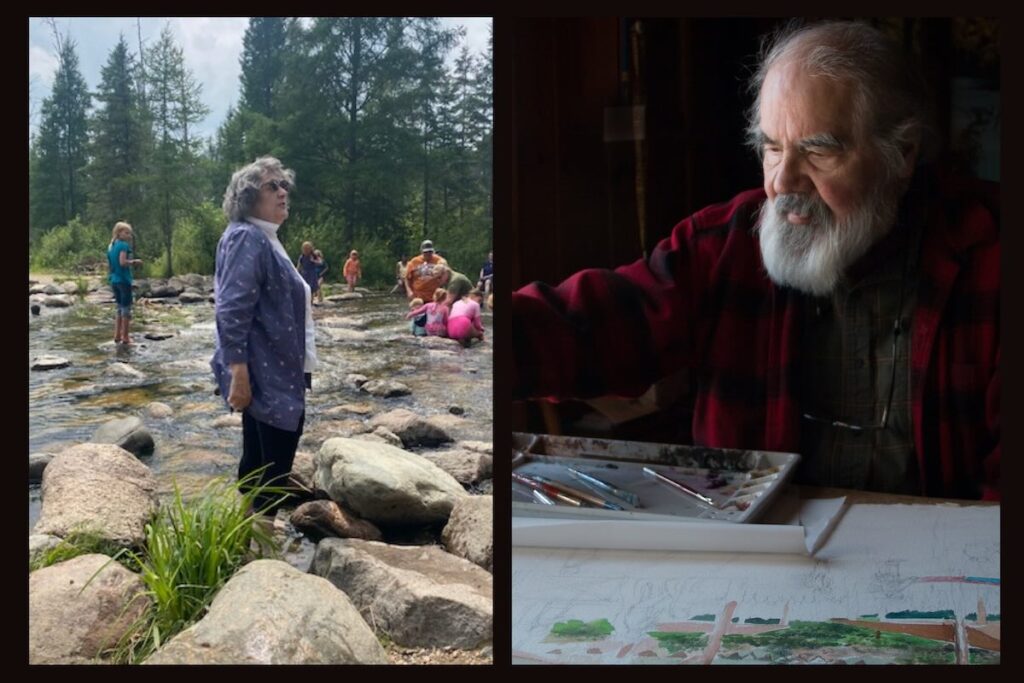
“Fur Trade Nation” and “Ojibwe Adornment” feature the work of Ojibwe artists Carl Gawboy and Wendy Savage, respectively. The first exhibit draws upon Gawboy’s 2024 book of the same name, a graphic exploration of Ojibwe familial, economic, and cultural systems. The second exhibit features Savage’s sartorial engagement with past and contemporary Ojibwe fashion.
Madeline Kayser, DAI’s exhibitions manager, shared how engaging these artists purposefully centers the historical and contemporary significance of broader Anishinaabe culture in the Great Lakes region.
“I would really like our audience to not only hear the perspectives of other artists, but the impact of the Anishinaabe and how that continues on,” Kayser said. “Carl is talking about the impact and the histories, and Wendy is really driving you towards this space of ‘how can we now take that and push through as contemporary artists?’”
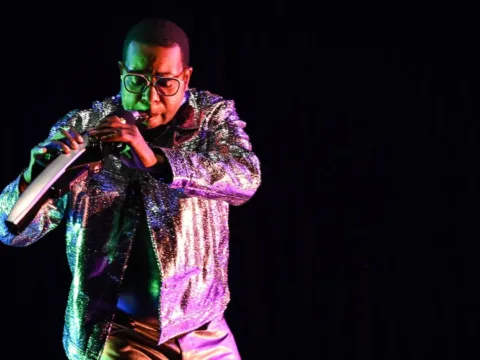
This navigation of past and present is something Tufawon also keeps in mind. Born and raised in Minneapolis’ South Side, his musical journey began early: choir, trumpet, and clarinet in elementary and middle school, and surrounded by hip-hop and R&B music in his neighborhood and on TV. He joined a hip-hop group in 10th grade, and since then, has utilized music as a tool of expression, education, and exploration.
His hip-hop style is a deft blend of lyrical bars, original beats, and live instrumentals, a shift from his early days of sampling and creative splicing. His more recent work highlights his move into reggaeton, dancehall, and Afro-Latin and Caribbean styles, a creative choice that ties into the cosmopolitan roots of Minneapolis hip-hop aesthetics. The stereotypical expectations a listener may expect from a Dakotan and Boricua man is something that Tufawon also approaches with equanimity, and is related to what he aims to express through Gradient.
“I don’t want to create an album that everybody would expect from a Native person, right? This idea of a stereotype — so many people walk with this idea that we still live in teepees and that we still wear feathers every day. I know I don’t want people to have this image, because we’re not a monolith. We’re so much more than what people perceive us to be.”
In relation to the exhibits at Duluth Art Institute, Tufawon wants people to experience the EP as an example of the nuances within and across Indigenous cultures. “I’m calling it Gradient, because when we talk about the Fur Trade Nation or we talk about even beadwork, we didn’t have beadwork pre-colonization. We had quill work. So, when it comes to our artistic styles from all mediums, as Native people, there are so many different influences and mixtures … we even borrow from other tribes.”
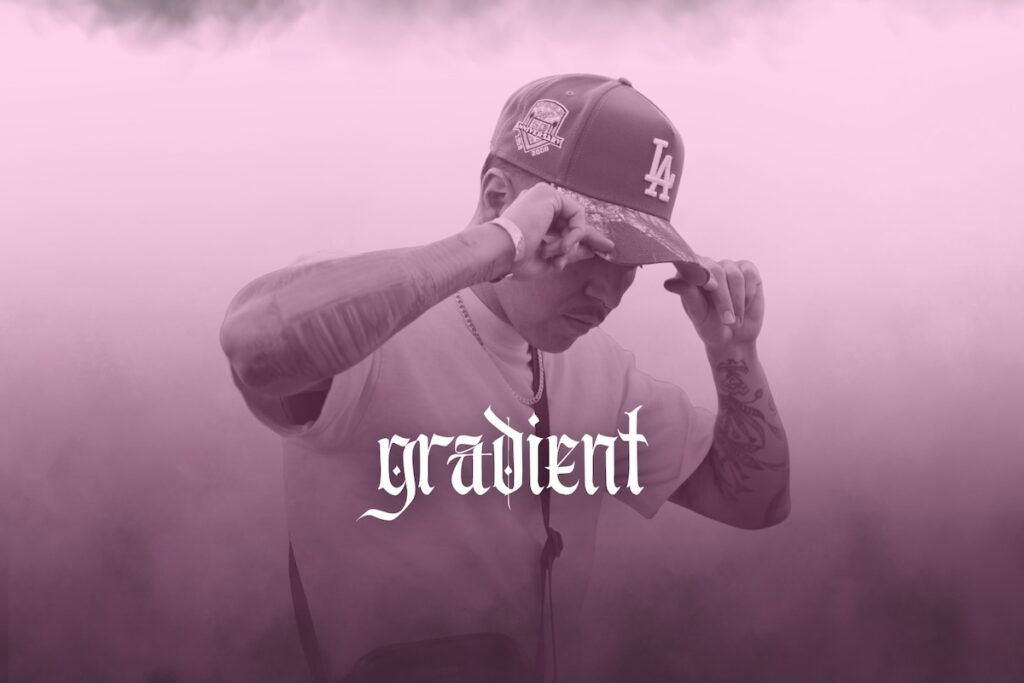
The mixture present in Tufawon’s music is also reflective of his identity and heritage. “Puerto Ricans are very mixed people in general, so that kind of goes along with this whole Gradient idea. I play bomba: that’s the very heavily West African aspect to our identity. Then there’s the dominant Spanish element of the culture, as well as the Indigenous … [the EP is] a nice medium for me to be able to express both cultures in a way that’s authentic to me through the music.”
Authenticity sits at the heart of not only Gradient, but also “Fur Trade Nation” and “Ojibwe Adornment;” the ways specific experiences – individual and communal – reveal the variety of human experience. Such nuance is urgently missing in public understandings of Indigenous peoples. The onus shouldn’t be on those who are negatively impacted by such misunderstandings to fix the issue. But Tufawon doesn’t see this as a burden; it’s part of the path he has chosen for himself, though not at the expense of communicating what is important to him: personally, communally, and creatively.
“What does it look like to be an Indigenous person from Minneapolis today, and how my narrative can and has the power to shatter stereotypes — that’s one of the levels and layers. And it is a very important piece to the work, but also had to marry the idea of incorporating what our teachings are and how to balance that in a fluid way, in a cohesive way.”
This program was supported by a grant from Jerome Foundation.
I CARE IF YOU LISTEN is an editorially-independent program of the American Composers Forum, and is made possible thanks to generous donor and institutional support. You can support the work of ICIYL with a tax-deductible gift to ACF. For more on ACF, visit composersforum.org.