In the last few years, arts workers have been hitting massive walls, witnessing the absurdity, toxicity, and fragility of our cultural ecosystems. From pandemics and inflation to wars, censorship, unpredictable funding, and demanding, intrusive donors, it is often impossible to gather the resources needed to realize curatorial visions and support artists’ livelihood.
Corruption scandals have erupted, exposing the connections between powerful billionaires such as Jeffrey Epstein, Leon Black, and the cultural industry, revealing the deeply unethical foundations of our networks. Labor is devalued and disrespected with low or absent fees, broken contracts, and rampant discrimination. Artists are on the verge of breakdown and live with the intense pressure of creativity and performance – where failure is not an option.
The recent protest movements, activist initiatives, and community organizations denouncing these dynamics are demanding radical shifts — divestment, land back, racial justice, reparations, abolition, transfeminist, queer, and crip alternatives, and sustainable support systems for those who risk everything for imagination and poetry.
In my communities in New York, Paris, London, Beirut, Cairo, San Juan, Kingston, and beyond, and of course in Gaza, artists have been pushed out and unhoused; left without studio spaces and tools; excluded by global cultural monopolies; denied incomes, life-saving healthcare, food, training, and housing support. They have been censored, surveilled, doxxed, threatened, attacked at protests, imprisoned, banned from travel, deported, killed, and impacted by racial, gender, ableist, and political terror. Under impossible circumstances, they continue to experiment with any available means, collaborating and producing the work that is a lifeline for so many of us.
Since the dawn of humanity, poets have been the archivists, the gatherers, the foretellers, the alchemists, the freedom fighters, the healers. We need to divest from our productivity models and calculus and create alternative ecosystems that center artists, their livelihoods, and their rhythms as a profound transformation of the ways we think and work together.
While concepts such as ‘abolition,’ ‘decolonization,’ ‘diversity,’ and ‘equity’ have become buzzwords in our circles, such principles are at odds with the ways in which many of our institutions and organizations actually operate. The arts are funded by the military, prison, fossil fuel and medical industrial complexes, by financial and real estate networks that amplify gentrification, and adjacent philanthropic groups complicit in racial and gender violence, police brutality, and ecocide.
As artists are forced to compete for grants, funding, awards, residencies, fellowships, and opportunities, we are stripped of the collectivity and solidarity we need. We become victims of nepotism, discrimination, retaliation, and ‘blacklisting,’ fueled by supremacist ‘leaders’ and ‘influencers,’ juries, and strategic alliances. The scarcity mindset damages our relationships and mutinies. Caught up in the grind to produce more with less, conflict is tackled with betrayal and systemic abuse instead of honest dialogue and repair. In our interactions, we perpetuate capitalist, military languages and mindsets rather than imagining and shaping a way out. The structures we uphold steal our ideas and labor while condemning our demands.
A lack of accountability and transparency around donors, boards, funds, and decision making, ethical guidelines, safe reporting channels, representation, and thorough education and training causes irreversible harm. Unionizing calls are met with punishment and coercion. Meanwhile, many museum, university and institutional directors earn salaries that often cross the million dollar mark, hoarding funds and bloating endowments. Held hostage by conservative super-wealthy donors, they become tools of the very system the tokenized artists and community organizers are protesting. No one, it seems, is actually listening.
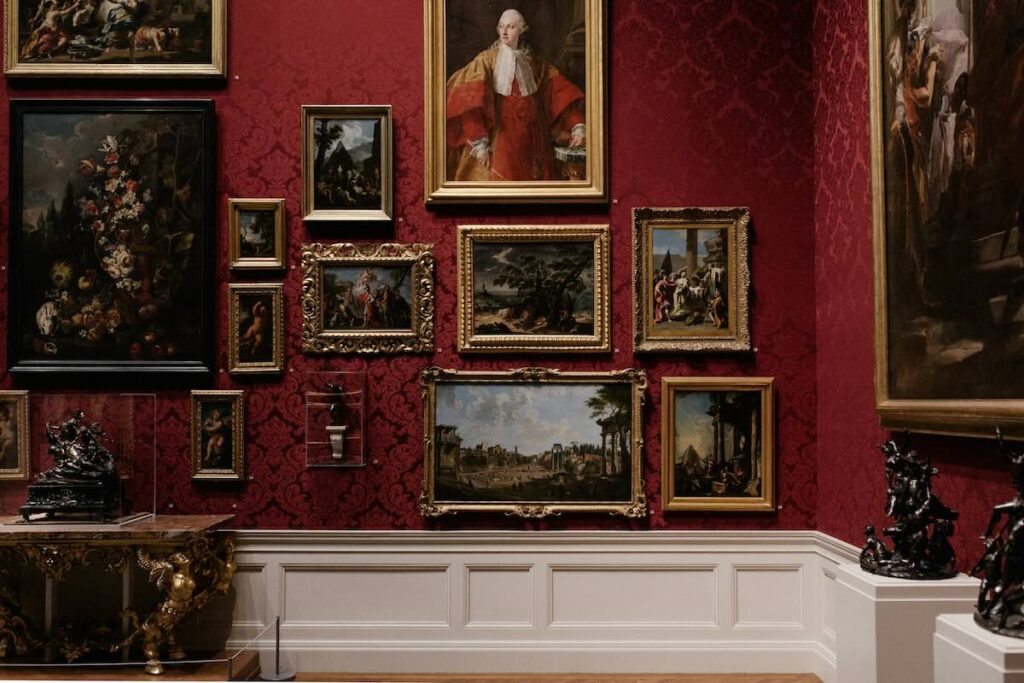
We remain intoxicated by the promise of individual glory — promotions, awards, book deals, brand deals, tenure, gala invitations, photo ops, retreats. Genocidal aesthetics are the weapon of this totalitarian order where a handful of (white) men amass indecent wealth while most of the world labors, starves, and dies. Recent attempts at increasing representation (‘ticking boxes’ to chase a variety grants and new audiences) have failed, selectively displaying trauma porn and marking targets of fascist extermination and control.
Many administrators boast about saving lives and launching careers — weaponizing values of ‘care,’ ‘community,’ and ‘safe space’ from the comfort of their starchitect-designed offices — but artists are the first victims of cruel and chaotic systems. Now, tech and artificial intelligence are coopting our creativity, tracking our movements, and claiming to render us obsolete. Revolutionaries always warned us that such structures needed to be burned down. Dismantled. Disassembled. Sabotaged. Looted. Exposed.
The answers are all around us. The Occupy Movement and MTL+ taught us that the art world is deeply enmeshed with the Wall Street complex. The relentless activist, educational, and archival work and guerilla poetics of Decolonize this Place routinely lists the connections that tie artwashing donors with the war complex through Strike MoMa. Nan Goldin’s PAIN has confronted the Sackler family, which funds many cultural spaces with wealth amassed from the Purdue Pharma opioid trade. Dancers for Palestine have demanded the cancellation of collaborations with groups such as Batcheva, funded by the Israeli government, and the affiliated Gaga Dance.
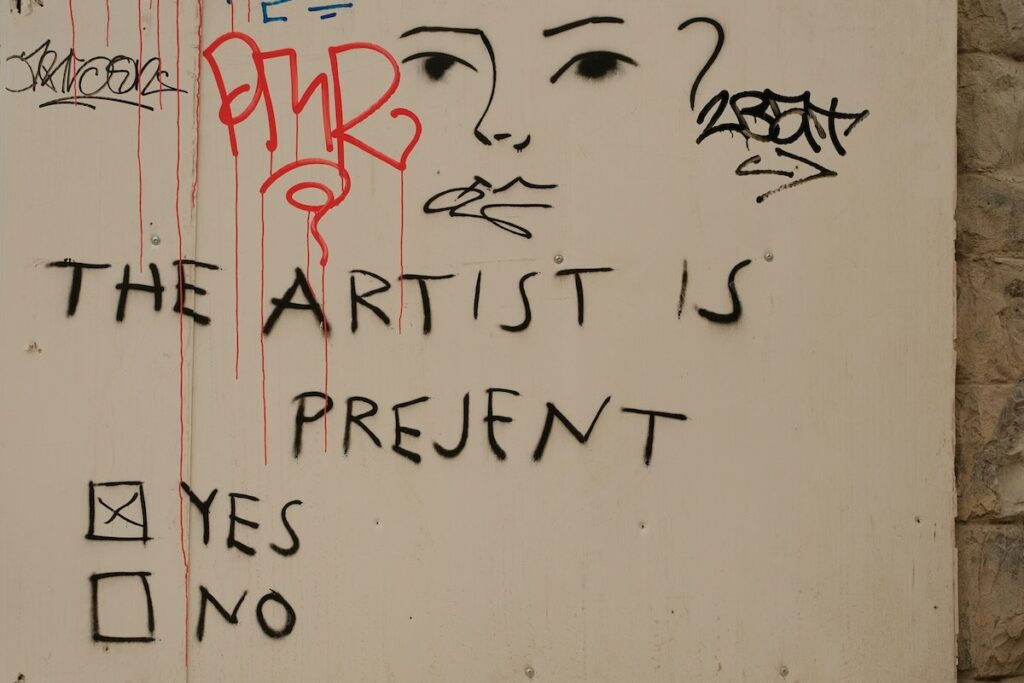
DJs Against Apartheid have succeeded in pressuring to divest from organizations such as The Boiler Room, Berghain, and festivals such as Sonar. Just Stop Oil has targeted several museums for accepting donations from oil, gas, and fossil fuel companies. WAWOG has disrupted the news industry by protesting the manufacturing of consent for genocide at the New York Times, PEN, and other literary and media organizations, and printing their own news from Palestine and transnational resistance groups. Some institutions have pledged to the Palestinian Campaign for the Academic and Cultural Boycott of Israel principles, but organizations funded by Zionists continue to shun activist demands.
Recent actions are rooted in the mass protests that have risen with Black Lives Matter, Standing Rock, the Black Panther movements, Metoo, and the Global Intifada. They echo the steadfast guidance of Indigenous leaders teaching us about the land we have stolen and exploited, histories erased and demolished. Crip activists such as the recently departed Alice Wong showed us how to develop alternative communities and frameworks against ableism. The courageous organizing of students from Columbia (where I studied) to Brown University (where I taught) were striking examples of other ways we could come together, resist, and disrupt, but they were met with shocking savagery and retaliation by administrators, politicians, police officers, and donors — the 33-year old Palestinian activist Leqaa Kordia, who was detained by ICE one year after the Columbia protests, remains in custody and suffers severe health consequences from abusive treatment in detention.
So many artists have participated in and amplified these waves of discontent. Esperanza Spalding left her role at Harvard after they refused to implement her requests listed in the Black Artist-Educators Decolonizing and Placemaking model. Dread Scott has remained at the forefront of protest initiatives through his art and targeted activations, recently with Fall of Freedom. Nicholas Galanin, among many artists, quit the Whitney Biennial to condemn the influence of then vice-chairman Warren Kanders, owner of Safariland tear gas manufacturer; Galanin also withdrew from a Smithsonian show due to censorship in September 2025. Moor Mother and Black Quantum Futurism’s poetry and activism spell out anti-supremacist ethics and poetics.
The Jacir sisters have created a thriving cultural center at Dar Jacir in Bethlehem, bringing together artists and activists for workshops, film screenings, and concerts under the bombs. Ruanne Abu Rahme and Basel Abbas document genocide through multimedia archives, publishing projects and records with many talented Palestinian artists. Pussy Riot denounces totalitarianism and patriarchal violence worldwide. Shellyne Rodriguez is a powerful anticolonial artist and thinker who leads teach-ins and has recently opened Comadre, a library and tattoo parlor in the Bronx. Toshi Reagon and friends such as Alsarah and Alexis Pauline Gumbs have been performing with local talent in each community and supporting each others’ practices, showing us what true sacrifice, mutual aid, and collective practice feel like.
We should all stop and reflect when activists demolish monuments, splash red paint at artworks and buildings, unravel flags and banners in conference rooms and atriums, organize dead ins and noise demos, boycott festivals, biennials, and platforms such as Spotify, denounce sex abusers, trespass, document networks of murder and corruption, refuse awards and titles, question our modes of operation, and demand accessible accommodations. But what do most cultural workers do? Turn a blind eye to the reality before us, victim blame, gaslight, bully, and scapegoat those who speak truth to power, further ruining their livelihoods.
It is time to respond to the urgent call for transformation rising from protest movements. We can begin by amplifying and emboldening resourceful community organizations developing grassroots, anarchist, and mutual aid-based cultural programs, connecting protest initiatives with collaborative art making, teach-ins and trainings.
Professors and administrators should set up conversations with students, artists, elders, and activists to co-create agendas and policies. Many leaders worldwide and the governments of Ireland, Belgium, Finland, Denmark, and Norway are implementing and normalizing free healthcare, income, legal and immigration support, studio spaces, and housing for artists. The United States (otherwise known as Turtle Island) should prioritize such programs to ensure the survival of their cultural communities and artistic networks.
If we divested from oil, drugs, guns, prisons, and other harmful industries, redistributed wealth and taxpayers’ income, and abolished the police and military, then supporting arts and culture would become an achievable, central priority. Even some of the ultrarich are asking to get taxed more to redistribute global wealth. We have to refuse the logics of the grants and awards systems that cause burn out, alienation, and isolation, that pit artists against each other, and feed celebrity cults, enabling more dangerous narcissism and individualism. Free culture for all is not a utopia; it is an essential need and right.
Within institutions, leaders must take on the monumental task of revolutionizing standard modes of operations. They must refuse programming and decision-making interference by politicians and donors, and make our spaces safe from police brutality, surveillance, and repression. Every worker should be unionized, and everyone from the director to the janitor should earn equitable, living wages. Censorship and retaliation should be monitored and reported through public complaint channels. Ethical guidelines — designed collectively and rooted in the needs, realities, and history of each site — should be implemented. The looted collections which fill many museum galleries and vaults must be traced, catalogued, and returned. Instead of spending funds on lavish retreats and donor galas, arts leaders should get to work, together.
We must commit to decolonizing our mindsets, delinking from white supremacist histories, and confronting the disaster of colonialism boldly, beyond performative land acknowledgements and virtue signaling. Condemning and ending practices of cultural appropriation and hegemony means considering the inherent power dynamics and imbalances in each exchange, and resisting the commodification of the arts as entertainment. True change requires replacing self-interest with humility, responsibility, fearlessness, radical honesty, and profound community activism for justice, love, and liberation.
In this global uprising, every voice, every chant, and every gesture has the power to shatter architectures of oppression. My beloved mentor Fred Moten calls such anarchic assemblies ‘ensemblic,’ like the spontaneous, fugitive expressions emanating from jazz jams or live improvisation sessions.
The martyrs of this earth are owed no less than the return of everything stolen from enslaved and Indigenous people, as my dear mentor Denise Ferreira da Silva’s Black Feminist Poethics insist. Or, as Andrea Abi-Karam and Kay Gabriel wrote, “We want it all, we want it fucking all, where all is a list for everyone to make.”
We welcome your ideas. Please respond to this anonymous survey.
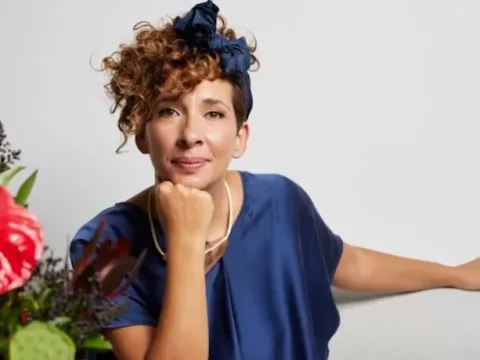
Shirine’s ongoing research on transfeminist and queer poetics from the Arab* world is featured on the Eruptions noise zine.
I CARE IF YOU LISTEN is an editorially-independent program of the American Composers Forum, and is made possible thanks to generous donor and institutional support. You can support the work of ICIYL with a tax-deductible gift to ACF. For more on ACF, visit composersforum.org.