In mid-July, London is in festival mood. Overlapping with the famous Proms at the Royal Albert Hall, a short festival of East and South-East Asian arts was taking place at the Southbank Centre. ESEA Encounters is a rather diffuse event, perhaps not surprisingly with such a wide geographical area being covered. Really, it is impossible to run a four-day event encompassing the wide diversity of London’s Asian diaspora, but ESEA Encounters gave it a good try: the Malaysian writer Tash Aw headlined a day-long literary festival, and other events included a ninja show, Japanese jazz-folk fusion, and a food market.
As the audience arrived at the Southbank Centre’s Queen Elizabeth Hall building for Alex Ho’s Ye Xian: A Story Untold on 17 July, preparations were underway for the following day’s 12-hour video/performance epic by the Chinese artist and director Tianzhuo Chen. A temporary stage was already built, someone was constructing a pond, and a huge grey inflatable creature was dangling from the ceiling near the bar. Walking into the building, it felt like we had turned up to a party a day early.
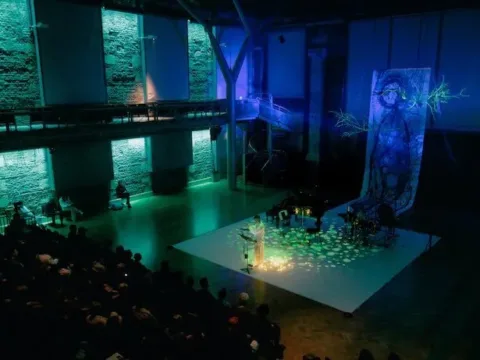
Ye Xian opened ESEA Encounters in the intimate space of the Purcell Room. Ho is co-director of the artist collective Tangram, whose imaginative multidisciplinary events focus on contemporary Chinese diaspora musicians and artists. His music is attracting a lot of attention: he is currently a featured composer at Glyndebourne Opera Festival, and a large-scale song cycle is being performed at Wigmore Hall on 24 July.
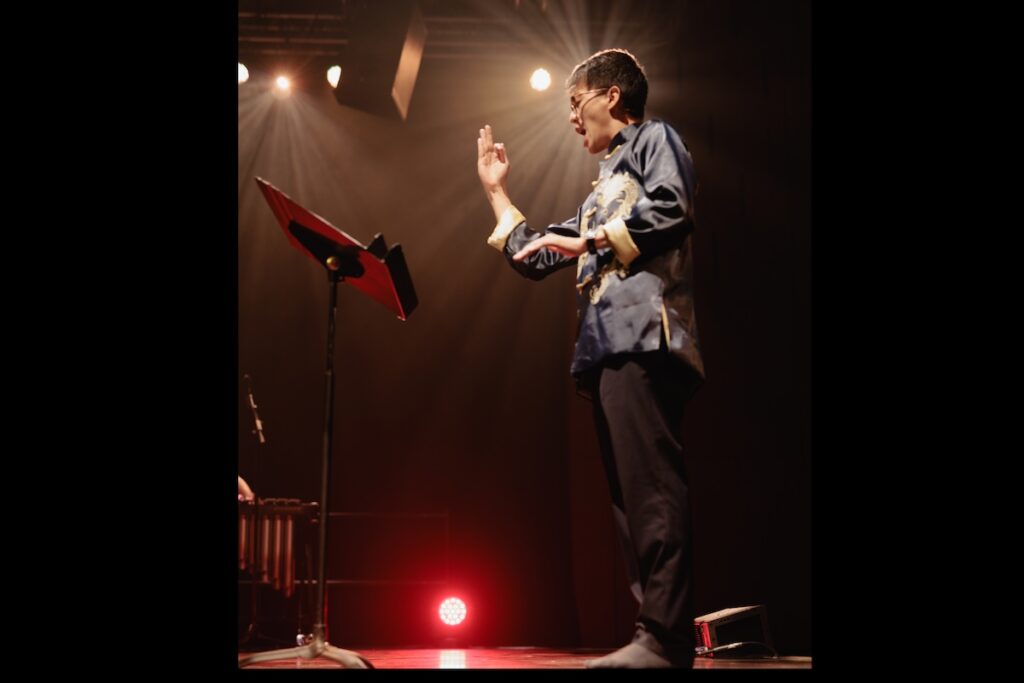
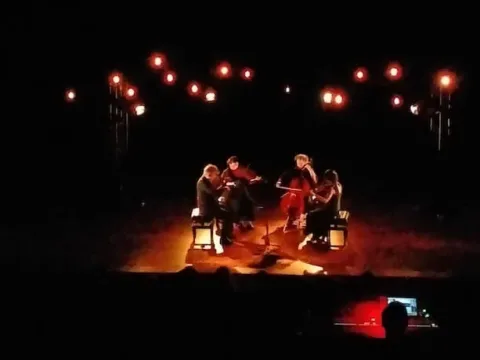
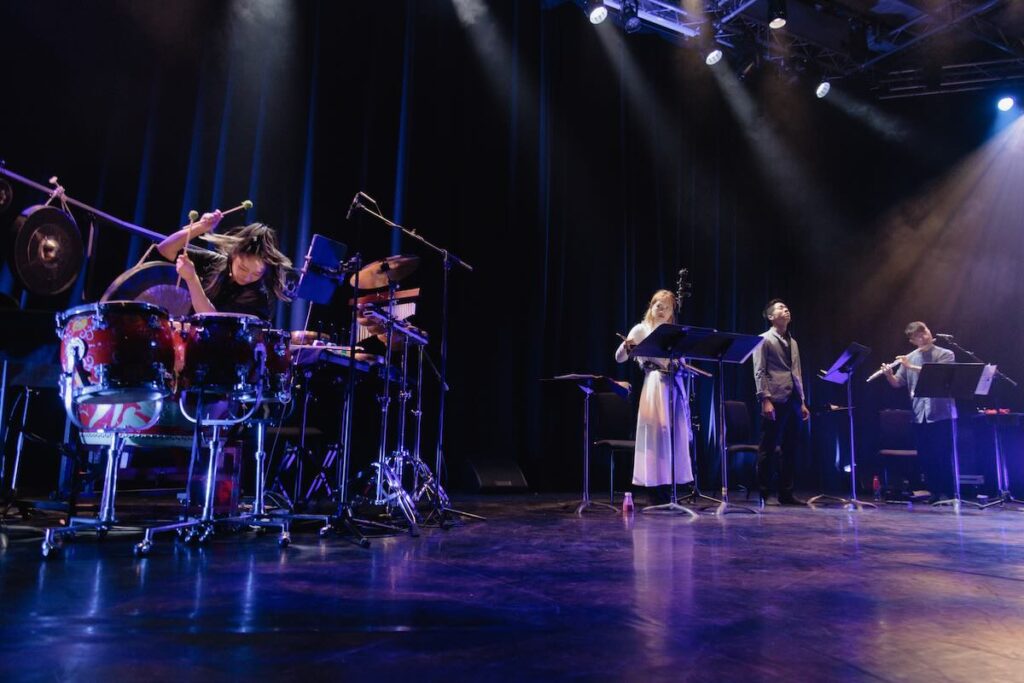
The legend of Ye Xian is known as Cinderella in the West, and the Chinese version predates its Western counterpart. The first version of Ho’s theatrical imagining of this story was produced under the title Untold in Rotterdam in 2023 and won the Fedora Opera Prize. Ye Xian is described in the programme as ‘a homage to the beautiful complexities of diasporic identity, weaving together a tapestry of sounds, memories and dreams,’ and the orchestration skilfully blends the Chinese erhu (Ziyang Huang) and percussion (Beibei Wang and Joanne Chiang) with piano (played by Ho himself), flute (Daniel Shao) and a countertenor (the engaging Keith Pun). There is further layering in the story, too, as personal stories from each musician are interwoven with the Ye Xian narrative. We are invited to see links between Ye Xian’s story and their experiences of loss, isolation, racist insults, and unexpected revelations, and the connections between the stories gave convincing contemporary resonance to the fairy tale.
The performance began unexpectedly when Ho asked us, the audience, to take off our shoes, as this reflects how we should behave as guests in a Chinese home: even this gesture ultimately turned out to have a second meaning. Part-narrated and part-sung, the story was underpinned by imaginative musical accompaniment that was always absorbing. In the hands of a player as skilled as Ziyang Huang, the erhu is an instrument of great poignancy: more subtle than a violin, its sound can almost completely disappear and reemerge in an instant, and it often gave voice to Ye Xian’s feelings of isolation.
Many interludes were percussion-driven, led by the charismatic virtuoso Beibei Wang, and all performers added extra cymbal crashes or gong strokes at particularly intense moments in the narrative. A layered, improvisatory dialogue of flute, erhu, and Joanne Chiang’s vibraphone suggested the freedom and tenderness the character felt as she cared for her pet fish, Shao breaking away from his music stand to move around the stage and Chiang finding precisely the right sound to blend with the other instruments.
The music built further as Pun – in character as the King who sought the mysterious stranger who attended his party – erupted in a gabbled solo. We were told that Ye Xian wore a magnificent kingfisher gown to the King’s party but left a gold shoe behind when she fled. Pun walked off the stage to mingle in character with the packed audience, trying to find the foot that fitted the gold shoe, amusing us as he commented that our feet were the wrong size. So that was why we had to remove our shoes!
This version of Ye Xian’s story does not have a happy ending. The character fled her village and her tale remains open-ended: where did she go and what happened to her? Ho’s adaptation of the story is musically captivating and emotionally wide-ranging, taking risks by using humour, personal stories, and extended instrumental techniques to add depth and texture. While the foyer of the Queen Elizabeth Hall was a work-in-progress, the audience’s enthusiastic reaction to this show got the ESEA Encounters festival off to a strong start in the Purcell Room. The performers’ telling of the story suggested that the Ye Xian tale is relevant to all of us – even though the shoe didn’t fit.
I CARE IF YOU LISTEN is an editorially-independent program of the American Composers Forum, and is made possible thanks to generous donor and institutional support. Opinions expressed are solely those of the author and may not represent the views of ICIYL or ACF.
You can support the work of ICIYL with a tax-deductible gift to ACF. For more on ACF, visit composersforum.org.