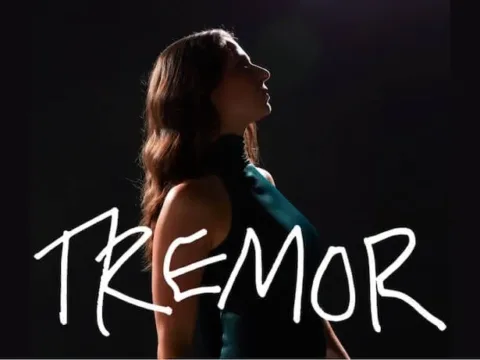
As a classical pianist born to Russian and Kurdish roots in Scandinavia, I’ve always been aware of how identity shapes the way we connect and are perceived. Moving between cultures teaches you to listen — to adapt, to observe, to find belonging in nuance rather than certainty. Perhaps that’s why I’ve always been fascinated by the complex ways we, as musicians, relate to one another.
We pride ourselves on our ability to listen, to empathize, to collaborate. We spend our lives cultivating sensitivity — shaping sound and silence into meaning. And yet, behind that refined surface lies a more complicated emotional landscape. Between competitions and collaborations, applause and auditions, I often find myself wondering: do we truly celebrate each other’s success, or do we merely perform it?
In the green rooms and rehearsal halls of our profession, I’ve felt both warmth and distance. There are moments of genuine camaraderie: shared nerves before a concert, laughter after a mistake, or a hug after a performance that went beautifully. But there are also subtler moments that complicate our relationships — the moments that happen when someone “makes it.”

When a colleague wins a major prize, lands a dream opportunity, or signs with a prestigious label, the atmosphere can shift almost imperceptibly. We clap. We “like” their announcement post on social media. We may even write a congratulatory message. But somewhere, deep down, the quiet voice of self-doubt that usually stays in the background begins to make itself heard.
It’s a reaction that’s rarely admitted aloud but often felt in silence. It doesn’t come from malice; most of the time, it comes from exhaustion, self-doubt, or the invisible comparisons that shape our artistic world. Classical music likes to see itself as a meritocracy: a system where talent, discipline, and hard work are enough. But most of us know that this is a comforting illusion. Our careers are shaped not only by ability, but by opportunity, geography, social networks, and visibility.
The classical music world runs on hidden hierarchies — shaped by where one studied, with whom, and under what banner. These invisible structures often dictate how success is seen and valued. For musicians like myself, who move between identities, languages, and traditions, it can be difficult to define what success even means. When recognition depends on such narrow measures — competitions, commissions, or social media milestones — every achievement feels fragile, as if it could vanish with the next season. The result is a culture where celebration and insecurity coexist, where applauding a colleague can, at times, feel like betraying oneself.

Our industry’s structure exacerbates this tension. Careers depend on visibility: on the right collaborator, the right critic, the right algorithm. For artists, especially freelancers, scarcity is a constant undercurrent. When every gig, festival, or review feels like a rare opportunity, the success of others can feel like a reminder of our own vulnerability.
But envy isn’t just about scarcity — it’s about identity. We tend to compare ourselves to those closest to us: peers of similar age, discipline, or training. When someone within our immediate circle advances faster, it can trigger an existential unease. Their success seems to rewrite the rules of what’s possible, forcing us to reexamine our own trajectory.
Classical musicians are trained to aim for flawlessness. From childhood, we learn that mistakes are to be eliminated, not explored. The conservatory environment reinforces this mindset: we are constantly evaluated, ranked, and compared. When our value is measured by how close we come to perfection, failure becomes shameful. And if we struggle to accept our own imperfections, how can we truly embrace someone else’s success?
And then comes vulnerability — the quiet cost of devotion. In an industry that prizes resilience and discipline, showing emotional fragility can feel like a risk. Mental health remains a taboo subject unless it has already reached a breaking point. Burnout is glamorized as dedication; exhaustion is mistaken for commitment.
I’ve seen colleagues push through illness, heartbreak, or grief because stepping back feels unthinkable. The fear of being replaced — or worse, forgotten — is real. Say “no” once, and the next call might not come. Show up at less than your best, and you risk exclusion. It’s a brutal economy of performance, one that leaves little room for compassion toward ourselves or toward others.

But when someone achieves something beyond where we currently are — a stage we hope to play on, a project we hope to create — it doesn’t have to feel like a threat. A colleague’s success can act as a nudge toward new possibilities, a reminder of what can still be discovered and explored. In that space, admiration and motivation coexist, allowing both personal growth and genuine celebration.
In recent years, I’ve felt a personal shift in how I relate to our industry, and to the idea of success itself. For much of my life, I was defined by labels: the late bloomer, the musician (not pianist), the one encouraged to “use” my multicultural background. Each label carried an expectation: something that should have already happened by now, some milestone I was meant to have reached. But I’ve learned that these pre-decided terms can frame your story before you’ve had a chance to write it yourself. Dismantling them — consciously stepping outside of what others decided I should be — has been one of the most liberating acts of my artistic life.
It has given me permission to listen again — not only to music but to silence; to rediscover the beauty of not knowing; to remember that being an artist is not about arriving anywhere, but about searching. Each time I touch a piece of music, I am reminded that our work is not about proving, but about discovering. It’s about understanding and revealing something — about the world, about ourselves, about humanity. We are all equal participants in something far greater than success. We become part of a living current called music.

Belonging is a question I carry with me constantly. Growing up between multiple cultures, I often felt caught between worlds, never fully anchored in a single identity or tradition. Over time, I’ve realized that belonging is not something to find elsewhere — it is something to claim in the present moment, in the time, place, and context where you stand. Every performance, every rehearsal, every city offers a space to arrive, fully and unapologetically, if we are willing to inhabit it.
Yet this awareness also exposes a larger responsibility: the people shaping the early journeys of young, sensitive artists must do more than teach technique. Conservatories, teachers, and mentors must actively participate in the humanistic development of their students — cultivating emotional intelligence, resilience, and self-awareness alongside skill and artistry. Preparing a musician for life on stage means preparing them for life as a human being: to navigate success, failure, comparison, and creativity with integrity. Music demands presence, empathy, and courage — and these qualities must be nurtured from the very beginning.
With this mindset, we can rethink how we measure achievement. Instead of viewing success as a zero-sum game where one person’s triumph narrows the field for others, we might see it as a collective expansion. When a colleague premieres a daring new work, wins a grant, or builds an audience, they widen the space for all of us. They remind the world that classical music is alive, relevant, and diverse.
True celebration, then, isn’t about approval — it’s about recognition. It’s about acknowledging that someone else’s success contributes to the vitality of the field as a whole. But this kind of joy doesn’t come passively. It’s a practice. It requires self-awareness, humility, and empathy. It asks us to examine our insecurities without shame, to acknowledge envy without letting it harden into resentment.

In a world where every career milestone is instantly visible online, comparison is unavoidable. But perhaps transparency can also be healing. Sharing not only our triumphs but our struggles — our rejections, our doubts, our messy middle chapters — creates space for authenticity.
I’ve started to notice a subtle shift in this direction among younger musicians: communities that value honesty over image, process over product. In these circles, success is celebrated not as a trophy but as a testimony to persistence and courage. Maybe that’s where genuine celebration begins — with honesty. Not the performative kind, but the kind that makes room for imperfection, for contradiction, for humanity.
Until we dismantle the quiet competitiveness masked as professionalism — and until we make space for failure, health, and individuality — the question “Do we truly celebrate each other’s success?” will linger unanswered.
But perhaps the goal isn’t to find a perfect answer. Perhaps it’s to keep asking the question, and to live differently because of it. As artists, our greatest power lies in our capacity to feel — to listen deeply, not only to sound, but to each other. To celebrate with sincerity requires courage: the courage to see another’s joy without diminishing our own, to applaud without comparison, and to remember that art is not a race, but a conversation.
I CARE IF YOU LISTEN is an editorially-independent program of the American Composers Forum, and is made possible thanks to generous donor and institutional support. Opinions expressed are solely those of the author and may not represent the views of ICIYL or ACF.
You can support the work of ICIYL with a tax-deductible gift to ACF. For more on ACF, visit composersforum.org.