In today’s global village, the desire to merge traditions has never been stronger. There is no longer a need to travel to learn about music: social media allows people to discover new music from all around the world, and people can easily find scholarly articles online or listen to top musicians in countless genres on streaming platforms. Symphony orchestras now share stages with traditional ensembles and rock bands; folk groups welcome instruments from various traditions; electronic producers search the world for new sound libraries; and composers from non-Western countries are pushing the boundaries of cross-cultural fusion through collaborations with Western classical musicians. However, one critical question remains: how far can traditions blend before losing their identity, especially when two musical languages share little in common?
Integrating with Western classical music can be easier for some folk traditions than others. Composers like Béla Bartók, Antonín Dvořák, and Zoltán Kodály were able to create a seamless blend of Western classical music and European folk songs because of their similar tonal foundations and harmonic language. Other musical cultures, such as Chinese traditional music, Javanese gamelan, Iranian music, and the Indian raga system, have evolved in very different ways, shaped by their respective societies, cultures, and histories. The sounds and structures that emerge from these traditions reflect their distinctive influences. Their approaches to musical notation also differ from Western conventions. Systems such as Sargam in Indian music and the specialized symbols used for quarter tones in Iranian music show how musicians have created their own musical vocabularies to capture ideas that Western notation was never intended to express.
Combining musical traditions that developed in different regions of the world over multiple centuries requires a deep understanding of similarities and differences. For instance, the pentatonic scale is used in the blues and traditional Chinese music. Why does one piece of music sound Chinese, while the other does not? In this scenario, we can compare how the same mode has been implemented differently in each style. However, a true blend of traditions extends beyond just notation — it necessitates detailed knowledge of the cultural, historical, and structural roots of both musics. The process is more like translating literature than simply rearranging a melody; success requires fluency in both “languages,” including a thorough understanding of cultural and historical meanings.
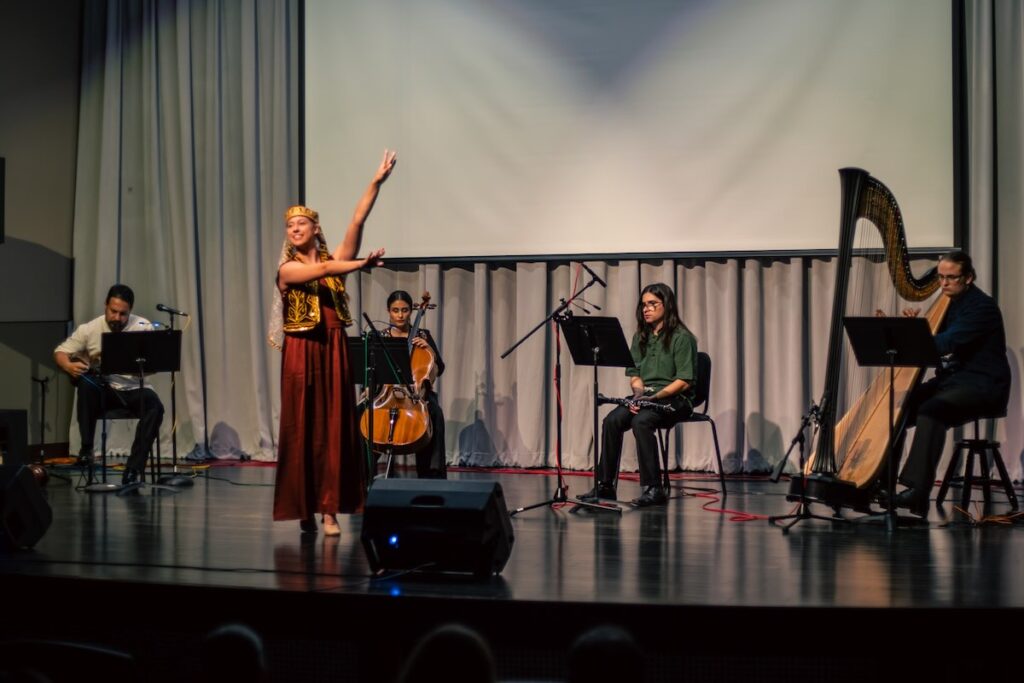
It might sound contradictory, but having fewer similarities can actually be a positive thing when blending various musical styles. Differences allow each style to maintain its distinct sound. When two traditions have too much in common, their similarities can begin to overlap and obstruct one another rather than cooperate.
Like many non-Western composers, I have always wondered “how far is too far?” when it comes to fusing various traditions with classical music. Over the years, I have discovered that there is no definitive answer, but perhaps the best balance is when the audience — especially non-musicians — can clearly hear both traditions in the music. To put it another way, someone from a non-Western culture should be able to say, “Yes, I can hear my music in it,” while a Western audience can say, “This still sounds like classical music.”
In most cases, the tradition being blended with Western classical music is some type of folk music with deep cultural roots and distinct qualities. In a successful fusion, the features that characterize a specific heritage are incorporated in a way where they maintain enough of their authenticity. Traditional instruments, well-known rhythms and dances, certain modes, certain intervals, motives, or renowned melodic figures are some of the aspects that might fit naturally in the structure of classical music without losing their identity.
One of the most intricate and infrequently tried fusions is Western classical music and Middle Eastern music, specifically Iranian music. With melodic instruments like the tar, ney, kamancheh, santoor, and setar, Iranian music is based on a monophonic foundation. These instruments often play the melody not in harmony, but in unison or octaves, even in ensemble settings. Additionally, quarter tones and microtones are not always fixed in equal temperament and have varying intonations. In Iranian music, quarter tones vary by mode (Dastgāh) and tonic (Shāhed). The following are the quartal tones used specifically in the Dastgāh system:
Koron(half-flat) : Lowering a note by approximately a quarter tone
Sori(half-sharp) : Raising a note by approximately a quarter tone
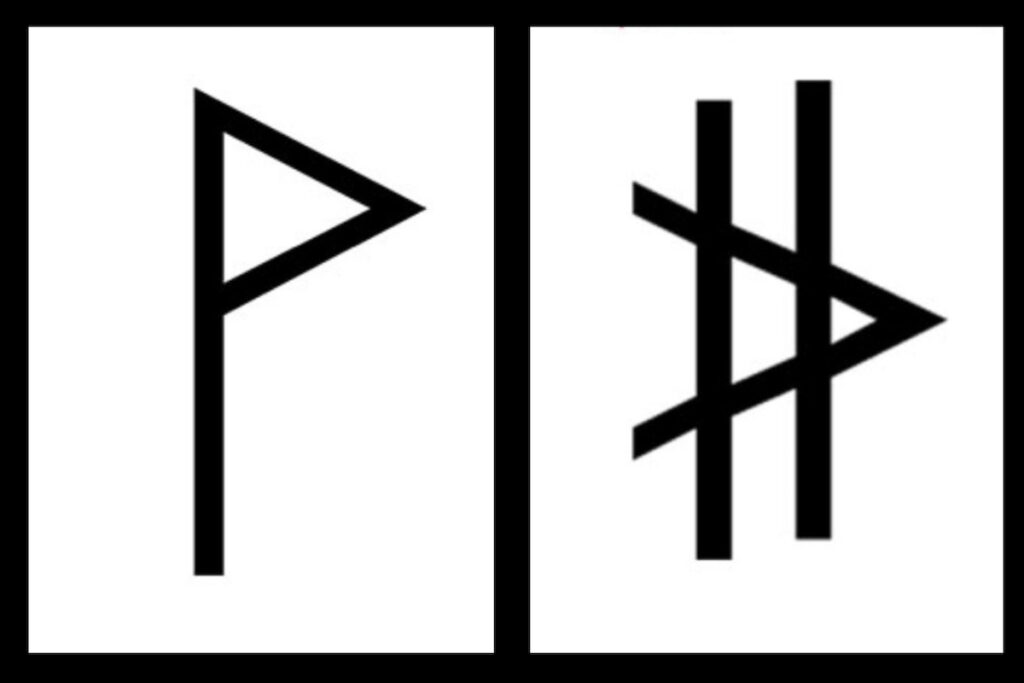
Most classically trained musicians are unfamiliar with this flexibility because they are accustomed to a fixed-pitch, equal temperament framework. However, composers can change the intonation to fit orchestral contexts while maintaining other aspects such as melodic figures, contour, ornamentation, and the modal identity of Iranian music. This is a common strategy for Iranian composers like myself who have classical training and work with Western ensembles.
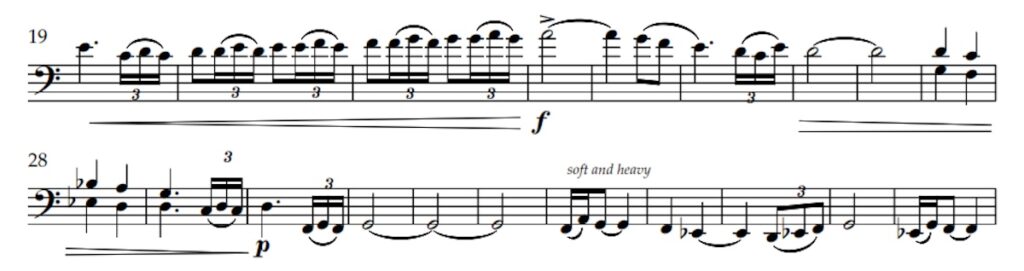
The following example is an excerpt from Detachment, a solo cello piece in Dastgāh Navā that I wrote in 2023. While the sixth scale degree is a half flat in this mode (E is Koron in this example), I tried to convey the feeling of this pitch by using both E natural from measures 19 to 27 and then E flat from measures 28 to 38. This decision is based on various aspects of Iranian music, such as contour, phrasing, character, sub-modes, etc.
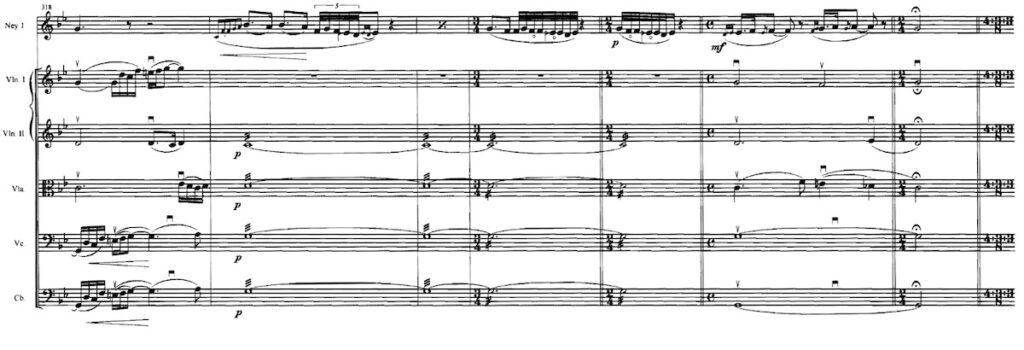
Other composers may prefer a mixed method. In Ney-Navā, Hossein Alizādeh uses quarter tones in the ney part, which is typically performed by an experienced Iranian musician, while modifying the orchestral parts to use half tones. The orchestra plays E natural, while in measure 319 (and later), the ney plays E Koron in its melodic line. Whatever method is chosen, it must be applied consistently throughout the work to ensure a cohesive piece of music.
With the goal of having my music performed by Western orchestras and ensembles, I’ve learned that there is not a one-size-fits-all solution. However, I have identified some key factors that guide my approach to fusing Western-style composition with Iranian music, and many of these ideas can be applied to other cultural traditions, as well.
General Considerations
Audience: People from different places in the world listen and digest music differently. A successful blend must offer familiarity to keep listeners engaged, while introducing enough new elements to find its way to the program and maintain interest.
Concert Program Context: The impact of surrounding repertoire cannot be neglected since it influences how the piece is perceived by the audience. In a Western-dominated program, the blend might lean toward classical idioms for coherence, but in a program with a majority of non-Western compositions, traditional and folk elements may be more prominent.
Instrumentation: Traditional instruments naturally carry cultural identity. If they exist in an ensemble, Western elements can be stronger without losing authenticity. If absent, more folk and traditional compositional elements are needed.
Performer Familiarity: Performers who are familiar with the characteristics of specific folk traditions will naturally add the necessary flavor and nuance in their performance, giving the composer more freedom to explore the Western world. For performers who are unfamiliar, adding more folk and traditional traits such as specific ornamentations helps to preserve the intended character.
Differences as an Asset: When blending music with little shared ground, it can be more effective to begin with their differences rather than their similarities. Distinct features are less likely to cancel each other out and can instead complement one another.
Composer’s Vision: At the end of the day, there is no fixed formula. It is all the composer’s decision whether to balance both traditions equally, let one dominate, or shift emphasis as the work unfolds.
Specific Considerations for Iranian Music
Understanding the Dastgāh System: Iranian traditional music draws from the Dastgāh system, which is basically like a carefully planned road trip. You start at a specific location, visit multiple stops along the way, reach the destination, and ultimately return home. Each stop provides a unique experience, but they are all part of the same journey. If we keep this approach in our composition, it will sound more authentic.
Appropriate Harmonic Language: Because Iranian music is fundamentally monophonic, the use of standard Western functional harmony, especially tertian harmony, can easily alter its identity and make it sound less authentic. However, since harmony plays an important role in orchestral writing, creating chords from primary modal tones can be effective.
Development and Modulation: Iranian music progresses by establishing the principal mode (Darāmad) and then moving through different submodes (Gušes), which function more as temporary detours than full modulations. In contrast, Western music frequently establishes and sustains new tonal centers for extended periods and modulation is an important part of it. In terms of audience engagement, Iranian audiences often prize return and continuity of the same material, whereas Western audiences tend to expect contrast. Both perspectives carry significance when blending.
Modal Compatibility: Some modes in Iranian music integrate more easily with Western modes. For example, Dastgāh Navā is similar to Aeolian, but with an optional rise on scale degree six, which theoretically changes to a Dorian mode. However, Navā differs significantly from the other two modes. Its cadences, contour, melodic figures, and phrasing are distinctively Iranian. A composer can achieve a better blend by using such modes.
Conclusion
Blending musical traditions is not about bending them — it is about deliberate integration, like a puzzle where each part completes what the other one is missing. A successful blend adds to the music rather than changing it and keeps the music interesting for audiences from different geographical areas. The right amount of blending will vary from one piece, performance, or setting to another because there is no single formula. But one thing remains constant: the differences between two musical languages are not obstacles; they are opportunities, and if used effectively, the music can sound authentic to audiences from both traditions.
I CARE IF YOU LISTEN is an editorially-independent program of the American Composers Forum, and is made possible thanks to generous donor and institutional support. Opinions expressed are solely those of the author and may not represent the views of ICIYL or ACF.
You can support the work of ICIYL with a tax-deductible gift to ACF. For more on ACF, visit composersforum.org.