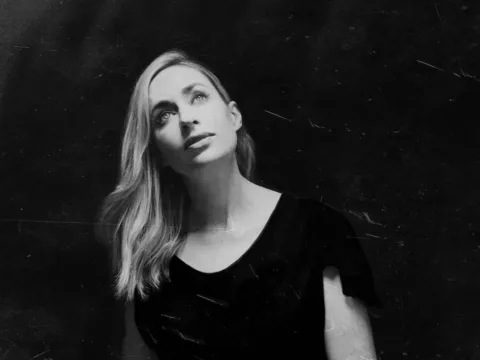
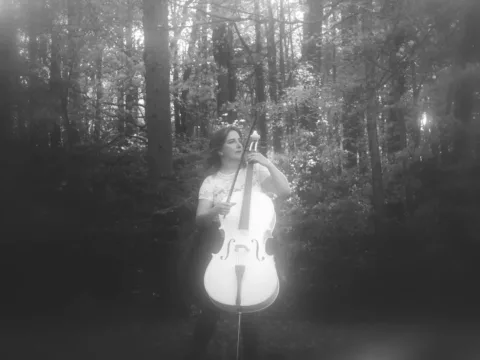
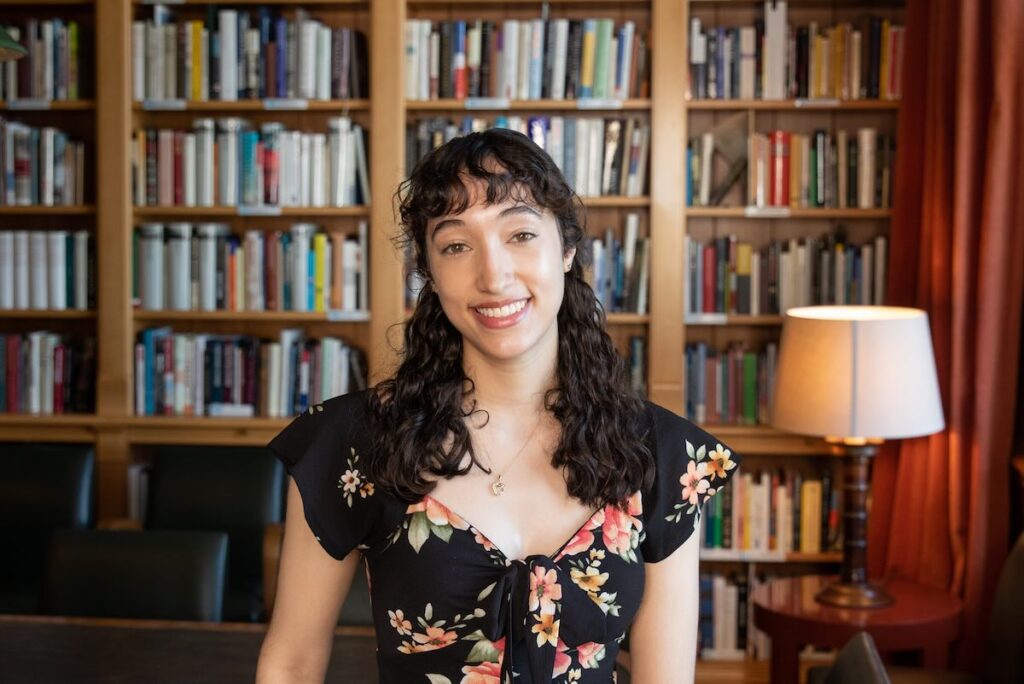
Stunning textures and timbral exploration are hallmarks of Camila Agosto’s compositional output. As a composer, interdisciplinary artist, educator, and certified yoga instructor, her work intersects psychoacoustic research, memory and storytelling, and meditative soundscapes. Agosto is an avid collaborator — her electroacoustic projects frequently encompass choreography, visuals, and installations.
She is currently a doctoral candidate in Columbia University’s Music Composition program, and during her studies, she became the youngest fellow of the prestigious American Academy in Berlin. Her perceptive work has garnered international acclaim, from performances at Lincoln Center and National Sawdust in the U.S., to KINDL-Zentrum für zeitgenössische Kunst and Banff Center for Arts and Creativity abroad.
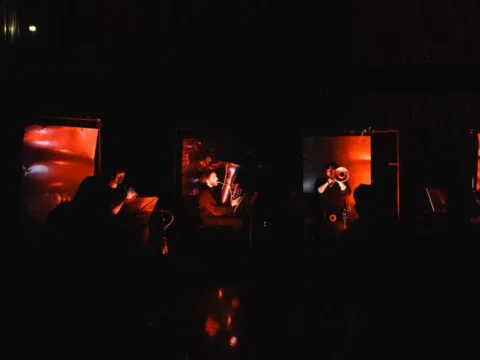
On Mar. 11 at Roulette Intermedium, the International Contemporary Ensemble will premiere a new work by Agosto alongside debuts by Lester St. Louis and Paul Novak. The Ensemble’s “Call For ___” commissioning initiative — started in 2021 in hopes of reimagining the “call for scores” process within the scope of new music organizations — invites artists of any sound-making discipline to create, workshop, and present collaborative work with a subset of musicians. Agosto’s new piece, The Shape of Forgetting, navigates identity and recollection, asking performers of the work to merge their own lived experiences with original text by Agosto. Through her music, she attempts to provide spaces for healing and deep internal reflection.
Ahead of the premiere, we asked Agosto five questions about her newest work and artistic process.
You collaborate with all sorts of artists — from other musicians and instrument-builders, to dancers and mixed-media artists. In your opinion, what makes a great collaborator/collaboration?
I’m still figuring this out and my answer shifts with every person I work with or project I work on. There are the logistics of what I think can help create a strong collaboration. It begins with open, honest conversation early on in the project, long before I write a note or someone plays something. It’s important to understand how you each like to communicate, what your respective processes look like (especially in a cross-disciplinary project), what is exciting you in your practice right now or what you want to try that’s new for you.
Being able to reflect and have that knowledge of yourself and a willingness to share it clearly can help prevent misunderstandings and situates you on common ground. Working across disciplines has really sharpened this for me. I’ve had conversations with choreographers and visual artists who were using the same term to mean almost opposite things. Slowing down to compare definitions and find common ways to bridge our respective practices has helped a lot.
Beyond logistics, what I personally value most is presence. Working with people who are genuinely engaged, who have sat with the material and who are willing to be uncertain alongside me as we try new things. Perhaps underneath all of that is empathy — for yourself and for the people you’re working with. We’re all bringing our full lives into every room we enter, and you can never know what someone is carrying. Treating everyone with grace and meeting each other with equal investment of time and care matters a great deal to me.
The best collaborations I’ve had have taught me something new about myself and my work. They’ve given me the safety to take risks, to say, “I’m not exactly sure how this will work, but this is what I’m thinking…,” and to have someone meet that openness with curiosity rather than judgement. To me, collaboration is about building relationships and community. That’s what lasts long after the piece is finished and those collaborations are what make writing new music exciting.
What was it like getting to work with the International Contemporary Ensemble from the beginning to ending stages of the “Call For ___” process? What is the importance of commissioning models like this one?
It’s been a joy to work with the International Contemporary Ensemble throughout this process. They create a space that feels genuinely supportive where I can be vulnerable and truly myself without apology. There is a pressure composers often feel when working with established ensembles to arrive fully polished or have everything figured out. What I appreciated most in the early stages of this project was that my ideas were accepted as they were. I came to the first workshop with loose sketches and they were absolutely game to explore them and see what happened. That kind of environment is crucial when you’re trying something new and it freed up headspace in ways I didn’t anticipate.
I was navigating one of the hardest seasons of my life during the beginning of this project. The support and understanding they met me with at every stage gave me the motivation to try new things in this piece and the courage to be more open than I otherwise might have been. They gave me the space to be human which felt healing in the truest sense. That’s ultimately what makes commissioning models like this one so important. Composers don’t just need opportunities to make new work or financial support—they need time with performers, time to learn by doing, time to fail and try again.
Equally important is what happens between those moments. The pacing and structure of this process gave me months between workshops to reflect on what worked and what didn’t, to listen back to recordings, and to let ideas develop organically before bringing them back into the room. That breathing room is as crucial to the creative process as the act of writing itself. This model provides that and demonstrates an understanding that it’s not just about providing an opportunity to work with an ensemble or receive a commission, it’s about all of these elements woven into the process and the thoughtfulness behind each stage. I hope more ensembles find ways to do something similar.
Can you describe what audiences can expect to experience at the world premiere of The Shape of Forgetting?
My first instinct is to say: just come and find out. I’m more interested in hearing what you experience than in telling you what to expect. I think there’s something valuable about entering a new piece without a roadmap and without listening for specific markers. That openness is part of the invitation.
But, since you asked. The Shape of Forgetting is connected to my ongoing project The Memory of Water, which explores the erosion of human memory through the journey of a life that begins in water and returns to water. This piece sits at a particular threshold in that journey: a soul releasing the identities, memories, and attachments that defined a lifetime in order to dissolve back into something larger. Over the three movements, the two vocalists carry this narrative, with original text I’ve written woven throughout.
More than anything, I hope audiences leave having felt something; a little space to breathe, reflect, maybe release something of their own. Your presence in the room matters to me. You’re not just an observer, you’re part of the ritual too.
You also do work around yoga, wellness, and holistic approaches — how do these practices inform your compositional style and process?
It has been a process to figure out how these interests intersect for me creatively, especially in a field that can place an unhealthy value on productivity. They’ve become influential organically, simply because they’re ingrained in my daily life. That said, I’m not actively trying to cultivate an identifiable aesthetic and I think it’s far too early to assert any kind of stylistic label on my work. I hope it continues to evolve.
What these practices have most influenced is my relationship to the act of composing, which has become a truly holistic process for me. I’ve developed a whole-bodied awareness as I write and I continue to learn how to tend to my needs: how to reset when I feel depleted, how to navigate burnout and creative blocks, how to establish values. That attunement has made me more conscious of the energetic demands I place on myself and the work I create.
Perhaps the clearest example of this approach finding its way more overtly into my music is in my string quartet Light Leak II. by light, by shadow. The piece emerged from a serious health crisis, and during my recovery somatic breathwork and chanting became a part of my daily routine. These rituals directly inspired the compositional material and performance practices in the piece.
These are also practices I try to share with others. I’m a certified yoga instructor and lead workshops for artists, scholars, and students through Columbia University and my own private studio, offering tools I hope support others in making the work they want to create without sacrificing their health to do it. It matters to me that we value how we make our art as much as what it becomes.
Your work deals with more personal aspects of listening — like psychoacoustics, deep listening, and somatic experiences. Can you speak to how these are incorporated into your work, and how you consider audience perception in your compositional practice?
I’m deeply curious about how we feel sound: how it resonates in the body, how it holds memory, how it can shape emotion and invite us into a deeper relationship with ourselves and with others. I’m not alone in this; there’s a rich lineage of composers who approach listening this way, and it’s something my own research has taken me deep into. But it has become central to how I think and work.
Compositionally, this means I’m always thinking about more than what the ear receives. I shape sonic environments that are intentionally layered and relational, where what you hear is shaped not just by the sound itself, but by the space, the people around you, and whatever you bring into the room. In my Paracusia series, for example, I explore how the boundaries between what is heard, imagined, and acoustically present become increasingly fluid.
Perception is never just neutral reception; it’s always in conversation with memory and the body. This is why the listener’s presence matters so much to me. I want people to experience the music as something that unfolds through them, not just around them. That sometimes means making compositional choices that leave room for the listener’s own interior life so they can experience my music as not just something to hear, but something to be inside of.
I CARE IF YOU LISTEN is an editorially-independent program of the American Composers Forum, and is made possible thanks to generous donor and institutional support. You can support the work of ICIYL with a tax-deductible gift to ACF. For more on ACF, visit composersforum.org.