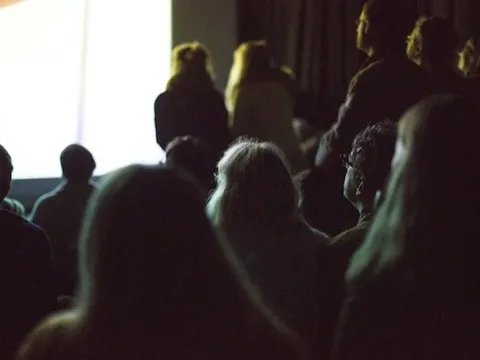
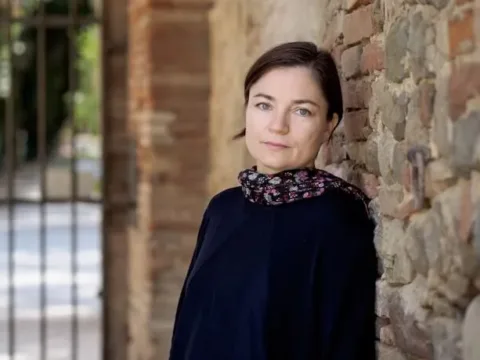
Seated in the round at Åsane Kulturhus, a string of spoken words transmogrified in spatialized audio as composer and vocalist Camille Norment strategically intoned key words along with the pre-recorded recitation:
“Dissolve… devolve… solve…”
Earlier, the sound of footsteps on gravel had circled the audience during sparse, morse code-like dialog between viola d’amore, double bass, and bass guitar. The foreboding moment conjured the hypervigilant feeling of being surveilled — a feeling that has been all too familiar over the past few months as ICE has inflicted unfathomable harm on the people in my community in Minnesota.
The world premiere of Norment’s Will there also be singing? was a standout moment of the 2026 Borealis festival because it resonated so deeply with my recent experiences. The double bass fell into an insistently unsteady groove, viola d’amore offered throaty swells, and interjections from distorted bass guitar interrupted the conversation. There was fear, negotiation, and exasperated fatigue in Norment’s voice as it gradually unfurled from hollow pitchless clicks to deep hums and wordless scoops with sultry vibrato. As strings of words eventually emanated from Norment’s pre-recorded and live voice, the way she transformed language underscored how easily innocence and goodness can be corrupted, twisted, infected. Yet it was also a reminder that the inverse is true: we can counteract the dark times with love, wonder, softness, and solidarity.
“Elation… Nation… Oscillation… Migration…”
Music festivals inherently exist in a sort of liminal space — for several days, time is suspended, we forgo our usual routines, and we dive headfirst into new experiences. But this feeling of in-betweenness especially permeated the 2026 edition of Borealis: the festival bridged the transition from outgoing artistic director Peter Meanwell to incoming leader Tze Yeung Ho; Norway has been undergoing a cultural funding overhaul that resulted in some (hopefully temporary) cutbacks to the festival programming; and artist-in-residence Jaleh Negari concluded her two-year term, where she has been exploring displacement, migration, and cultural fragmentation.
After Norment’s performance, we traveled to Bergen Kjøtt for the premiere of Negari’s Earthly Bonds, and these two back-to-back programs made Friday the strongest day of an inconsistent festival. Panels of geometric watercolors — which had previously been stitched together and displayed as a single tapestry in Negari’s installation at Lydgalleriet — were hung from the ceiling as graphic scores, flung to distant corners and displaced from their origin. The quartet of saxophone, cello, electronics, and drums were similarly stationed on their own individual platforms throughout the space, communicating across the divide.
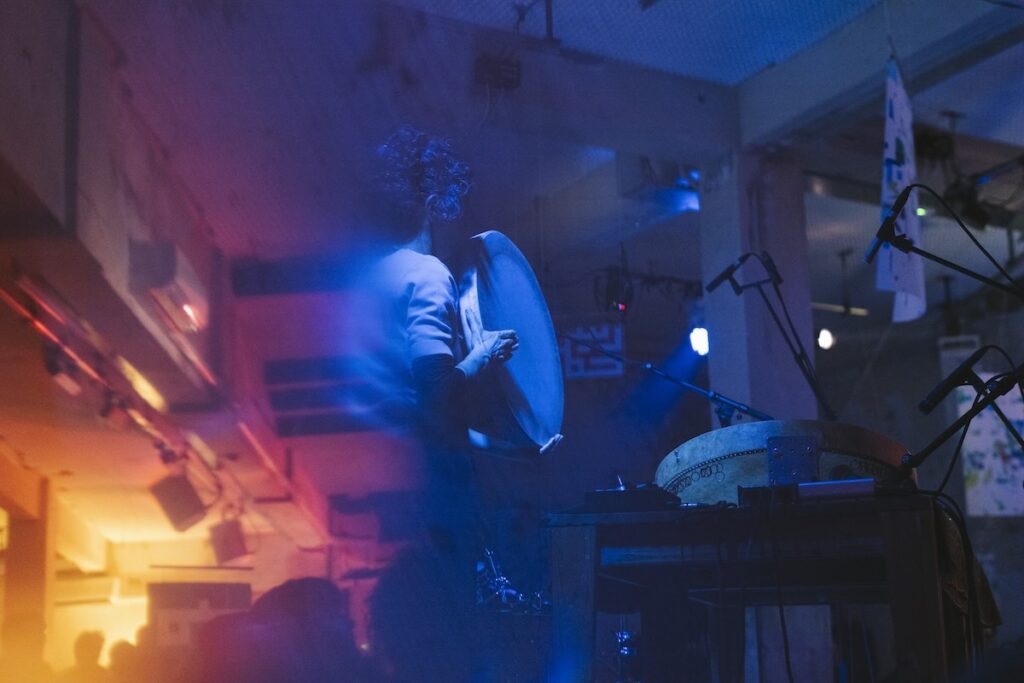
The music was simultaneously fragmented and unified as it traversed Iranian and jazz influences, downtempo grooves, and ethereal ambiance. Negari was an emphatic and magnetic bandleader; her chameleonic performance effortlessly shifted between drumset and daf, a Persian frame drum adorned with jingling metal rings. Her work left me thinking about the role of fluidity when one is fractured between cultures and learning to survive in new environments — how this ability to shapeshift can be both an asset and a burden.
“Informative… Transformative… Transform… Mourn…”
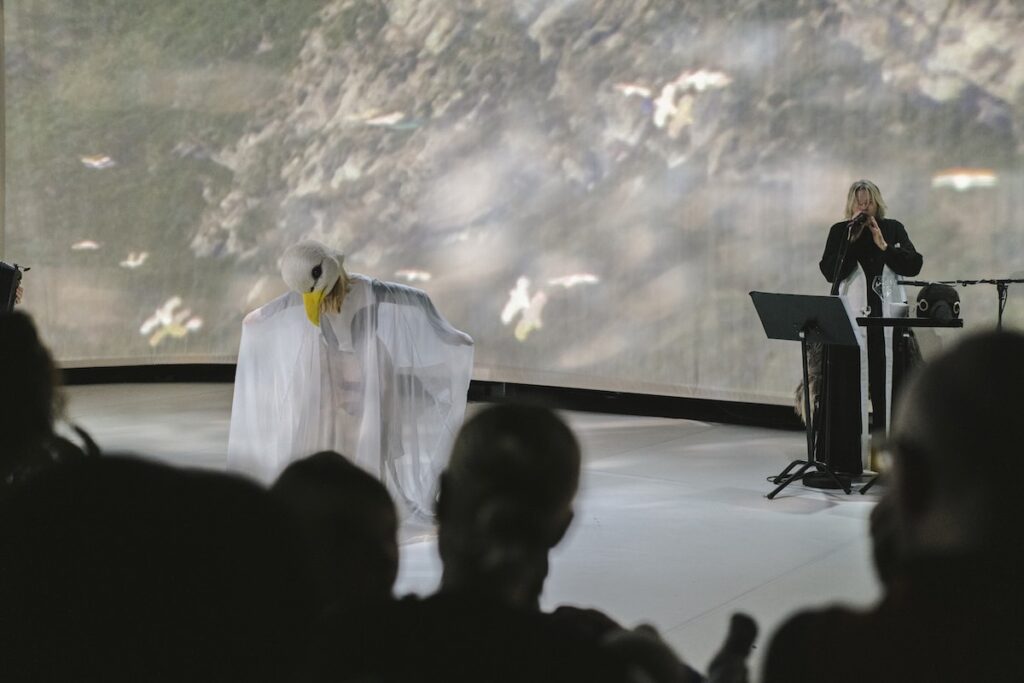
At her gallery opening the day prior, Negari spoke about the importance of traveling back to Iran with her young daughter who was born in Denmark, and this idea of creating cultural bridges for younger generations had also been a theme at the opening night performance. Vedøya — Laments to the birdmountain who lost their voice was a collaboratively-created interdisciplinary piece that mourned the loss of the kittiwake population on the island of Røst. Over the past decade, climate change and industrial fisheries have driven most of the birds away.
The communal activation of music, dance, storytelling, video, and field recordings had interesting potential, but the presentation of the work fell significantly short. The evening began with an extended reflection by artist Elin Mar Øyen Vister in Norwegian with no available translation. And about 85% of the way through the performance, the lights came up abruptly and the tone drastically shifted to a 25-minute casual conversation that was also in Norwegian. The performance then restarted for a short epilogue, but the creative momentum had fully stalled by that point and the end of the piece lost all impact.
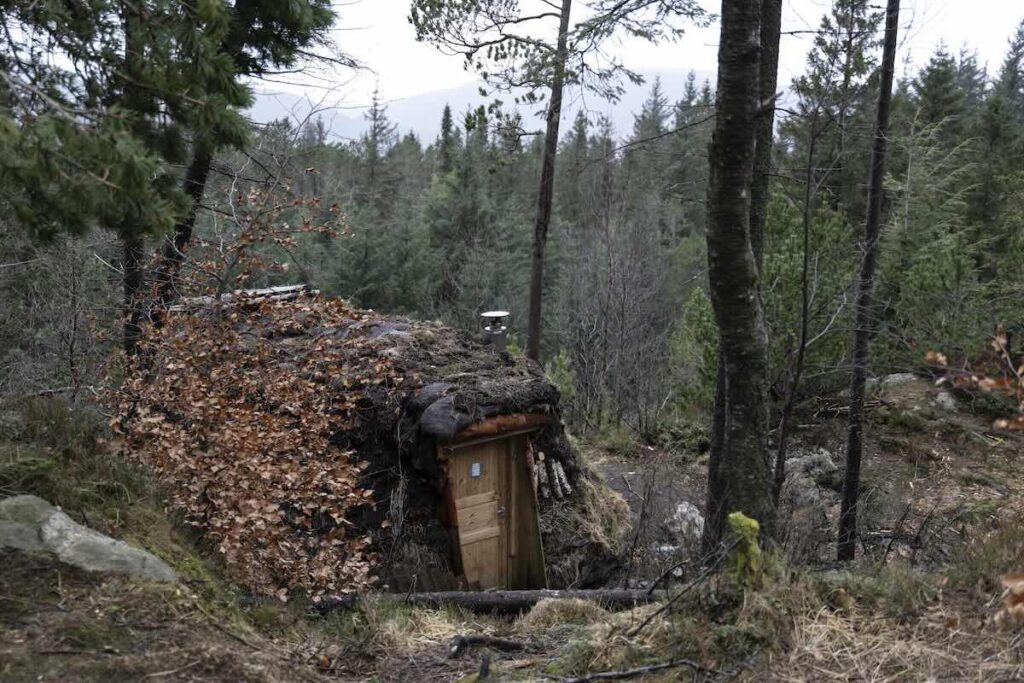
Vedøya was one of several pieces throughout the festival to feature Sámi artists and culture. Sara Marielle Gaup’s Nana Nannán – Solid Soil more effectively combined music and cultural education. The piece was created specifically for Jiennagoahti, a small listening hut on top of Mt Fløyen constructed in a Sámi architectural style using naturally curved tree trunks. After venturing through the damp and moody forest past verdant moss and conifers, we settled onto the cozy floor of Jiennagoahti for the 25-minute piece that combined field recordings and joiking, a traditional form of Sámi song that evokes a specific person, animal, emotion, or landscape.
As recordings of the wind blended with the gusty conditions outside, Gaup’s distant voice came floating in on the breeze; a rustling crunch of organic materials and the crackling of a fire mirrored our journey to the hut. A gentle backbeat emerged to accompany Gaup’s increasingly foregrounded joiking, her raspy and guttural chanting in hypnotic counterpoint with herself. Then, with the twittering of birds, her voice receded into the distance again.
After listening, we were treated to a discussion with Trine Hansen, our Sámi host and guide who answered all of our questions and graciously provided context and insight for what we just heard. Through our conversation, we learned about Sámi language revitalization and how joik has survived Nordic colonialism as a wordless artform; its throughline and continuity is of great significance to a culture that has lost many of its ways of living and being.
By contrast, Johan Sara Jr.’s The Eight Sámi Seasons for string quartet and piano felt misplaced on an experimental music festival program. Each movement of the detrimentally long and painfully formulaic work followed a conventional ABA framework with direct copy-paste repetition of the A material, creating a bloated and predictable listening experience. For a piece meant to represent the diverse seasons of the Sámi calendar, the individual movements lacked a unique identity; each included some combination of angular chromaticism, folk-inspired melodies, and placid sustains.
Also questionable on the program was the concluding performance of Franz (Purgatorio XXVII-XXXIII) by Spreafico Eckly and Matteo Fargion. After a week of experimental music, it felt odd to be sent off with gratuitous quotations from the classical canon, even if they were ironically invoked. At Borealis 2019, I had struggled with a piece from the same creators that casually dropped the N-word and made light of 9/11, but I tried to go in with an open mind. While I generally enjoy deadpan absurdist music-theater, this performance within a performance about creating a new opera proved to be too meta and convoluted for its own good. But worst of all was the jocular concluding chorus, which included a mention of femicide that was incessantly repeated and played for laughs — an uncharacteristic misstep for a festival deeply concerned with inclusion and an unfortunate end to the week.
“Solutions… Resolutions… Resolve… Evolve…”
Since my first Borealis festival in 2018, the programming model seems to be shifting away from multi-composer concerts toward more project-based work. The risk with programming fewer total artists is that everything becomes weighted more heavily. With a pared down program, every single performance counts and the failures are harder to dismiss, which resulted in a very polarizing festival in this transitional year.
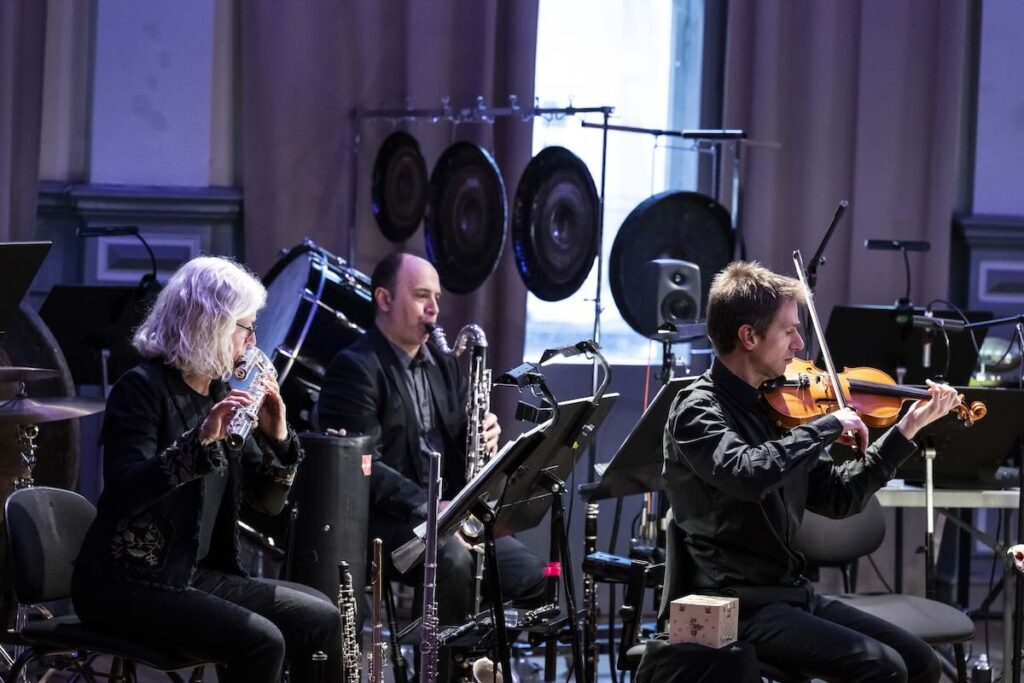
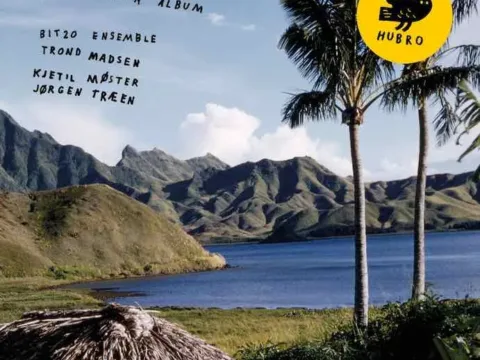
BIT20 Ensemble’s diverse and engaging performance at Bergen Internasjonale Kultursenter on Sunday was the sole remnant of Borealis’ previous approach to programming. Helena Tulve’s trembling and textural Stream started in the sparse treble ranges of flute, clarinet, violin, and cello before diving deeper, then resurfacing. Øyvind Torvund’s Neon Forest Space was playful as ever with retro synths and the pew-pew of a laser tag gun. Diana Soh’s Modicum was a whiplash of seven wildly contrasting quick-burst movements, a commentary on the fragmentation of our lives on social media. And Hannah Kendall’s Even Sweetness Can Scratch the Throat leveraged grinding gears, discordant harmonicas, eerie simultaneously playing music boxes, and intentionally-obscured walkie talkie transmissions to comment on the history of sugar plantations in the Caribbean.
“Transcendental… Elemental…”
Other highlights of the festival included Sonic Entanglements at Østre and Infinite Pollination at Bergen Kunsthall. Sonic Entanglements was the Saturday night double bill of Bergrún Snæbjörnsdóttir + John McCowen and Hilde Marie Holson + Mariam Gviniashvili. In Bergrún’s Roföldur, contrabass clarinet multiphonics emerged from white noise, first at the faintest whisper, then growing into earth-shattering, spectral explosions that threatened to rattle our bones from our bodies. Sound became vibration; McCowen’s foghorn of overtones transformed music from a sonic experience to a somatic one. Later, Holson and Gviniashvili’s Serene Din — as the paradoxical title would suggest — offered a trance-like cacophony of deep throbbing drones, glitchy interference, and shimmery, ruminative trumpet longtones.
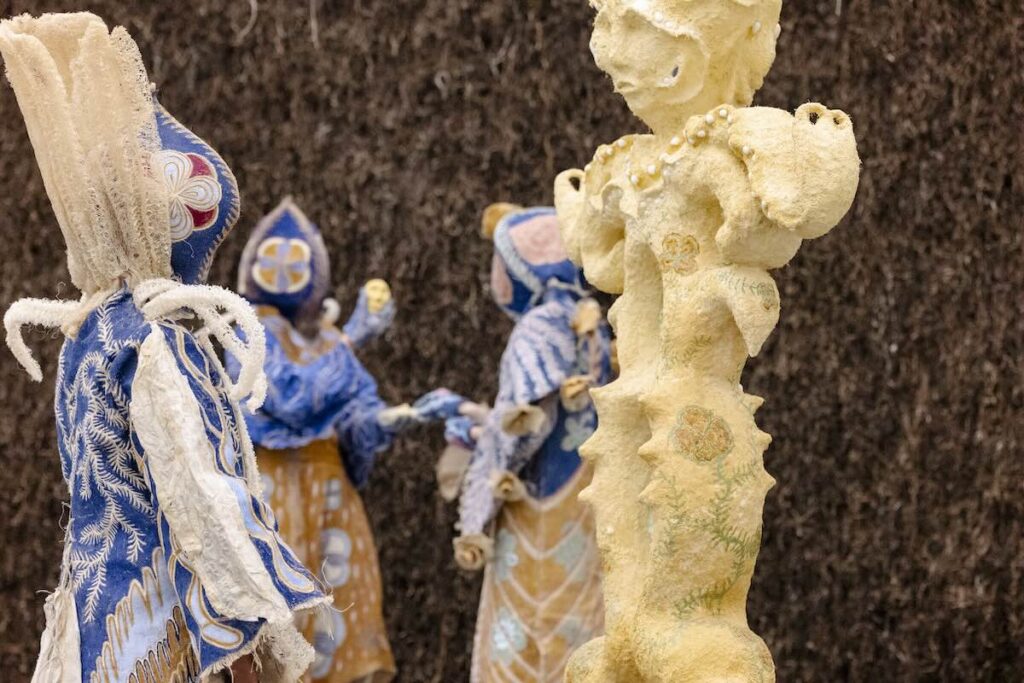
Earlier that day was Cecilia Fiona’s Infinite Pollination, a short operatic performance in the Iter Subterraneum exhibition in Bergen Kunsthall. The ritualistic activation of the surrealist, alien sculpture garden featured faceless “cosmic pollinators” clad in regal, almost medieval-looking costumes. Gorgeous, soaring two-part counterpoint in the treble voices was met with a textural underpinning of buzzing, humming, and whistling from the bass-baritone as the trio pantomimed the creation and destruction of life.
It’s understandable that this edition of Borealis felt less robust and cohesive than previous years — six months ago, outgoing artistic director Peter Meanwell transitioned all of his curated projects to a mostly new production staff, who then had the unenviable task of executing someone else’s vision on a short timeline. Borealis 2027 will be a fresh experiment with a completely new team, and I think we are all looking forward to seeing what comes next from this boundary-pushing festival.
I CARE IF YOU LISTEN is an editorially-independent program of the American Composers Forum, and is made possible thanks to generous donor and institutional support. You can support the work of ICIYL with a tax-deductible gift to ACF. For more on ACF, visit composersforum.org.