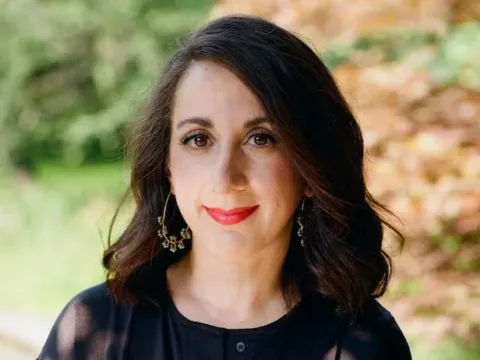
The work of Mary Kouyoumdjian is equally rooted in composition and documentary through projects about the Armenian genocide, the Syrian refugee crisis, and the Lebanese civil war. So it comes as no surprise that Paper Pianos, the work that made her a Pulitzer Prize finalist, explicitly foregrounds the words of refugees and refugee resettlement workers. Using interviews conducted by Kouyoumdjian and librettist Nigel Maister, Paper Pianos centers four distinct voices: Milad Yousufi, who secretly taught himself to play piano under Taliban rule in Kabul by drawing piano keys on paper; Getachew Bashir, from Ethiopia; Hani Ali, a child refugee from Somalia; and Akil Aljaysh, who fled Iraq via Syria and Lebanon before arriving in New York.
Released Aug. 7, the new Cantaloupe Music recording of the piece features Alarm Will Sound in a performance that balances overwhelming dread and unyielding optimism. In the overture, “This Is Not a Choice (Gee-Gee’s Primer),” an ambient, almost unpitched drone oscillates underneath Bashir’s voice: “The main difference between refugees and other immigrants is the choice they make. Refugees didn’t make a choice to leave their countries.”
Breaks in speaking are punctuated by sustained metallic percussion as Kouyoumdjian adds layer after layer of texture. There’s no real melody to be spoken of here; instead, metallic scrapes, pulsating drones, and long crescendoes build dramatic tension. But as the instrumentation thickens, it never interferes with the recorded interview — the documentation is the primary focus, and the purpose of the music is to underscore what is being said. A less sensitive composer might run the risk of the music working too much in tandem with the voice, but Kouyoumdjian is extremely careful to make sure that the text is what the listener is zeroed in on.
The overture seamlessly becomes the second movement, “Child of War,” with only a slight increase in musical activity before the next speaker begins. This movement initially continues in much the same way, with drones accompanying the voice of Milad Yousufi, until piano ostinatos and metallic percussion are introduced under the interview. It’s the most rhythmic motion we’ve heard so far, and this quickly escalates into compelling and bombastic noise, ending with Milad saying, “I mean it was completely of violence there that I’ve been living. That’s why I’m telling like I never had a childhood. I see the death in front of me.”
“All Good Things” brings transcendent music and a welcome air of (relative) optimism after about 30 minutes of bleak subject matter. On this standout track, unexpected interruptions suddenly recontextualize the music; what starts as a shimmering and bright texture is briefly overshadowed by something darker. One doesn’t need to look for any musical symbolism here — after about 15 minutes of interviewees describing the lengths they had to go to to play music, Akil says, “When they start beating you, you feel it in the beginning, and then something is like stone inside you. You don’t feel it. I mean you feel it, but it’s just like you don’t. You will think nobody will survive.”
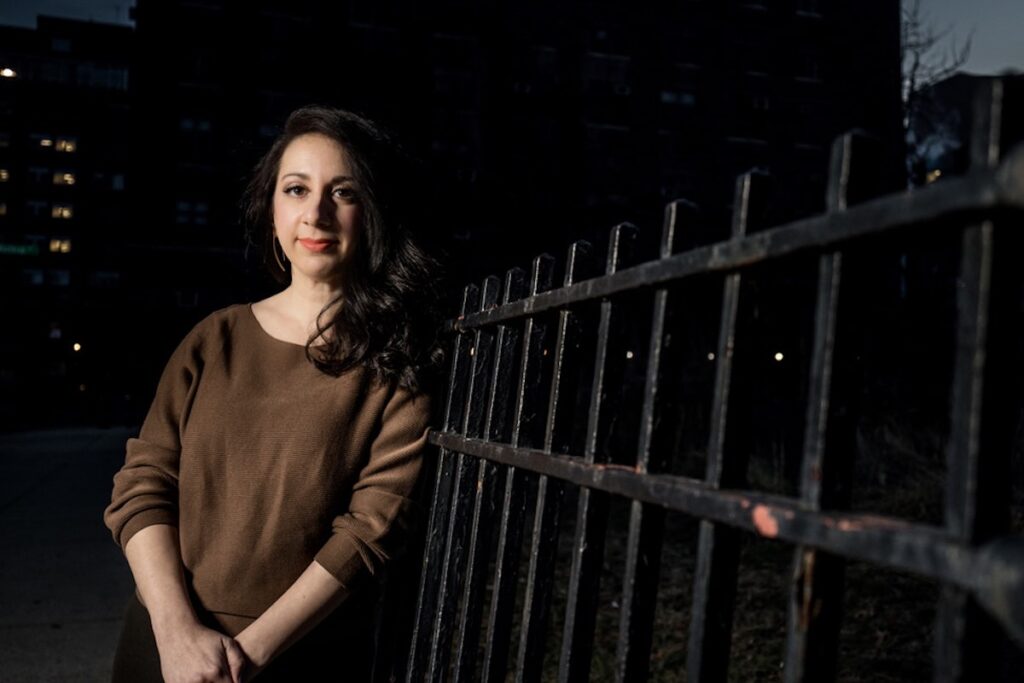
If there’s any critique of “Bad to Worse” and “Flight,” it’s that both movements follow the same established musical pattern of long drones that are increasingly layered until the container can no longer hold its contents — but the text is really the point here. The otherworldly sea of building, electronic static-noise that ends “Bad to Worse” is also exciting enough to immediately forgive any formulaic repetition.
The final movement, “An Open Fist,” crescendoes from drone into a louder section that would almost groove if it wasn’t so noisy — a drumbeat stops and restarts while the rest of the ensemble builds an incessant wall of dissonance. As the music decays, Malid says, “If I do this with my hands, if I make a fist, I can never see something. If I open it, I can definitely see it. If we close our heart like a fist, it will be closed completely. If you open it, you might find something interesting.”
Paper Pianos is not just a piece of concert music — it’s a multidisciplinary project that blends documentary research with theater and composition. Kouyoumdjian has carefully written the music to interact with the recorded voices without ever interfering or commenting on the subject matter. The music is truly in service to the narrative, emphasizing what we are already being told. By giving space for people to tell their stories, the music fills in the gaps to illustrate what can sometimes be too hard to say.
I CARE IF YOU LISTEN is an editorially-independent program of the American Composers Forum, and is made possible thanks to generous donor and institutional support. You can support the work of ICIYL with a tax-deductible gift to ACF. For more on ACF, visit composersforum.org.