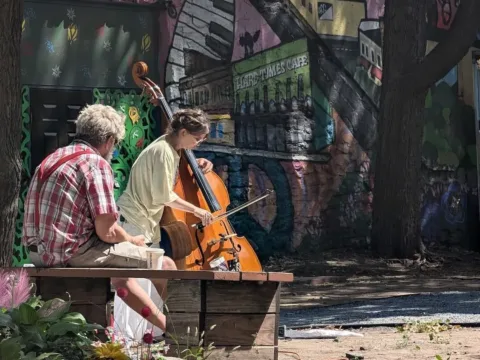
The lights don’t dim at Arts on Lafond. They’re simply on, whether the audience is arriving or the performance is beginning. There’s no amplification. There are no frills, just an intimate setting where performers sit ten feet from rows of pews.
Scrappiness is not often a quality that garners praise in classical music. It should be. Its virtue is displayed by the Vanguard New Music Series, which has been housed at Arts on Lafond in St. Paul since 2022. Its Nov. 19 season finale featured a smartly constructed program from the Mill City String Quartet, which featured four Minnesota-based composers and a pair of world premieres.
The ensemble opened with Libby Larsen’s Sorrow Song and Jubilee (2014), a short dumka based around “Swing Low Sweet Chariot” and “Going Home.” The prolific composer originally wrote it for the Apollo Chamber Players as a tribute to the partnership between Antonín Dvořák and Henry Thacker Burleigh during the former’s years in the United States.
Violinists Huldah Niles and Erika Hoogeveen, violist Coca Bochonko, and cellist Rebeccah Parker Downs brought vibrant emotion to the reimagining of familiar spirituals. The introspective program wasn’t engineered as a showcase of technical prowess, but a series of songs striving for emotional purchase. Larsen’s mournful prayer was a fitting introduction to the three longer works, not only because the composers come from subsequent generations of Minnesotan composers, but because of their desire to look inward through varying degrees of collage.
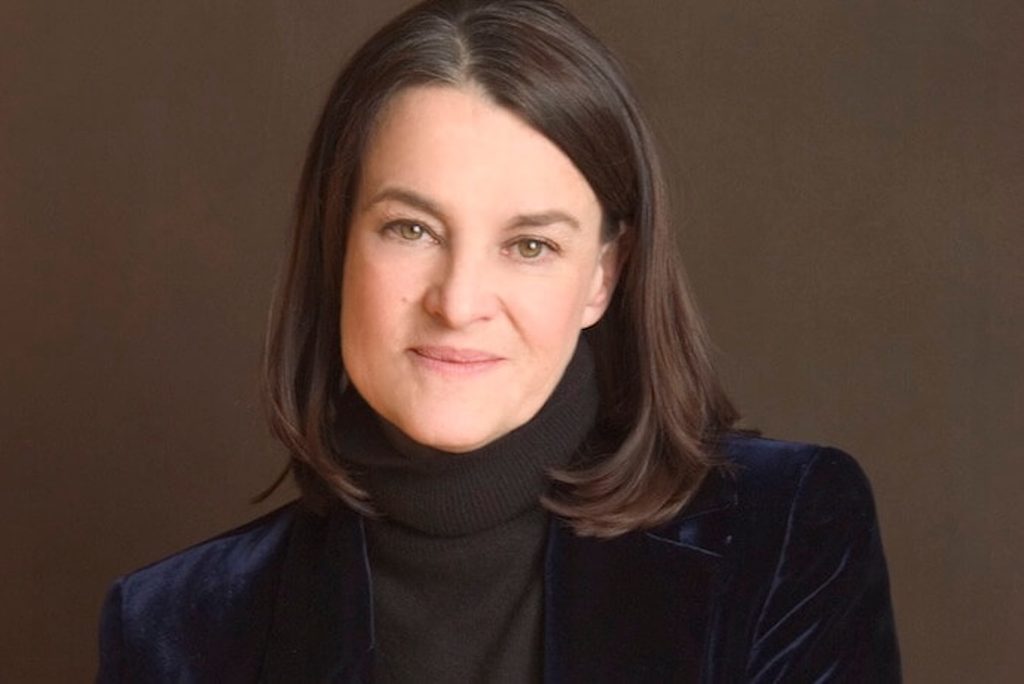
The premiere of Elizabeth King’s Si je dois rester la meme (chanson sans paroles) (2025) was driven by themes composed over the span of a decade — a surprising note, as they felt like they were cut from the same cloth in Mill City’s buoyant performance. Light strains swam above the piece with the assertive aura and confidence of a pop melody. Those euphonic phrases stood out against the background, drawing a throughline that evoked a journey from joy to despair and back again. Yet, while its emotional evolution drew from a complex place, passages felt airy, as though the tumultuous sea of longing it hinted at had been forgotten.
Isaac Mayhew’s Music for the Ending of a Season (2026) shared thematic resonances — it was also composed in part with melodies written years earlier — but it was a stark tonal contrast. The piece sought to exist in the in-between space created by the end of one thing and the start of another — both a season of music and the shift from fall to winter, in Mayhew’s explanation. Following an atmospheric introduction, Parker Downs’ cello took the lead in a burly, driving melody dotted with silences. This quickly became conversational as the violins and viola jumped through the hoops of the negative space before all four voices merged into exclamatory staccato bursts.
With Mill City’s delicate attention to texture, the liminal space suggested by the title emerged. The ensemble found energy in moments of stillness and made pizzicato passages feel ponderous, a dense forest of calm in the stillness between seasons where ideas can flit back and forth until they take root.

That textural dynamism felt central to Mill City’s performance both in Mayhew’s work and in Jonathan Posthuma’s String Quartet No. 1 “Going-to-the-Sun” (2019), a piece this quartet debuted in 2022. It echoed the discordance and pensive energy of Music for the Ending of a Season, but also found a darker longing in its focus.
“Going-to-the-Sun” was inspired by the composer’s visit to Glacier National Park. Each of its movements centers a different element of its landscape: Geological space (I. Rising Ridges), the melting glaciers (II. Vanishing Glaciers), and the journey of water from glacier to ocean (III. Rushing Falls).
Again, Mill City shone in its attention to texture, something paramount to the piece with its ascending, precarious runs up a craggy mountainside in the first movement. That climb to the summit spun around in the second movement in mournful glissandos and squeals that sat under the pizzicatto drops of water and dissonances that suggested something is not the way it should be. The drip turned to rolling torrents, building momentum and volume in the third movement as the water rushed toward the ocean. There’s a thematic echo at play, as this too feels like an in-between space, somewhere between the cycles of nature and the disruption of humans.
Throughout, the Mill City String Quartet kept tension and emotion top of mind, creating a sustained resonance across the program. It was not their playing that brought scrappiness to mind, but the thoughtful programming from the ensemble and the series. Before the show began, Aaron Kerr, chairperson of the Vanguard New Music Series Advisory Council, told the audience that the series was aiming to raise $2,500 in November. That would be the foundation for its 2027 season. Vanguard is a series that forgoes the frills, but has a clear vision of what it values most: Considered programmatic decisions and holding space for local composers to be heard and take chances.
I CARE IF YOU LISTEN is an editorially-independent program of the American Composers Forum, and is made possible thanks to generous donor and institutional support. You can support the work of ICIYL with a tax-deductible gift to ACF. For more on ACF, visit composersforum.org.