Like any living art, contemporary classical music is in a constant state of flux. Aesthetic tides rise and fall, key players come and go, and as our world transforms, so does the art that we create — which makes it remarkable that the New York-based contemporary chamber quartet Yarn/Wire is celebrating 20 years this season. With a winning combination of grit, flexibility, and seemingly unending artistic renewal, Yarn/Wire has staked out a formidable place for themselves in our everchanging world.
The hundreds of new works Yarn/Wire has commissioned to date challenge audiences to rethink what it means to make music and what it means to truly listen. Fortunately, they have a knack for presenting each piece with a disarming openness and enthusiasm, an approach that has led to memorable experiences for audiences and the quartet alike.
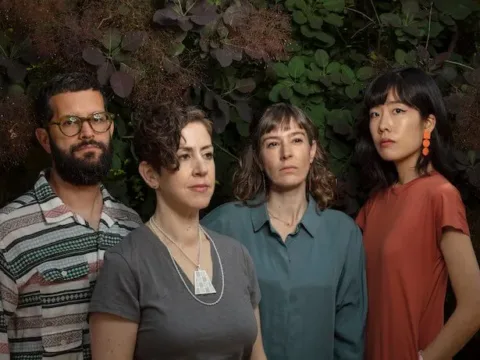
Yarn/Wire’s central mission and unique instrumentation of two percussionists and two pianists have remained steady through personnel changes, which is a further testament to the strength of their guiding ethos. The quartet’s current members are percussionists Russell Greenberg and Sae Hashimoto, and pianists Laura Barger and Julia Den Boer. The ensemble was founded by Greenberg, Barger, Ian Antonio (percussion), and Daniel Schlosberg (piano), and additional alumni include pianists Ning Yu and Jacob Rhodebeck.
I recently sat down with Greenberg, Barger, and Den Boer to discuss the quartet’s rich history, ongoing initiatives, and what their next chapter might hold. As for the secret to sustaining a self-directed ensemble for 20 years? Greenberg says it all boils down to keeping lines of communication open and cultivating an awareness of individual needs. “They’re very different now than they were when we were in school or freshly out of school. It’s so important to match up the realities of living in New York with regard to budget and sustainability. It’s really important to stay in touch and talk about it.”
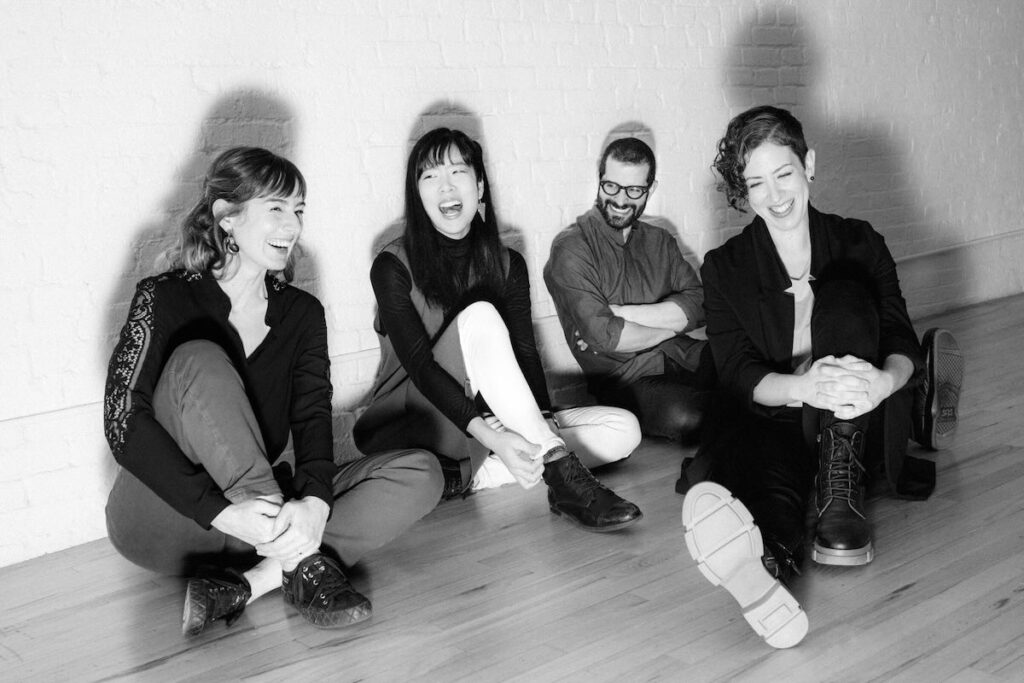
Yarn/Wire formed in 2005 at Stony Brook University for the purpose of performing a recital featuring the “greatest hits” of contemporary repertoire written for this unusual ensemble; Berio’s Linea, Crumb’s Makrokosmos III: Music for a Summer Evening, and a slew of logistically and sonically demanding works originating from IRCAM were constant companions in Yarn/Wire’s earliest days.
It didn’t take long for the ensemble to exhaust the available repertoire and turn to the composers around them to collaborate on a much larger project: expanding the body of works for this distinctive instrumentation. “Particularly when you’re a percussionist, the people knocking on your practice room door are composers,” Greenberg said. “We just started asking people for pieces, and that’s how the commissioning started.”
True to the frugal demands of grad student life, some of the quartet’s first commissions were created in exchange for a six-pack of beer or pizza. But as the quartet saw more success each year, their commissioning efforts (and offerings) also grew. “We’ve been able to come back to people who wrote for us in the very early days,” Barger said. “It shows their evolution as well as ours.” As a result of this commitment to sustaining creative relationships, composers such as Alex Mincek, Andrew McIntosh, and Simon Steen-Andersen have been able to explore different ideas at different points in time while becoming part of Yarn/Wire’s rich history.
This investment in relationship-building extends to Yarn/Wire’s audiences, too. Before a performance of a challenging work by Klaus Lang at a community college in Wyoming, the quartet encouraged the audience to completely open themselves up to the experience. Barger recalls introducing the work by saying, “This is a long piece, so it’s okay if your mind wanders. It’s okay if you come in and out of it.” She continued, “Without telling them what to feel, we just conveyed what the composer was interested in.” When people encounter complex contemporary music for the first time, it is this openness that creates space for an authentic experience with the music, which ideally leads people to even explore further.
Yarn/Wire’s enthusiasm for introducing audiences to contemporary classical music is matched by their dedication to supporting living composers. While artists-in-residence at ISSUE Project Room in 2013, the quartet reached a turning point that was instrumental in expanding their roster of collaborators. “We started thinking beyond our school ties, necessarily” Barger said. “We [went] a little further outside our circle and ended up with a lot of really different pieces.”
This led to the creation of Yarn/Wire’s international commissioning series, Currents, which serves as a self-proclaimed “incubator for experimentation.” To date, there are 10 self-released Currents albums featuring works by over two dozen composers including Jessie Cox, Alvin Lucier, Sarah Hennies, David Bird, and Victoria Cheah, among others.
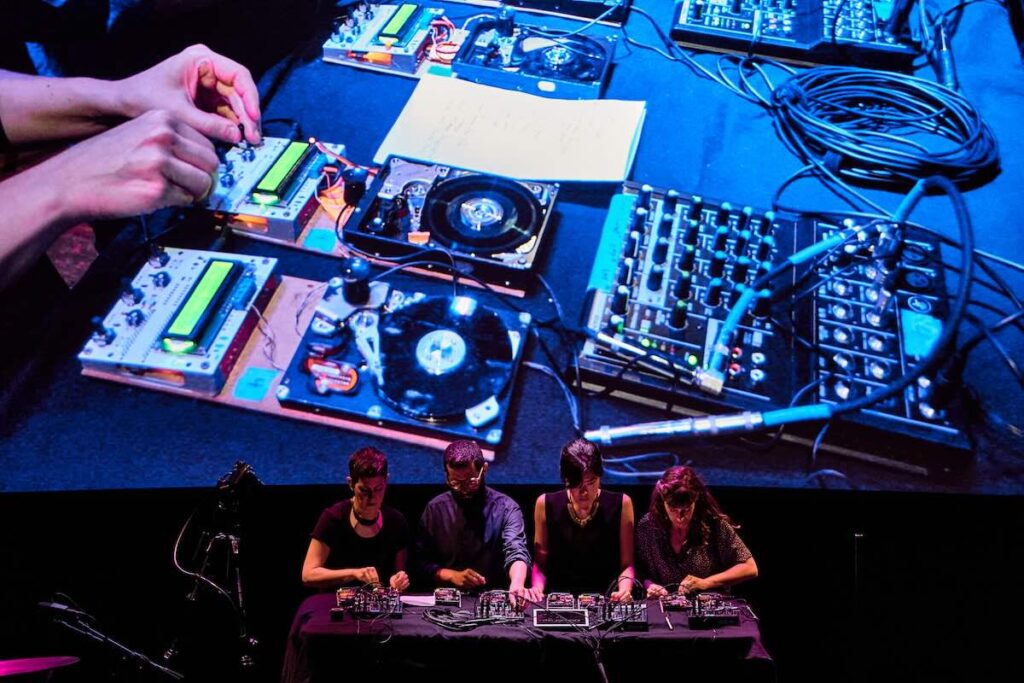
Equally interested in supporting student and early-career composers, the Yarn/Wire International Institute: Creative Studio has served as an “incubator for new sonic collaborations” since 2016. The Institute is hosted both virtually and in-person at Yarn/Wire’s studio in Ridgewood, Queens and has supported the development of nearly 200 composers and performers.
Yarn/Wire has a jam-packed season to celebrate their 20-year tenure. Highlights include the 20th Anniversary Pop-Up Festival at Miller Theatre at Columbia University (Oct. 27–29), where the quartet will present works by Craig Taborn, Zeena Parkins, Sam Pluta, Enno Poppe, Tyshawn Sorey, and Mei-Fang Lin, whose Yarny/Wiry was the first piece ever written for the ensemble. They will also present two Composer Portrait concerts at Miller Theater: Anthony Cheung (Nov. 13) and Andrew McIntosh (Feb. 5).
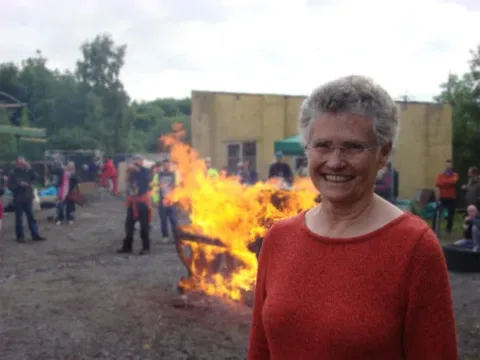
At Harvard University’s Fromm Players Concert curated by Claire Chase (Nov. 6), they will perform Annea Lockwood’s Into the Vanishing Point. “Working with the four beautiful musicians of Yarn/Wire is exhilarating — a fast ride with four brilliant minds and deep experience,” Lockwood says. “I love the way they listen: their sound is fully alive, detailed, and beautifully shaped. Ideas that might be only a couple of sounds or words blossom into gorgeous sound structures in no time, a whole piece coming into view, as with Into the Vanishing Point. Co-composing that work with them, hearing it shift and change, even now, is pure joy — a gift.”
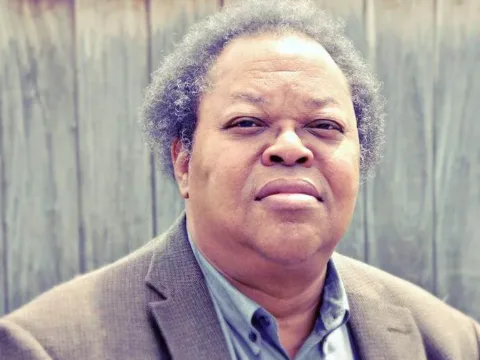
Today, Yarn/Wire is still finding new directions to explore in the evolution of their craft. “Over the last 20 years, we’ve moved from a more repertoire-based mission to one that is more collaborative and transdisciplinary in nature,” Greenberg said. That initiative has led to their upcoming debut with the New York Philharmonic at David Geffen Hall at Lincoln Center (Apr. 8-10), which will feature the premiere of a new work by George Lewis commissioned by the orchestra.
“I’ve known Yarn/Wire for over a decade, and I am, like Venus Williams at age 17 at the US Open, super-stoked about my work with this new music superquartet on my April 2026 New York Philharmonic concerto grosso,” Lewis shared. “Their unmatched, insightful virtuosity and post-genre, creolized perspicacity continues to inspire as we try to present new experiences and ways of being and doing.
Alongside Yarn/Wire’s dedication to serving the needs of their members, their collaborators, and their community, the spirit of innovation remains stronger than ever. Thinking about the quartet’s next chapter, Den Boer said, “I’m looking forward to seeing how we can remain curious, keep pushing our limits, and to see how we can just keep playing better together.”
I CARE IF YOU LISTEN is an editorially-independent program of the American Composers Forum, and is made possible thanks to generous donor and institutional support. Opinions expressed are solely those of the author and may not represent the views of ICIYL or ACF.
You can support the work of ICIYL with a tax-deductible gift to ACF. For more on ACF, visit composersforum.org.