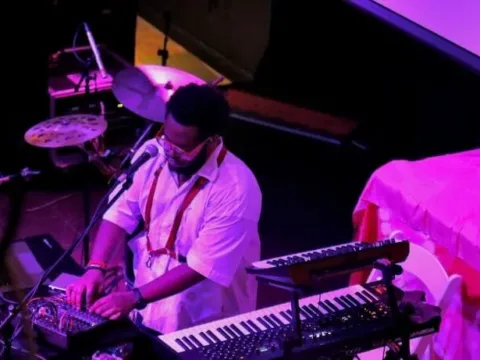
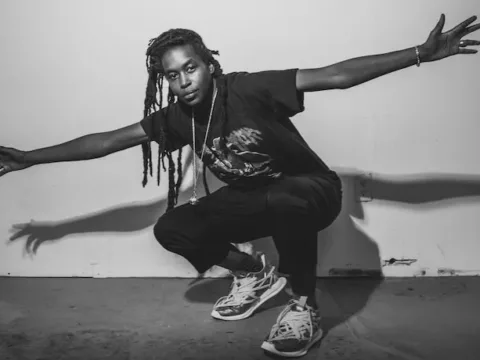
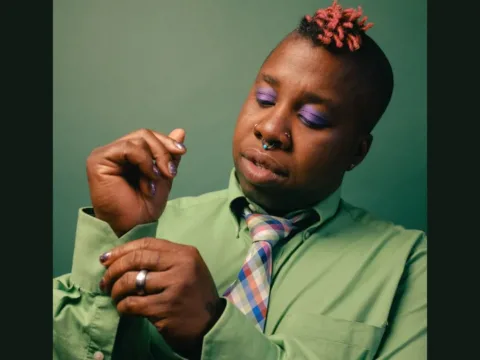
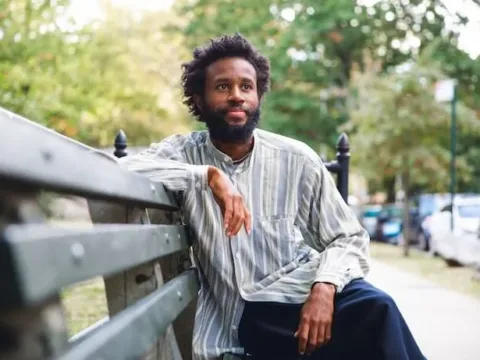
Talk Low Festival returned for a second year Sep. 26–29 in Cincinnati, Ohio — and thank goodness. While the first year was full of inspired performances and public activities related to deep listening and ambient sound, this year presented a more cohesive and focused line up: less to do with stylistic commonality than a shared understanding of the turbulent, horrific, infuriating times in which we live. Talk Low 2025 was a stunning exploration of sonic embodiment and experience; of being conscious in community; and of making physical spaces your own. If that was the intention of Talk Low’s executive director Ryan Hall, he succeeded. If not, he achieved it anyway.
This year’s festival was focused in the downtown entertainment and business districts, and day one brought us to the Contemporary Arts Center, the institution charged with obscenity in 1990 due to a Richard Mapplethorpe exhibit. Fritz Pape was the evening’s triple bill opener and set a beautiful tone for the rest of the festival. Through a long-form composition featuring guitar and synth, Pape gently and steadily layered aquatic and arboreal articulations, expanding to include white noise and organ-esque sounds. Near the end, he handed out chimes to specific audience members and created an organized call-and-response before gradually deconstructing his soundscape until all that was left were the chimes.
White Boy Scream aka Micaela Tobin took us on an episodic journey characterized by primal, distorted screams, vocal expressions of pain, and rapid rhythmic sounds. With verses like “I am reborn” and “We have been taught to erase ourselves, over and over,” there was an urgency that emerged, not only in the need for ferocious vocal exclamations, but also as a way to break free from the very confines with which she expressed herself. The alteration/transformation of the voice became a core theme, evident in one moment where she placed a small mic inside her mouth, creating a satisfying digitized timbre that felt cosmic and interplanetary.
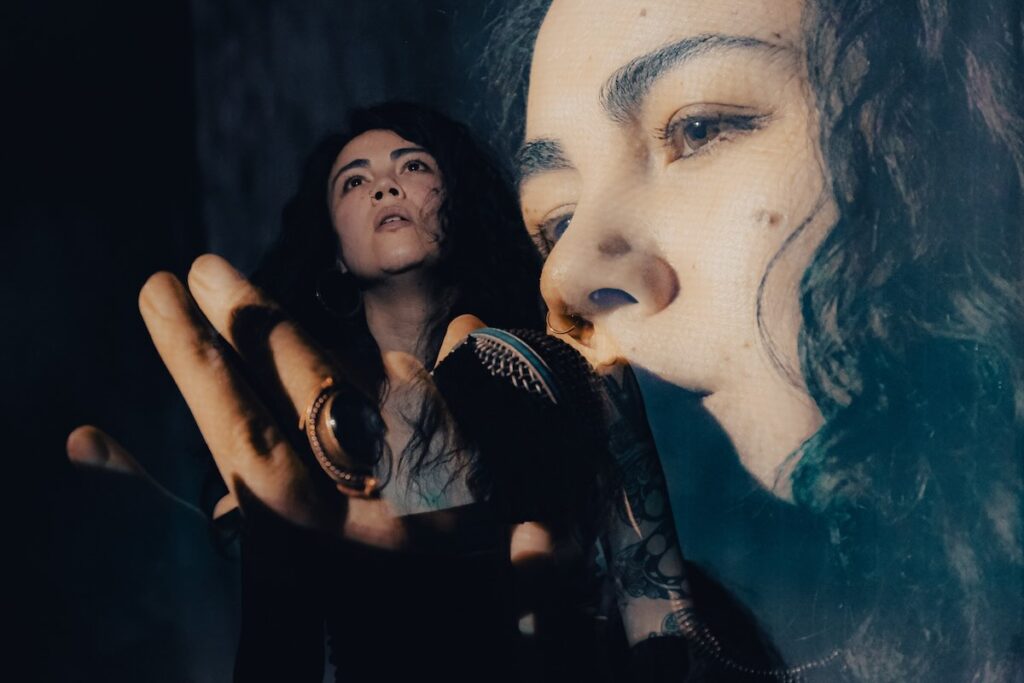
Cole Pulice closed the night and requested a moment of silence for Assata Shakur, a reminder that even in this particular space, we were not disconnected from the world. Pulice’s set featured saxophone, digital instruments, guitar, and what appeared to be an electronic recorder, layering and looping passages that created a mesmerizing and ethereal timbre. In compositions like these, the start and decay of a note are as essential as the repetition of motives or flow of a musical line, which Pulice executed effectively.
Day two began with what I heard was an electrifying performance by Chris Corsano at Homemaker’s Bar that I unfortunately had to miss. By 4pm, I had made it to Christ Cathedral for JJJJJerome Ellis and Sarah Davachi. Before he played a note, Ellis listed the instruments that were on stage with him (saxophone, hammered dulcimer, piano) and described himself and what he was wearing, an intentional choice that eventually clicked for me on day three. Through a series of episodes, Ellis explored the sonic and tactile possibilities of the saxophone, the hammered dulcimer, and the piano, sometimes moving throughout the sanctuary and the balcony as he played and joined at one point by Molly Joyce.
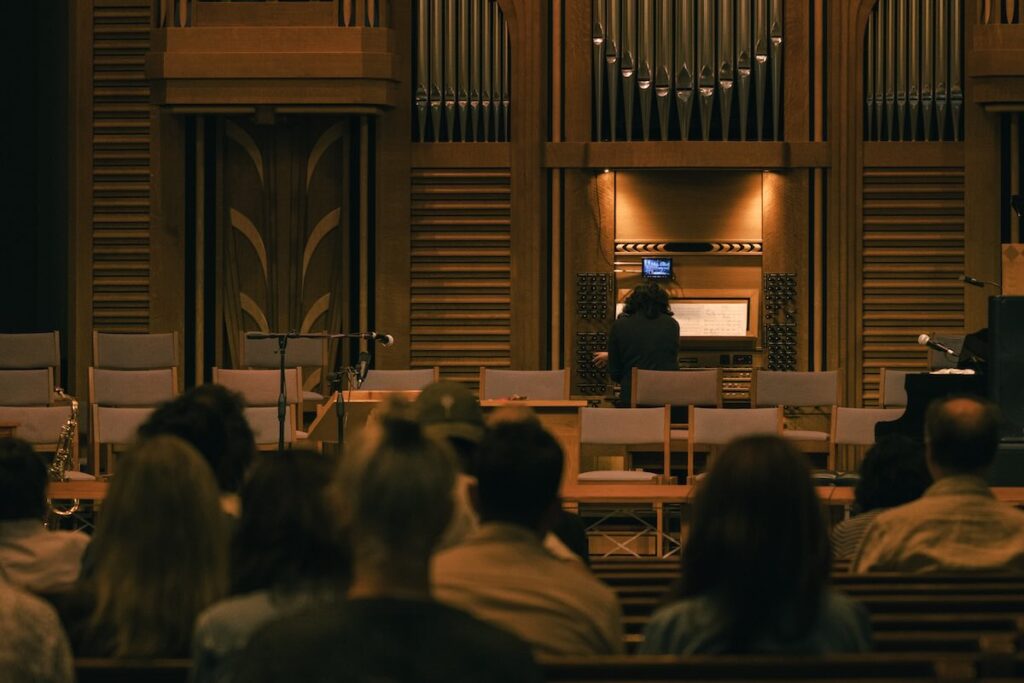
Sarah Davachi’s solo organ piece was performed on the church’s magnificent instrument. Similar to Pulice, Davachi was interested in movements within moments of (perceived) stasis. Through long, layered, sustained pitches, Davachi built a texture where sympathetic and overtone vibrations came to dominate the “set” pitches, though this changed when she introduced a new note, requiring us to reorient ourselves and see what would emerge next.
The evening performance featured another triple bill back at the Contemporary Arts Center. SHERMVN and Victoria Lekson regularly perform in the area as a duo, and their selected compositions highlighted their interest in collaborative improvisation. There were gorgeous moments of sonic alignment and conversation that spoke to their strengths as performers, composers, and improvisers — but technical issues that were eventually resolved in the middle of their set unfortunately prevented the duo from fully settling.
Joy Guidry started with a long-form work of white noise and feedback percolations, using her bassoon to improvise over or stitch into a soundscape that blossomed and transformed. In her second piece, her use of pre-recorded material gave me pause, as I recognized the familiar lilt and velvety candor of Toni Morrison.
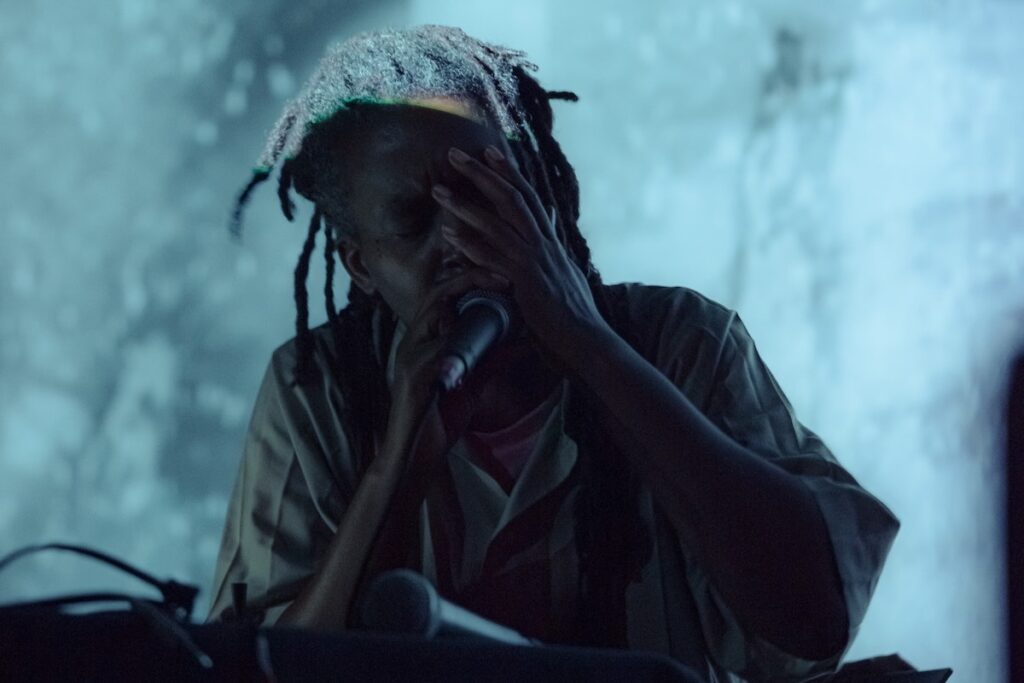
Moor Mother didn’t just recite, control the electronic layering, and sing — she embodied. It was clear in her halting, frightened expression of a Black person being shot by police (“don’t shoot,” “hands up”) and her incorporation of Nina Simone’s “Mississippi Goddamn.” That is to say, Moor Mother’s creative use of beats, rhythms, and lyrics was just part of what made her set electric. Like Guidry, her layering and use of sampling to transform reminded me of how important the technique of quotation is within Black music across style and genre. I was only scratching the surface in this exposure to Moor Mother’s work.
On day three, Molly Joyce performed a stunning set at Memorial Hall that explored disability and ability through compositions that highlighted her mesmerizing vocals, distinct digital manipulations, and organ playing, with a guest appearance from Ellis. Her lyrics were projected on a screen, and during one music video with a narrator outlining what was happening visually, I realized that Ellis’ descriptions from day two were so that listeners, regardless of visual ability, could perceive and experience what was happening in the room.
An invigorating conversation about disability and creative practice followed, facilitated by Dr. Nathan Morehouse of University of Cincinnati’s IRiS institute. Listeners were then treated to performances by Jess Lamb and Friends and Siri Imani during the reception portion. This was the only moment of the entire festival where the sound engineering fell short; when Siri Imani joined Lamb and her band, it was almost impossible to hear her, which was a shame, as she’s one of the premier wordsmiths and rappers in the area.
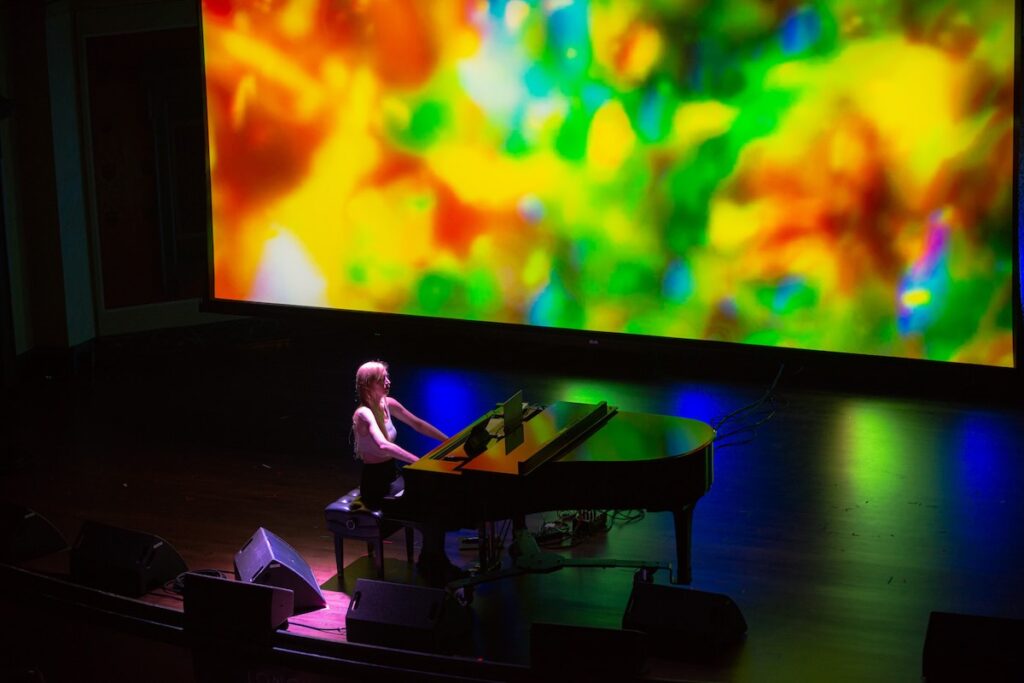
In the main hall we were treated to the final performances by Kelly Moran, the Cincinnati fixture WHY?, featuring concertnova, and the experimental rap group clipping. Like the performances in CAC-Black Box, Moran’s set featured projections as she performed her original compositions on piano. However, while the images at the CAC-Black Box, provided by Fuse-Box’s Andrew Au and Jennifer Purdum, enhanced the music, I found Moran’s images more distracting than complimentary; the visuals featured a dynamic variation in color, texture, and shape that weren’t often evidenced in the piano’s sustained chords and beautiful, repetitive motives. Her final piece, a performance of Ryuichi Sakamoto’s Merry Christmas, Mr. Lawrence, featured a subtlety and nuance that I found missing in her performances of her own works.
WHY? performed a set that highlighted the tightness of the ensemble, which consists of vocals, guitar, piano, drum kit, and double bass. The lead singer/rapper, Yoni Wolf, is a skilled songwriter, imbuing his disinterested white guy vocal style with an emotional perceptiveness that stops it from becoming cloyingly sardonic. In the second half of their set, WHY? was joined by members of concertnova, conducted by Ömer Aziz Kayhan, and the addition of woodwinds and strings with WHY?’s instrumentation created a lush soundscape and interesting timbral interplay.
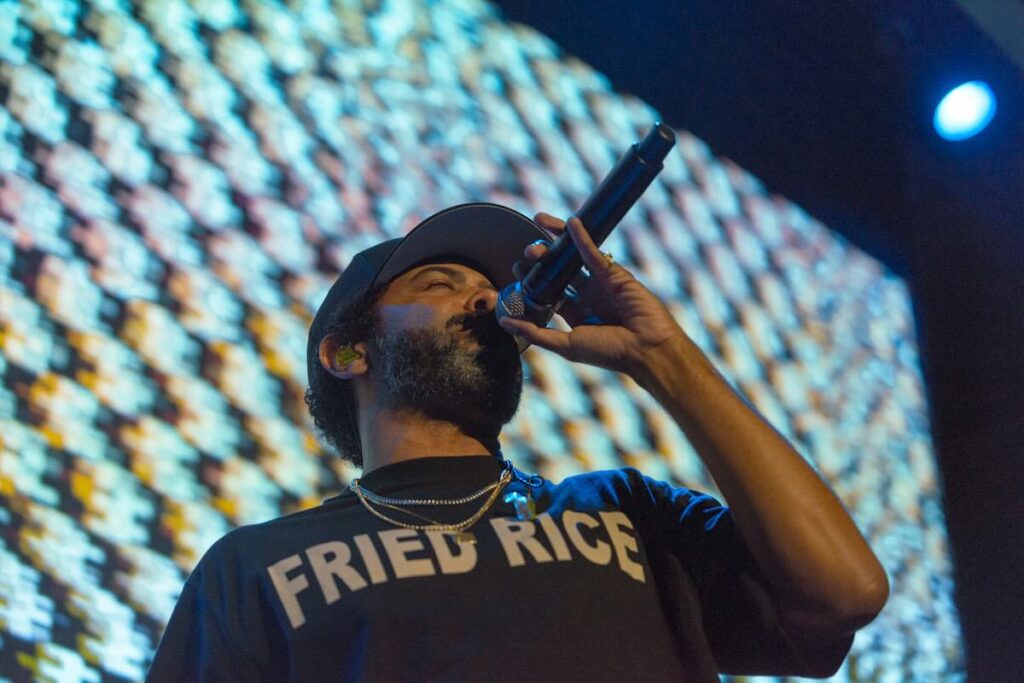
clipping., the experimental rap group of Daveed Diggs, William Hutson, and Jonathan Snipes, closed out the night and kept us in the hall until midnight (it was supposed to end at 11pm!). They were joined by their frequent collaborator, composer-vocalist Sharon Udoh, who performed stunning vocal passages and piano accompaniment that engaged directly with the trio’s inventive rhythmic interplay and declamatory virtuosity.
It made me wish we could transport ourselves to a venue where the small group of listeners that gathered at the edge of the stage, heads and bodies bopping, could mosh appropriately. Diggs quickly perceived that this was not an audience keen on the etiquette of a hip-hop show, but we learned to constantly and consistently express our joy for the performers’ stunning musicianship because what else was there to do??
On Monday, concertnova presented a postlude to Talk Low 2025 with a performance of Borrowed Landscape by Dai Fujikura. Described by Fujikura as a “narratorio,” the work called for four narrators, violin, piano, and double bass, exploring the literal and spiritual resilience of musical instruments and what they carry on from those that owned them and performed on them. One instrument referenced is a piano made by the Baldwin Company, based in Cincinnati, that was played by a young woman named Akiko Kawamoto, and carried with her family to Hiroshima when they relocated there in the 1940s. The piano survived the bombing; Akiko did not.
The subject matter was engaging, bittersweet, and effectively connected individuals’ experiences in Poland, the United States, and Japan in WWII. But I felt a disconnect between the musical portions and the narration, as they tended to occur separately instead of together. There was one moment where violinist Anna Reider continued to play during TaShauna Jenkins’ monologue, a choice I wished was more frequent throughout the piece.
Ryan Hall shared the following mantra each day: “Fuck ICE; protect our trans community; and Free Palestine.” In a time when it’s easy to say nothing or obfuscate to avoid consequences and discrimination, Talk Low Festival 2025 had something to say. That queer and trans people are part of our history, culture, and society; that the safety of one person cannot be at the expense of another; and that if they come for one person, they come for all of us. Granted, this was said in a space where everyone agreed, or at least was considerate enough to not say otherwise. But that such spaces exist in this city, in this era, is important.
I CARE IF YOU LISTEN is an editorially-independent program of the American Composers Forum, and is made possible thanks to generous donor and institutional support. Opinions expressed are solely those of the author and may not represent the views of ICIYL or ACF.
You can support the work of ICIYL with a tax-deductible gift to ACF. For more on ACF, visit composersforum.org.