In a time with so much uncertainty, how do we determine what is essential? Is it only our basic human needs like food, shelter, or healthcare, or is it the things that seem like luxuries, but are growing increasingly important like connection, community, and equitable access to the arts?
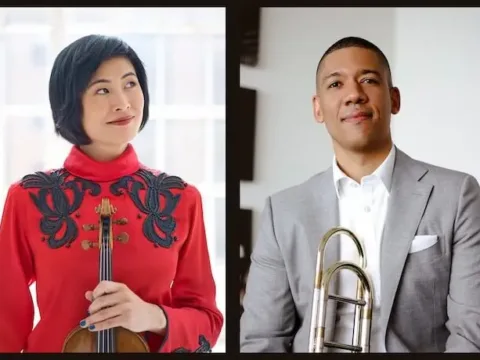
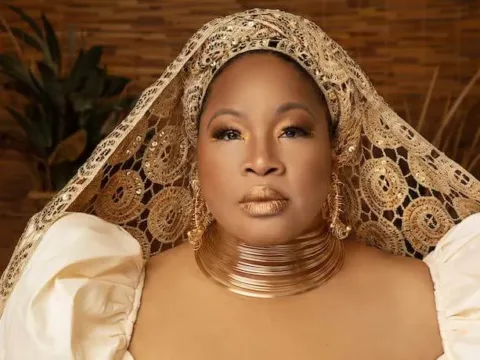
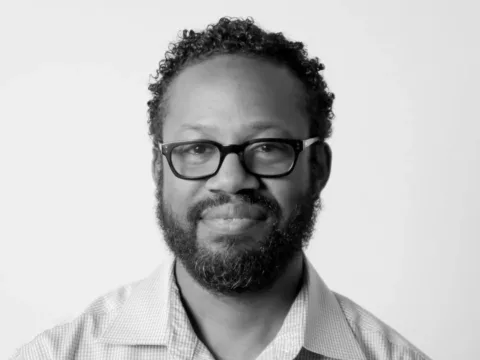
Humanity’s Essential Gems, a new work by composer James Lee III, seeks to provide clarity for this question. Lee weaves a love for history and his faith into his dynamic and captivating works. Well-versed across multiple classical music genres, his catalog of over 80 works has placed him in high demand for collaborations with ensembles and organizations across the world. Through these collaborations, Lee has maintained a theme of working with Black classical musicians including Anthony McGill, Jonathan Heyward, and Karen Slack. This, in combination with using his craft to tell powerful stories, amplifies the poignancy of his work.
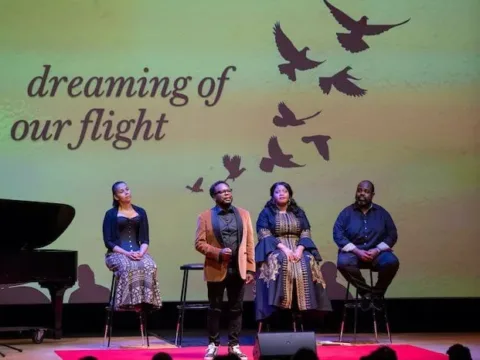
For his latest commission, Lee was approached by People’s Symphony Concerts (PSC), an organization dedicated to providing high caliber classical music performances to their patrons who are on a budget. PSC was originally hoping for an arrangement of Lee’s clarinet concerto for clarinet and string quartet to celebrate their 125th season, but instead, Lee proposed a new work that highlighted the beauty of attending PSC concerts. Anecdotes from audience members included words like “essential” and “gem;” people shared that PSC provides access to music they would not usually be exposed to, which inspired Lee’s creative process when writing Humanity’s Essential Gems.
On Dec. 7, the Isidore Quartet — a young ensemble with its roots at the Juilliard School — will collaborate with Anthony McGill, principal clarinetist of the New York Philharmonic, to bring this work to life. In anticipation of its premiere at The Town Hall in NYC, I wanted to learn more about Lee’s inspiration and process.
As an artist, where do you source your inspiration, and how do you work through the current social and political climate?
As an artist, I source my inspiration from various aspects of biblical imagery, history/historical figures, languages and different cultures. Despite what is happening in the current social and political climate, I choose to stay motivated and compose.
What do you think humanity’s essential gems are? Have you always felt this way, or have your feelings changed throughout your lifetime?
In the way I conceived the work and from what I read regarding various concert attendees’ responses regarding the programs, “humanity’s essential gems” are the concerts themselves. The concerts that are offered at a price that the public can afford are seen as essential to the cultural life of the community. In a broader sense, I consider “humanity’s essential gems” to be humanity itself. As a person of faith, the scriptures state that we are made in God’s image and the command us to “love our neighbor as ourself.” Therefore, considering humanity as our brother or sister informs how I/we treat and respect them. I have always felt that everyone is entitled to be respected, loved, and be in good health, regardless of ethnicity or nationality.
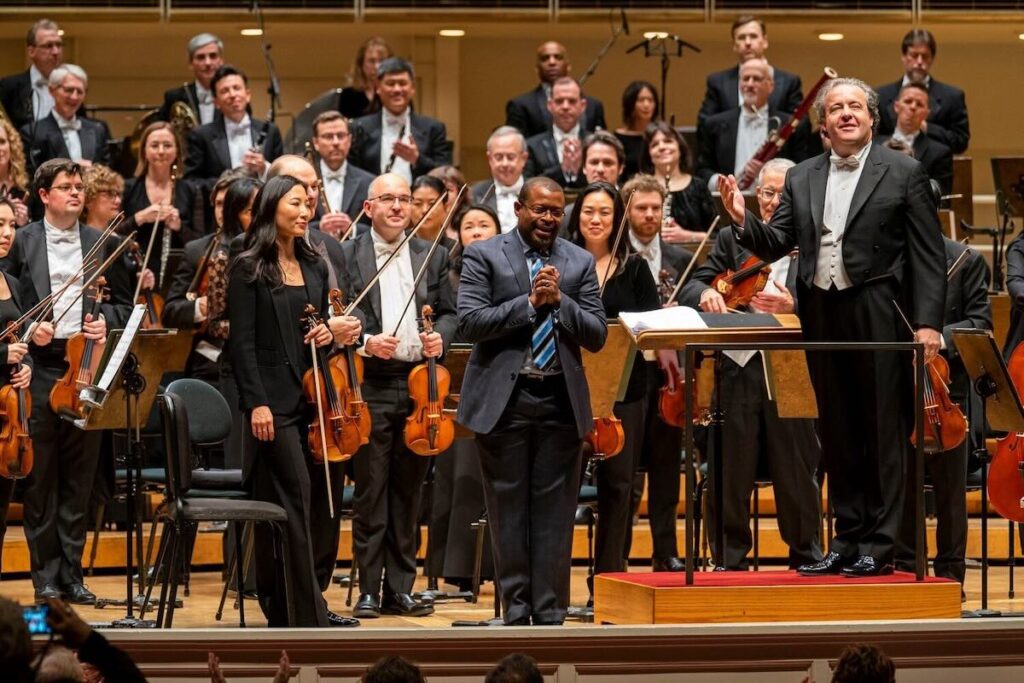
Can you speak more about your compositional process and why it would have been impractical to arrange your clarinet concerto for clarinet and string quartet?
As a person of faith, I usually pray for inspiration before I start composing. During the initial process of a new piece, I plan the form and when various musical events will unfold. Then I think more about harmony and derive various melodies from those harmonies. My music also tends to have a narrative quality. When I compose a concerto for solo instrument and orchestra, the orchestra does not simply serve as an accompanist to the soloist, but an integral partner. It would have been impractical to arrange my clarinet concerto for clarinet and string quartet because at times, the orchestration has dense textures.
In what ways do the musics of your faith inform your art?
On numerous occasions, it has been more that a biblical text has been the inspiration of my art especially earlier in my career. The music of my faith has been a part of my life more during an actual worship service and not necessarily as part of my own compositions, which tend to have a different harmonic language. It is more of the biblical imagery of books of Daniel and Revelation that inform my art when I seek to communicate certain ideas and concepts from those books into music.
Your resume highlights collaborations with leading institutions in our field. What advice do you have for composers or artists who also dream of this level of success and affirmation?
I would encourage young composers to continue to listen to a lot of music, especially classical art music, and become familiar with the composers and their style. As young or up-and-coming composers continue to write music and develop their own voice/style, I believe it is very important to network with many conductors and artists to obtain opportunities to have their music performed and recorded. I would also like to encourage composers to as much as possible, compose music on subject matters for which they are really convicted (for which they really believe in) because it is in those moments that the inner depth and beauty of their musical voice will most likely emerge.
I CARE IF YOU LISTEN is an editorially-independent program of the American Composers Forum, and is made possible thanks to generous donor and institutional support. Opinions expressed are solely those of the author and may not represent the views of ICIYL or ACF.
You can support the work of ICIYL with a tax-deductible gift to ACF. For more on ACF, visit composersforum.org.