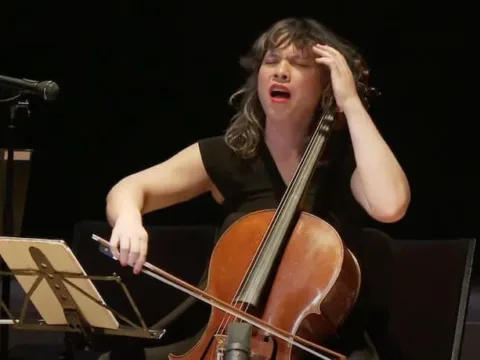
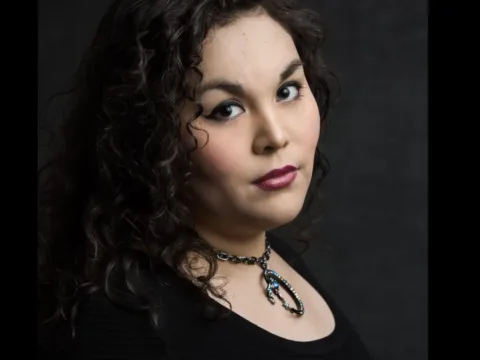
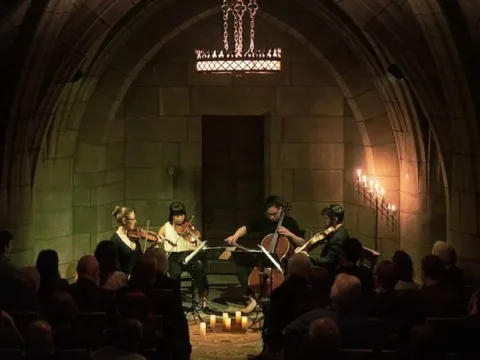
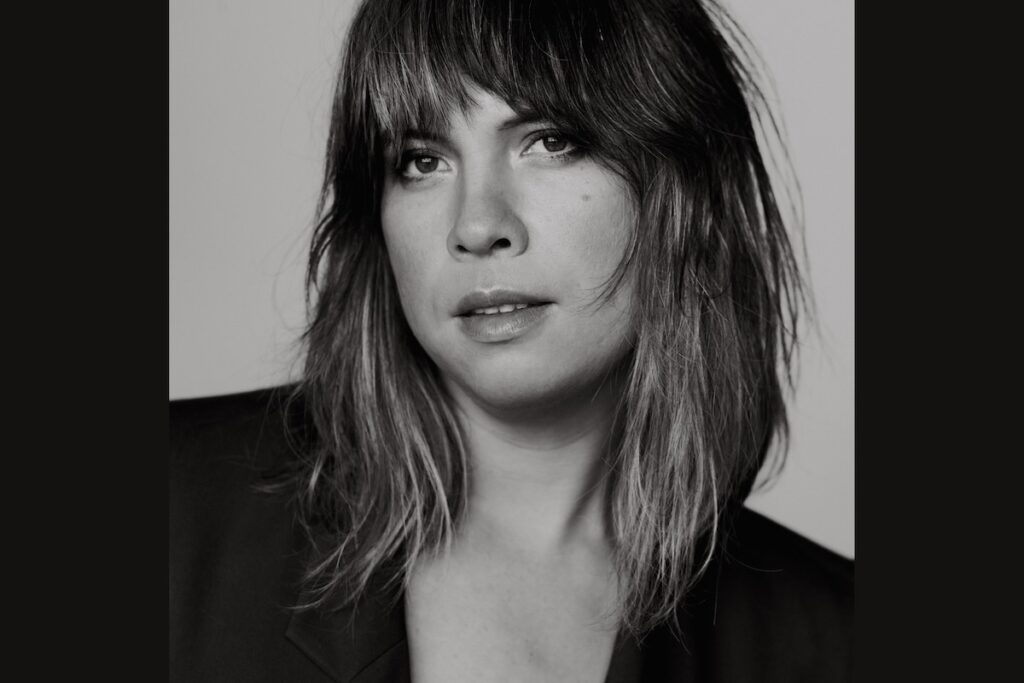
Andrew Yee, a multi-hyphenate new music powerhouse, continues to build an oeuvre that spans composition, performance, videography, visual art, beverage programming, and more. With collaborative roles including founding cellist of the acclaimed Attacca Quartet and duo partner to Caroline Shaw, she brings an arresting conviction to her endeavors, which carry a reverence for the body and for life.
Yee has tended the gardens of lineage and memory across projects like or, the Whale, an album crafted in collaboration with Shaw that features — among other rich references to previous works and landmarks — a rendition of “Louange à l’Éternité de Jésus” from Quatuor pour la fin du Temps. Attacca’s sharp take on the luscious Ravel string quartet is another example of bringing a novel exploration to an iconic work. But Yee also incorporates stories of fleeting, everyday moments into tender pieces like their solo composition, The Sea as it Is. Assembled, these touchpoints comprise a canon as capacious as it is focused.
That thread emerges strongly as ever in her newest composition, Trans Requiem, commissioned by Trinity Church NYC. Described as “musical testimony,” Trans Requiem premiered last September with a recording set to release on Jul. 17 under the New Amsterdam label. Yee’s penchant for combining voice and cello gets space to soar into Trinity Church’s lofted cathedral ceilings with the full power and drama of Trinity Choir flanking NOVUS, the church’s new music orchestra. Yet her writing pares back to solo cello pizzicato accompanying spoken and sung vocals with dexterous ease. It’s with the same sensitivity to scale that she weaves liturgical text with poetry and personal stories, speaking remembrances into the realm of the sacred.
We asked Andrew about their practice, lessons from collaboration, and the best meal to gather around.
I love the thread of cycles and repetition in your work. What draws you to memory and history?
I think a return in music is one of the greatest gifts we can give first time listeners. There have been so many times I have been listening to something and it moved me beyond words, and when I re-listened, the theme was played right in the beginning.
In terms of memory and history, I am in this place in my career where I am no longer young, or getting very old, so I am seeing voices emerging and voices being forgotten. I definitely see myself as a chain on a historical thread of music, and with the Trans Requiem, I am happy to shine light on something that people 40 years ago probably couldn’t have done on such a big scale.
Collaborations abound in your work — what makes a collaboration successful for you? Do you have a different approach or set of expectations depending on the context (duo, string quartet, etc.)?
I love working with other people. I think the only reason I can be a composer is that I do most of my writing at home while my wife is in the other room. I love the process of bouncing ideas off of people, of making them laugh with a musical gesture. I think what is most special about music is that when we perform, we all turn into creatures without spoken language. We all revert, or maybe better, level up into people who have to convey with their instincts.
Could you tell us about the process of working on Trans Requiem? How did you decide on the requiem form, and what does it mean to you?
It is an unsettling time to be trans right now, especially in the U.S. The past 10 years have been a lot to handle, and when Trump was elected this past time, I found myself pretty despondent. I kept on seeing people say things like, “Don’t get sad, make art! Protest!”…and I didn’t really feel like it for a few months. It wasn’t until I was playing a concert of a Massenet mass that I realized a requiem was a perfect vehicle for my grief and anxiety. The bones of everything were laid out for me already. I spent some time steeped in the requiem texts and found the ones that spoke to me. I ended up writing companion pieces to a few of the movements, and decided (with the exception of “Death Before Detransition,” which was written by the brilliant poet Jennifer Espinoza) to write my own lyrics, some of which were stories from my own life.
When working with different source materials like poetry, personal stories, and liturgical text, how do you decide what to use, and how do these types of text interact with each other across your work?
About 10 years ago, I reconnected with my love of visual art and decided to dedicate myself to a new medium every few years. I started with charcoal because of its focus on value alone, and because of its relative malleability. When I started planning the Requiem, I treated each movement like the beginning sketches of a drawing. Write first, make adjustments later, try not to step on the toes of the inspiration.
I knew I wanted to tell stories from my life, stories of my friends, and stories of trans people I had never met, but only knew from their three-sentence Instagram obituaries. I knew how they all made me feel, and I tried my hardest to capture the feeling of the time as I was writing.
In addition to sound, you work with the sense of taste. In “Light” from Trans Requiem, your tribute to Cecilia Gentili highlights the simple and meaningful moments of love — mutual recognition, sharing a quiche. Do you have a go-to meal or beverage you like to share with others?
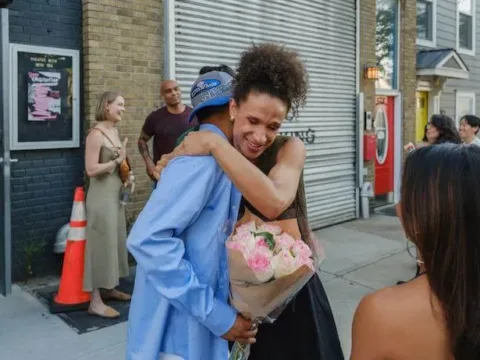
The story of Cecilia cooking quiche for me and my family was to highlight the kind of person she was. This visit to her house was just one of the first interactions we had, and she decided to welcome us with food, which is totally my love language. I think the same thing happens at a good meal that happens in a concert hall. Taking a first bite of a delicious piece of food at the same time as someone else is a transcendent act. Again, we are unable to communicate with language for a split second, and can only widen our eyes, clench our fists, and reach for each others hands.
I CARE IF YOU LISTEN is an editorially-independent program of the American Composers Forum, and is made possible thanks to generous donor and institutional support. You can support the work of ICIYL with a tax-deductible gift to ACF. For more on ACF, visit composersforum.org.