Money Matters is a NewMusicBox x I CARE IF YOU LISTEN collaboration, supported by New Music USA
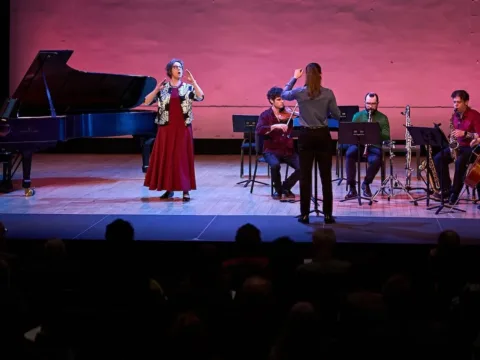
During my collegiate studies, the goal of my vocal arts degree program was unequivocally to prepare students for a solo career on the operatic and concert stage. If you weren’t “in front of the risers,” as one teacher put it, you wouldn’t make enough money to support yourself. But thanks to the protections offered by strong artist unions like SAG-AFTRA and the American Guild of Musical Artists (AGMA), I’m entering the second decade of a successful career as an ensemble vocalist in Los Angeles.
Between my union work with Los Angeles Master Chorale, LA Opera, and SAG-AFTRA, I make $50,000-90,000 of W2 income annually, supplemented by 1099 work as a freelance singer and arranger. I also currently serve as the LA Master Chorale’s union delegate, representing the shop of 100+ singers in negotiations and discussions with management every few years.
As someone whose career includes both union and freelance work, I’ve seen independent freelance artists struggle to research industry best practices through mentors, colleagues, and the internet. Professionally and personally, people suffer through mediocre, unfair, or legitimately abusive treatment and think it’s ‘normal’ because they don’t have much to compare their experience to. And in an industry that, in its darkest corners, finds itself still plagued with the toxic message of “you should be happy you’re being paid to do this at all,” I feel so fortunate that I had the protection of large union infrastructures at the start of my career as I was still establishing my idea of a good and sustainable ‘normal.’

Forming or joining a union may not make sense for every artist – your work may vary too much in its application, and you may prioritize flexibility of approach over contractual terms that often extend multiple years. Or you may never find yourself classified as an W2 employee, instead fully living the freelance life. However, I firmly believe that there are lessons to be learned from unions that can help us create more equitable work for all musicians across the industry.
The many artist unions in North America each have their own focus, and can be researched on AFL-CIO’s website. As a snapshot, AGMA represents 7,000 choristers, dancers, vocal soloists, narrators, and stage managers and is the governing union of 70+ choral, operatic, and dance ensembles across the U.S. The American Federation of Musicians (AFM) is the largest musician’s union in the world, and represents professional instrumental musicians playing in orchestras, bands, clubs, and theater in the U.S. and Canada. SAG-AFTRA’s 160,000 members range from actors and broadcasters to stunt performers and puppeteers, and the union’s contracts cover a wide gamut of media products: major motion pictures, sound recordings, variety shows, video games, student films, and more.
Admittedly, there are some things that only unions can provide. Their infrastructure is the unsung backbone behind the protections offered to artists and is hard to replicate with freelance contracts. With unions, if you have questions about protocol or if you feel you haven’t been paid for completed work, there are teams of representatives, legal counsel, and executives with the knowledge and authority to answer your questions, take a company to task for a violation, or make you whole.
Unions also have the resources to elevate their members’ work. An organization may be required to provide training to affiliated artists, and many SAG-AFTRA contracts now include “Diversity in Casting Provisions,” easing some financial restrictions for productions that employ women, seniors, people of color, and performers with disabilities. In an unstable artistic climate that has concentrated hiring power into fewer hands, institutional support like this can disrupt calcified gate-keeping and enable stellar performers to access some of the most lucrative work that may otherwise remain out of reach.

Some of these union protections would be difficult to replicate in a freelance contract. For example, there are sections of union contracts geared toward job security that provide sick days and health leave. Some artist unions even offer pensions or health insurance if you secure enough work “on the card,” and I’ve been on contracts with pre-tax retirement contributions in addition to regular wages. Other protections include a minimum number of engagements per musician per season, re-employment for a percentage of musicians on returning repertoire, and “Pay or Play” terms guaranteeing that one party will pay the other, even if they are released from contract and their services are not used.
However, many of the protections offered by collective bargaining agreements — protections that give me stability, job security, development resources, and clear pay expectations — could be applied to freelance contract negotiations. A collective bargaining agreement binds all involved parties; it articulates clear and mutually agreeable responsibilities, mitigating surprises that may arise for musicians and a company’s management alike. Negotiating committees sit down before contracts expire to craft language to update and refine these agreements for the next installment.
As a freelance artist, you can start with this foundation: unequivocally establish pay expectations and timetables in your contracts. Union contracts set bespoke minimum rates of pay for each signatory, covering rehearsals, performances, and recording sessions. Additional considerations can include wardrobe allowances for maintaining and replacing concert attire, pay bumps for performances that require additional instruments, gear, or choreography, and the right to access and distribute recordings of new works. Musicians who need to travel might benefit from reimbursements for transportation, lodging, or per diems in foreign countries. My colleagues that have spent months chasing down payments in the past have included firm pay-date language in subsequent contracts; your state and local jurisdiction may provide additional protections to ensure timely pay.
Beyond payment terms, ask for the protections you need to deliver your best work. Van Halen’s infamous “no brown M&Ms” clause in their rider was their built-in canary in the coal mine; if that silly but visually striking provision had been ignored, it signaled a lack of attention to their contract, and failure to adhere to their rider could cause serious harm to the band and their crew. There’s nothing silly about including safety provisions in your own contract, including language about everything from fog to lights, temperature, amplification, and hearing protection. In my time on contract, I’ve even seen clauses about guaranteed rest periods for performers within and between rehearsals; consider if you should include rest minimums so you can deliver the best performance possible, especially for taxing repertoire.

Individuals and ensembles alike can also explore professional development funding in their contracts. An opera company might cover registration fees for Opera America webinars, or a presenter focusing on site-specific performances could help artists attend a workshop for immersive creators. Upskilling like this can strengthen an organization and elevate a project with minimal upfront investment. Larger organizations may also provide resources normally inaccessible to individual artists, like access to archival materials or face-time with passionate donors.
For artists working in recorded media, getting even a small mechanical licensing or revenue-sharing agreement in writing can provide passive income and stability for the future.With over a decade of TV/film singing work under my belt, half of my W2 income comes in the form of SAG-AFTRA residuals: additional pay once a media product reaches secondary distribution markets (free/paid TV, digital streaming, DVD, etc.). A low-budget project might pay a performer a few cents every quarter, while a blockbuster with a small cast could pay $10k+ on the back end for a few days of recorded work. Even some of the more traditional classical organizations I perform with provide small upfront media fees to their artists for album and streaming releases, with sales thresholds for additional payments. An organization doesn’t have to be pulling down Marvel numbers to add a profit-sharing element into their media agreements.
As workers — as creators — free and open communication with each other is our biggest strength. Anyone can visit the SAG-AFTRA website and access their media contracts, complete with pay tables and bargained protections. And AGMA members have access to the collective bargaining agreements of all 70+ signatories, meaning I can benefit from cumulative centuries of negotiations to see what employees and employers alike agreed to as fair practices for disparate ensembles across the U.S. While there’s no composer’s union in the U.S., the Musicians Union in the UK has extensive resources available to the public: from their Musician’s Well-Being Guidance Pack to fee guidelines for commissioned work, arrangers, and copyists.
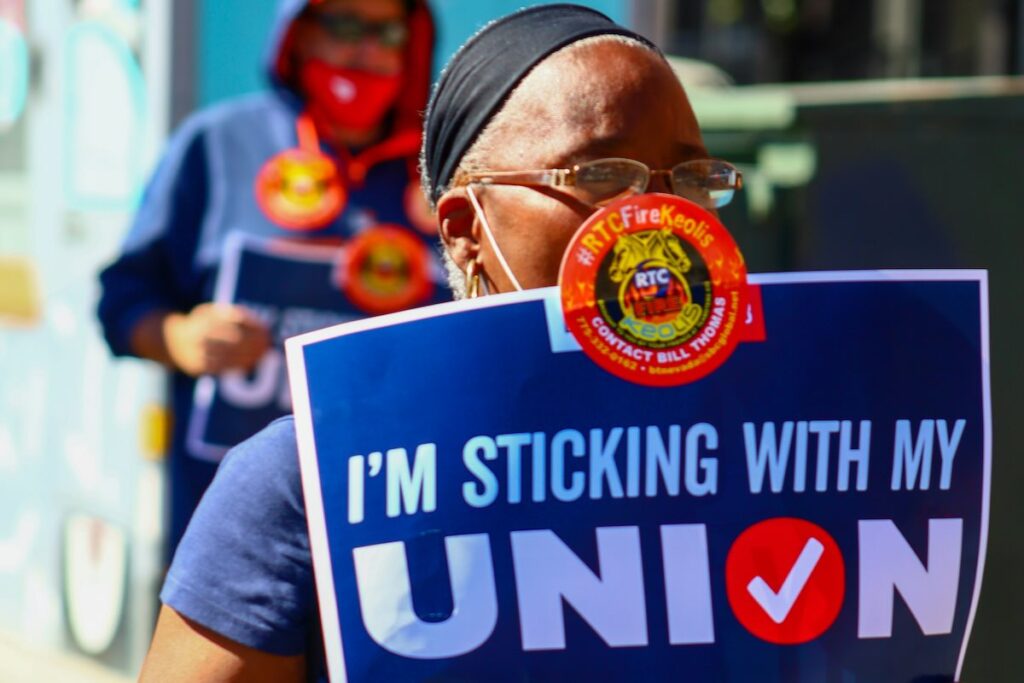
Thankfully, open dialogue and collective action aren’t limited to the legal structure of a union alone. The Freelance Solidarity Project seeks contributions to their database of rates that media freelancers can use to negotiate higher compensation from their publishers. AFM Seattle’s Fair Trade Music Campaign secured commitments from 25 regional clubs to abide by Fair Trade Music principles, regardless of a performers union status. Candid conversations with mentors, colleagues, and students about pay expectations will broaden the knowledge base of our community and serve as a vanguard against sub-par or exploitative treatment.
If nothing else, this is a call to gather data from your local artist community. Compare the pay rates of different organizations near you. Talk to your colleagues and see if their pay and protections are comparable to yours. In my conversations with my own community, it has been eye-opening to hear of a colleague who made over $5,000 singing eight bars of music for a TV show, and another who was asked to be the singing voice of a nationally-distributed Christmas toy for a flat fee of $100. I’ve spoken with composers who regularly accept arranging work for a flat $500 fee, and others whose starting rate is $1,500 per minute of music. I suspect that the pay range extends far beyond these examples in both directions. Gather data, compare notes, speak freely with each other, and ask for what you need in your contracts. This knowledge allows union and freelance artists alike to make informed choices and better forge a sustainable career.
I CARE IF YOU LISTEN is an editorially-independent program of the American Composers Forum, and is made possible thanks to generous donor and institutional support. You can support the work of ICIYL with a tax-deductible gift to ACF. For more on ACF, visit composersforum.org.