Last summer, Chicago’s Experimental Sound Studio invited ten artists to compose multichannel works for the 24 speakers mounted at the Jay Pritzker Pavilion in Millennium Park. The pieces were commissioned for a two-day event called Sonic Pavilion, but that event was cut short due to the torrential rain that besieged the city on the second day of the public exhibition. Happily, this provided the impetus for a second presentation of the collection. All eight pieces were adapted for an eight-channel indoor experience, on exhibit from December 5 to February 1, as “Sonic Pavilion Redux” at Experimental Sound Studio’s Audible Gallery in Chicago’s Edgewater neighborhood.
The eight pieces play on a continuous loop; for a listener, there is no specific beginning or end. The decor in the room is sparse; light bounces off the cinderblock walls, but the eight speakers command the eye’s attention. The listener can walk around the gallery isolating sounds from each speaker, experiencing how the pieces change at each point in their spatialization.
The first piece listed in the program notes is Cloud Listening by Myles Emmons, which explores “all ten cloud classifications.” The highly kinetic music feels like an appropriately energetic translation of its imagery. The eight speakers are used to create an expansive, cinematic effect.
After a 60-second pause, The Other Spectrum by Anna Friz and Jeff Kolar begins. The piece weaves clips of “useful radio,” such as air traffic control transmission, in between swells of synthesizer. A listener sitting in the center of all eight speakers can’t quite decipher individual strands of dialogue until the end of the piece. The resulting strain builds tension, almost evoking a sense of dread. The artists’ note indicates that the piece is intended to “reveal ways that radio is implicated in systems of state command and control.”
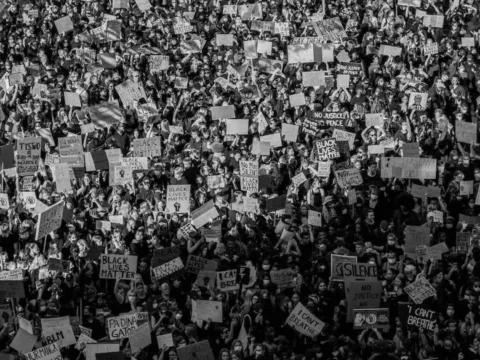
The theme is all too resonant in Chicago after the city’s experience of Operation Midway Blitz. Only a few weeks after this piece would have originally been presented in Millennium Park, Greg Bovino and his Border Patrol forces would march from the iconic Park through Chicago’s downtown streets, masked, armed, and arresting passersby based on “how they look.” For a Chicagoan of color, listening to Sonic Pavilion Redux in January of 2026 is a fundamentally different experience than listening to Sonic Pavilion in August of 2025 would have been, because of the intensity of what we have endured.
After the thick tension of The Other Spectrum, the sudden introduction of Love Beats All is startling, but the piece unfolds from its opening into a joyous, percussive groove. Composed by Glenn Kotche of Wilco fame, the piece tosses staccato vocalizations between the gallery’s eight speakers to create a gleeful drumbeat shouting “Love!” “Love!” “Love!” in a multitude of languages, nodding to the diversity and vitality of Chicago.
The collection then moves into a gentler, meditative soundscape with Ponds Appearing Overnight by Saapato, a project of sound artist Brendan Principato. The piece weaves aural fabric out of the frogs and other amphibians of New York’s “vernal pools and woodlands ponds.” The result is immersive, almost dreamlike. Next, Paige Alice Naylor’s Currents features 30-40 voices from a “new experimental choir.” The piece was written without a prescribed tempo, and the resulting arhythmic flow is strongly reminiscent of Gregorian chant. The shimmering, gossamer connection between the voices is undeniably beautiful.
From here, the loop takes the listener back into an activated soundscape. Dust Storm by Zouning Liao is a visceral evocation of sandswept winds. The sounds of flying dust are mixed with an array of plucked timbres, and the piece ends on a long, piercing note. Aleatoric Tilt by David Bird sounds like the imagined inside of a computer. Whirring, mechanical sounds accelerate, creating a dizzying, unstable effect.
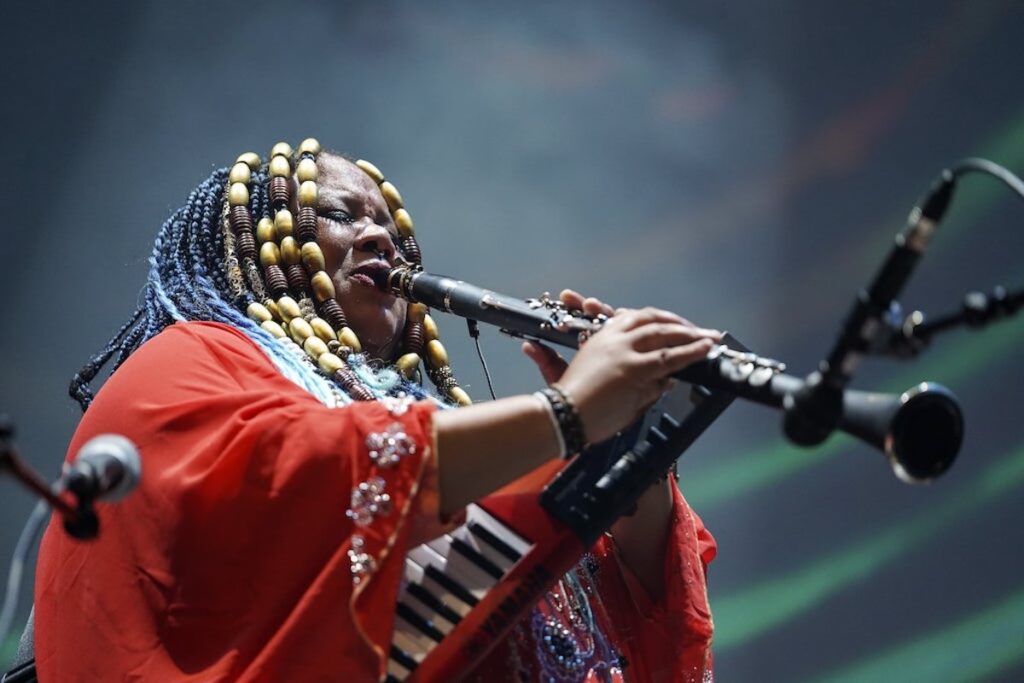
The last (or first) piece in the collection is the longest. Angel Bat Dawid and Eyeisha Sistrunk, present a Liberation in Sound: A Sonic Tribute to Maya Angelou’s Seminal Work “I Know Why The Caged Bird Sings.” The piece includes more melodic interludes than the others in the collection, including a few clarinet riffs nodding to Rhapsody in Blue. The work also pushes the edges of hearing at times with a low bass throb. A sharp, wordless voice can be heard partway through the piece; this is a recording of Sistrunk’s infant child.
Liberation in Sound, and the collection as whole, reward sustained attention. Since the original presentation was intended as public art, audiences can engage with each piece on many levels; as a listener is passing through, they might pause and catch a few moments of delightful surprise. But the listener lucky enough to spend a full 90 minutes with the exhibition is taken through an entire emotional cycle, challenged and stretched and calmed again. I found the experience of Sonic Pavilion Redux deeply nourishing.
I CARE IF YOU LISTEN is an editorially-independent program of the American Composers Forum, and is made possible thanks to generous donor and institutional support. You can support the work of ICIYL with a tax-deductible gift to ACF. For more on ACF, visit composersforum.org.