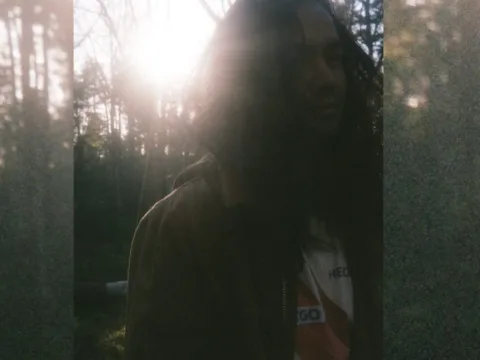
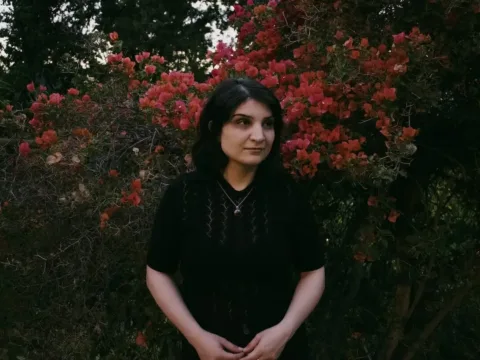
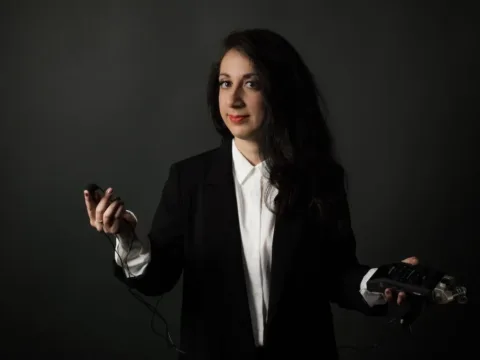
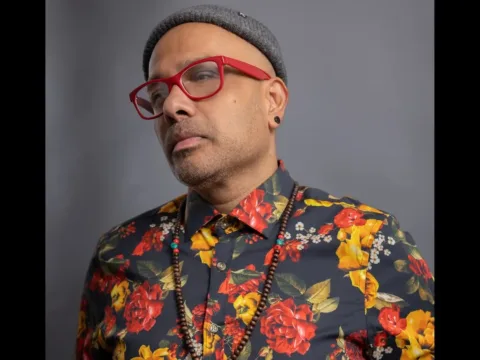
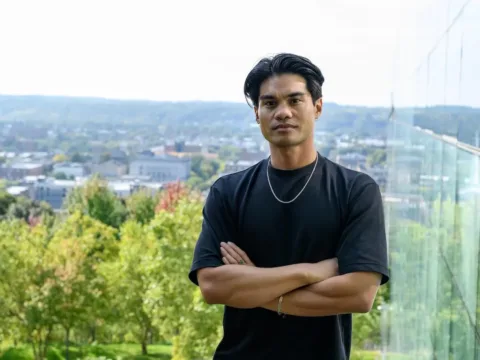
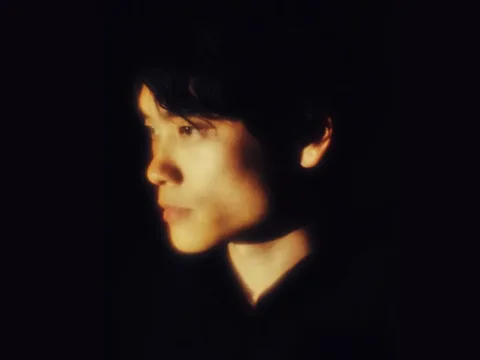
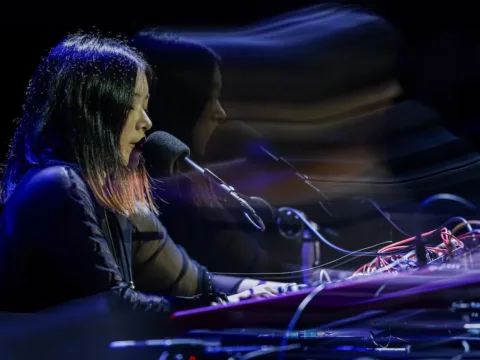
Micah Huang is a musician and performing artist whose work focuses on cathartic rituals and grassroots community. Micah’s projects include the Los Angeles Hungry Ghost Festival, Blood on Gold Mountain, and have been featured by numerous local and national media outlets including KCRW, LAist, the Mercury News and the Washington Post. Past projects have received support from the National Endowment for the Arts, California Arts Council, Mahindra Humanities Center, UCLA Chancellor’s Award, and Fulbright Commission, among others. Micah is currently a PhD Candidate in Creative Practice and Critical Inquiry at Harvard University.
What is underground music, and why should we care?
It’s a fair question, and if you asked 10 different underground artists, you would definitely get 10 different answers. For me, underground music is my roots. Long before I knew to identify as a composer-performer or interdisciplinary artist, I was a guitar player in a punk rock band called Kategory 6, back in Pomona, California.
That was a long time ago, but now we’re living through a moment where the misalignment between musicians and the music industry, between artistry and the content mill is perhaps even more profound than it was in the past. For that reason, I think this is a great moment to revisit underground music and see what we can learn from its history as we chart our course forward into the future.
This playlist is divided up into 3 subsections: The first is an overview of punk and hardcore, as I experience it. The second deals with post-coloniality and its relationship to underground status, and the third goes way back to the beginning while also looking forward into the future as I try to figure out how to integrate my underground roots with the current artistic environment that I occupy. I hope that you enjoy it, and please feel free to reach out to me if you want to talk about this or connect.
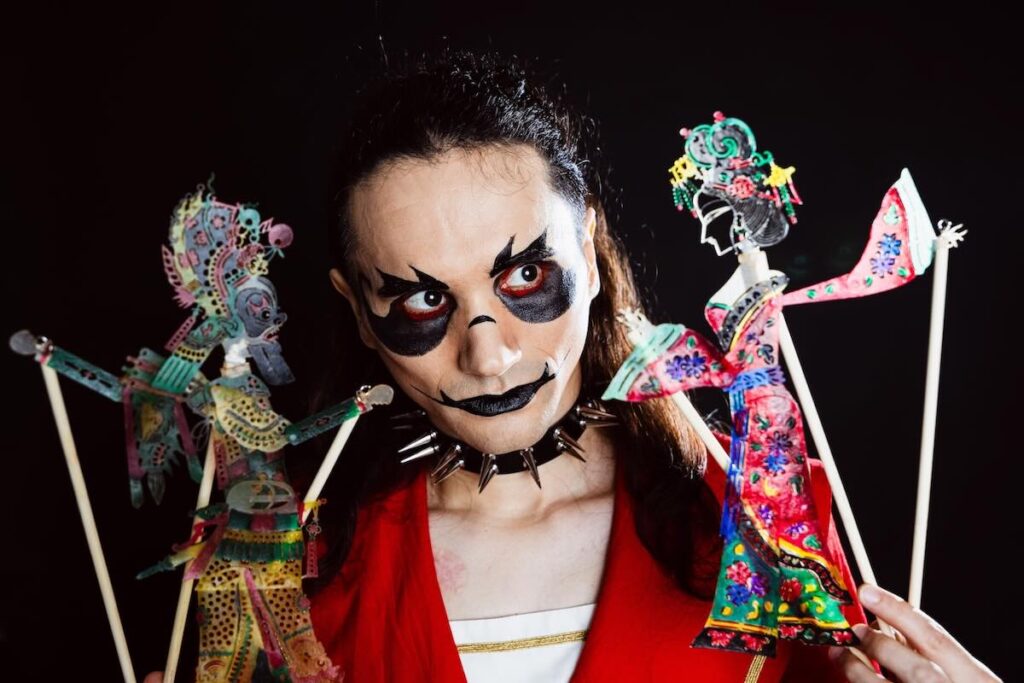
Underground Eco[log/nom]ies (aka Notes from the Underground)
Set 1: Punk and Hardcore
“Bremen Song” by Poison Girls
Anarcho-Punk is, for me, one of the most intriguing of the utopian experiments associated some underground music. While Crass are probably the most well-known group from the movement, Poison Girls darker sonic aesthetics are more to my taste. Both bands took part in direct actions including the the Stop the City protests, which speak to Anarcho-Punk’s position regarding the relevance of speech vs action with regard to social and political issues.
“Pull My Strings” by Dead Kennedys
If there’s one west coast hardcore song that explicitly states the ethos of that era’s underground zeitgeist, this might be it. It’s not the most iconic or best-sounding song on 1987’s Give Me Convenience or Give Me Death but there’s something cathartic about hearing it spelled out in such stark terms. The bloodcurdling, sulfurous irony here is very characteristic of the post-punk scene in which I got my start as a musician.
“House of Suffering” by Bad Brains
It took me a long time to learn that not all underground or punk or hardcore music had to be acerbic and armored in irony. The Bad Brains are icons of D.C. Hardcore, who can spit vitriol as well as anyone else. However, some of the material on their first album embodies an earnest, vulnerable side that is present in almost all underground music.
Set 2: Outlaws of the Pacific Rim
“I Want to be Your Lover‘ by Pan Ron (Pen Ran)
Not all underground music is made by westerners disgruntled with the rapacious activities of their own empires. Khmer Rock’s relationship to empire, colonialism and the “cold” war are all complex and tragic. For those, like me, who are the children (or products) of the great Pacific war and its displacements, this scene provides a counterpoint to the hostility and contempt heaped on us (often in racial terms) by the music industry.
“Outlaws” from Blood on Gold Mountain by Micah Huang
The music and entertainment industries like to pretend that they are diverse, democratic and meritocratic. This is a lie. Statements and stories that are “too niche” or “controversial” for the mass market have always been suppressed. I created this audio drama (with full, original musical score) to tell one of these stories. During the pandemic it went viral on Apple Podcasts, in a classic case of underground art colliding with mainstream culture in crisis. If you prefer a platform that doesn’t finance military drones, you can listen here.
Talking Gong by Susie Ibarra
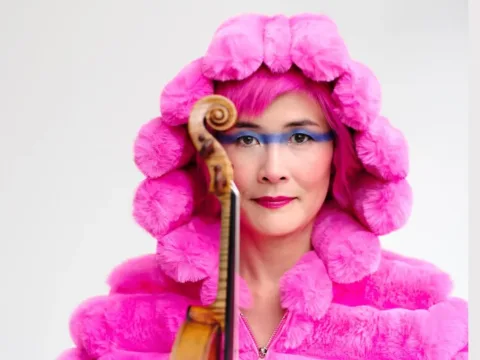
Contemporary music (in the nominally classical sense) has a lot in common with some underground scenes: A small but loyal community. An appreciation for that which may not be considered “pretty” or “normal” by the commercial mainstream. Susie Ibarra’s work helps me understand these affinities on a sonic and aesthetic level. In some ways, Talking Gong reminds me of atmospheric Anarcho-Punk tunes like Bremen Song. Just without the yelling.
Set 3: Bootlegs and Brainwaves
“Loser” by The Grateful Dead
American Underground music owes much of its social and economic structure to the precedent set by the Grateful Dead bootlegs. These illegal recordings were hated by record companies, but were encouraged by the band and sometimes facilitated by sound-wizard Owsley Stanley III, whose other hobby (chemistry) played a major role in the alternative economics of the Deadhead scene.
A Sonic Womb by Suzanne Ciani
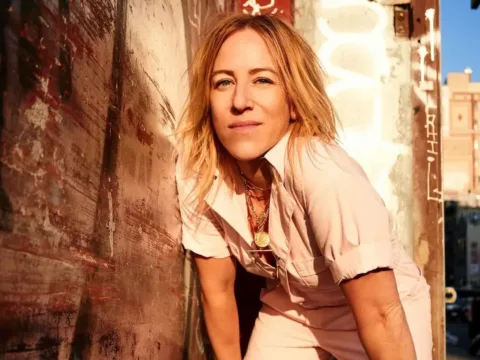
Electronic music has always been an important part of my relationship with the underground. Recently, I’ve really enjoyed the maker-player approach embodied by Suzanne Ciani, whose modular synth playing is informed by her experience building the instruments themselves. This is some serious DIY, with implications that could free musicians from enforced complicity with consumerist structures that don’t align with their ethics. In our age of generative AI, this feels very timely.
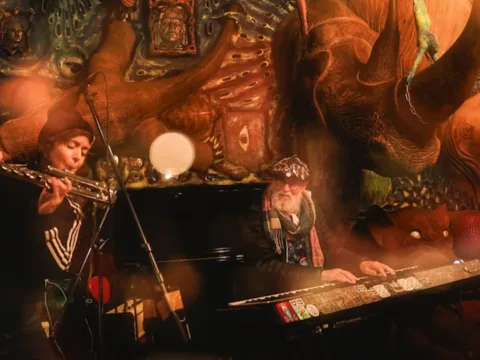
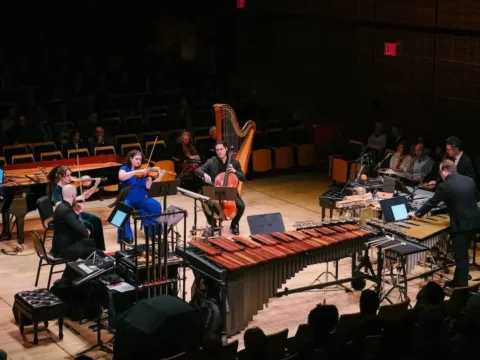
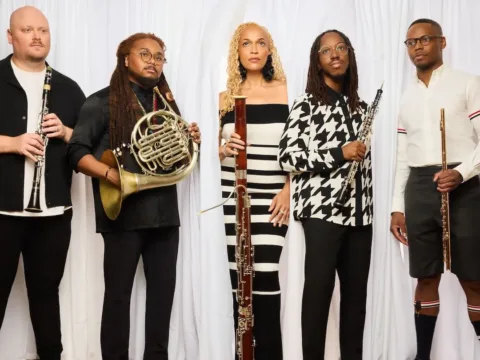
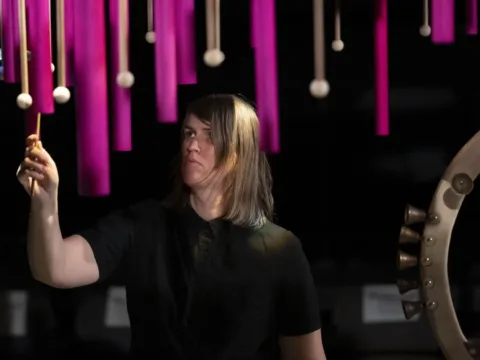
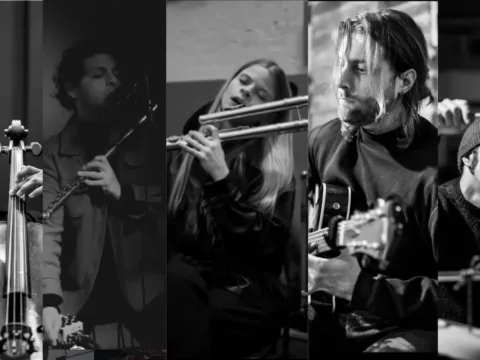
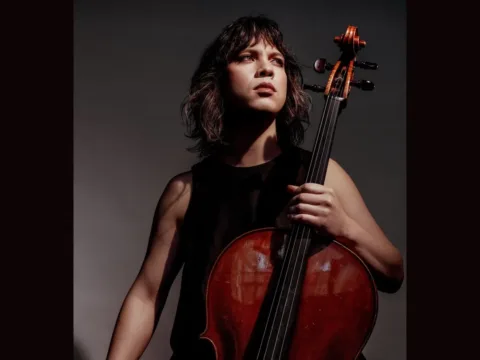
Sounding Psychedelia by Micah Huang, Performed by Huang, Devon Gates, Michele Cheng, Weilu Ge, John Pax, and Anonymous
This piece is part of an ongoing project in which I’m working to bring underground energy into the establishment spaces that I now frequent. I believe that we need the freedom and defiance of underground music now more than ever. Relaxation, humor and groove are all forms of resistance: subtler than punk, but resonant with its ethos. This approach harkens back to the Dead, incorporating aesthetic influences from composers like Susie Ibarra and Suzanne Ciani.
I CARE IF YOU LISTEN is an editorially-independent program of the American Composers Forum, and is made possible thanks to generous donor and institutional support. You can support the work of ICIYL with a tax-deductible gift to ACF. For more on ACF, visit composersforum.org.