Content warning: This interview contains explicit descriptions of violence and assault.
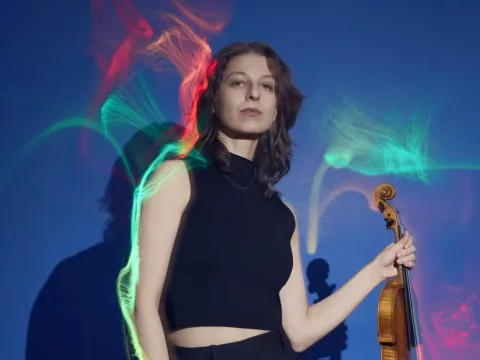
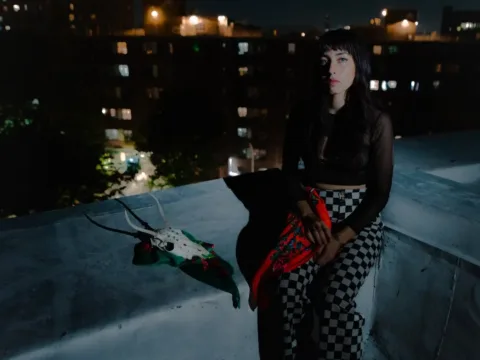
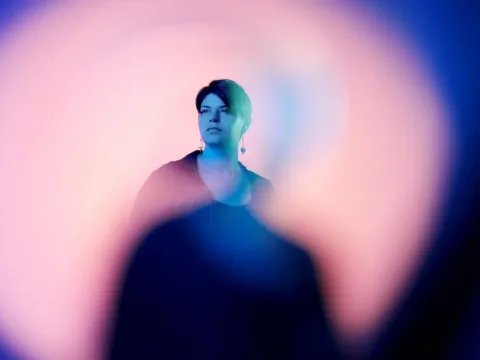
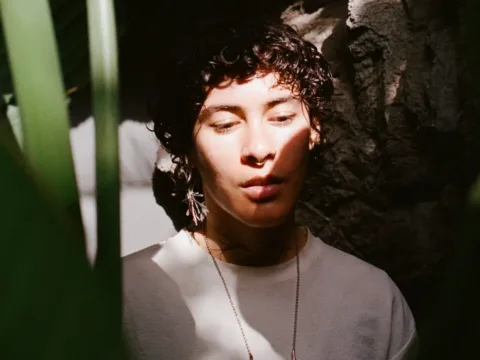
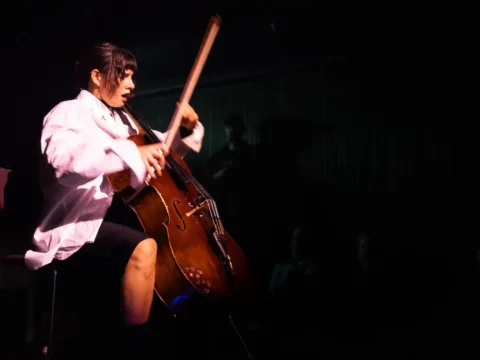
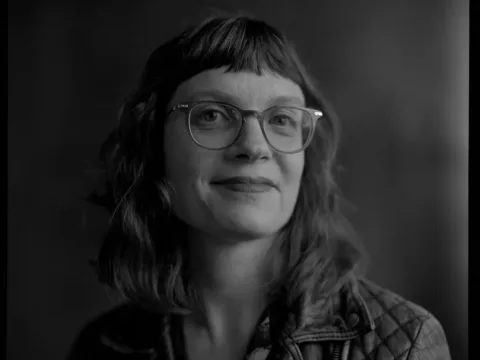
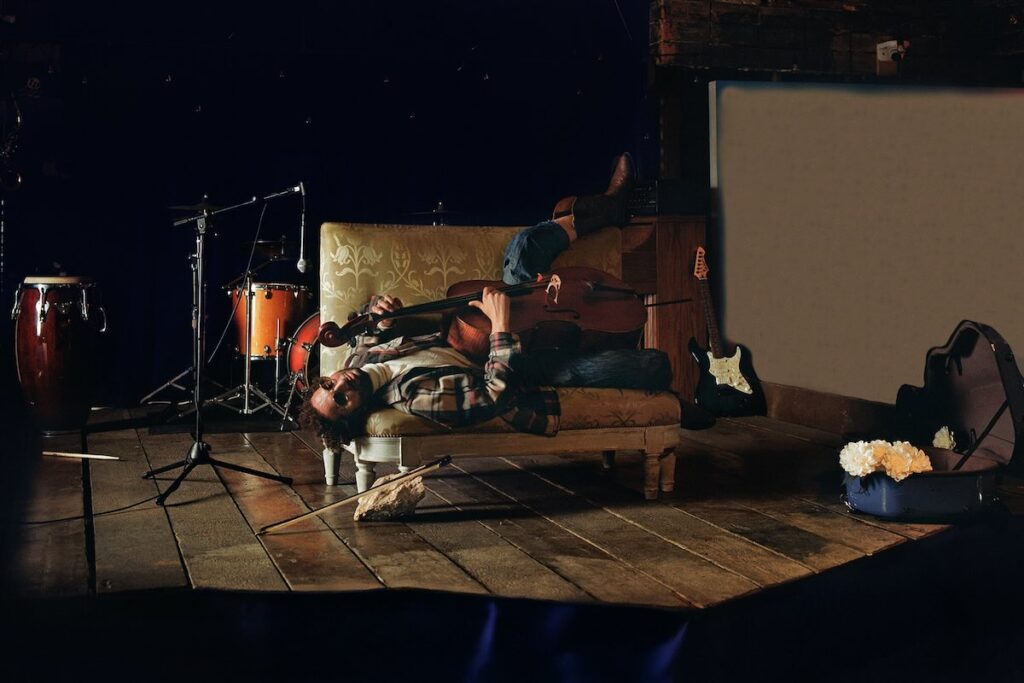
Zeelie Brown is an artist who is not afraid to showcase their full self — their wants, beliefs, desires, and dreams — in their works. They find vulnerability in areas that others may hide from. As a jazz cellist and multimedia artist, Brown honors the warmth of their Southern roots while reconciling the horrific and dark history that accompanies them. With strong values of community and anti-capitalism, Brown brings new meaning to art nourishing the soul by advocating for mental health and economic freedom for Black people and providing food for concert attendees to take home.
The benevolence that imbues their humanity also radiates in their music. Their debut album, the apocalypse is not the end but the unveiling (Dec. 5, 2025, New Amsterdam Records), is a Blues album in the way it highlights the difficulties and heaviness of this world through authentic, beautiful, and raw music. In what feels like a live performance, Brown infuses the album with anecdotes and monologues that support listeners as they grapple with the simultaneous glory and heartbreak of our world. From the painful history of Black farmers in America wrapped in uplifting forward motion and encouraging words (“let go, let god”) to the dynamic difference between mortal and immortal existence (“in the waters between life and death”), Brown guides listeners on a journey of embracing both beauty and hope in difficulty.
Just after the release of their album, I got the opportunity to speak with Zeelie and learn more about the project and their inspirations.
In your bio, you identify as a jazz cellist and multimedia artist. Can you speak about your journey to this point, especially in a field that often encourages perfecting a specific area of your craft?
The most beautiful thing about jazz is how it lives in the blur, the uncomfortable in-betweens. I guess I try to capture that in my sounds. I’ve emerged out of the Black, Indigenous, Spanish, Anglo-American, German mestizaje of South Texas, where classical music is a community thing and mariachi violins and guitars fill the streets with songs of jealousy and love. I come out of the Black lined-out hymnody in my tiny family homestead in rural South Alabama. Enslaved Africans took Scottish-Gaelic congregational singing and bathed it in the blood and blues. There is such a beautiful tradition there – of rooted, embodied, ear-first African musical pedagogy – that I’m worried is being lost amid digital consumerism.
I started putting this together at Oberlin. I wouldn’t have made it through without Oberlin’s strong cadre of Black arts faculty. That said, Oberlin was generous financially but traumatic to attend. The Black opera singers were told they would be thrown out if they were caught singing in church when I was there, because “that type of music,” Black American hymns, would destroy their voice. Who does that to a 19 year old? Failure of respect and care breaks artists. Among many, I almost shattered there.
My cello has an irreparably broken neck. It sits at a rake. It’s dull to respond. Christo Wood is carving a new one for me, to debut at a sonata that Recess Gallery commissioned me to write. But, I’ve had this cello since middle school. I won a concerto competition with the Youth Orchestras of San Antonio on that cello. I learned jazz with Ralph Jones III under Yusef Lateef’s autophysiopsychic lineage and Black dance with Adenike Sarpley at Oberlin with that cello. But, I have always been playing at a physical handicap because my parents, who wanted the American Dream for me, got scammed by an unscrupulous luthier.
My broken-necked cello reflects my life path, how my artistry has emerged from having to survive. I’ve had to quilt myself back together in the places where the world tried to tear me apart. My works are rememories, reassemblages, that act as roadmaps for the wayward soul.
Through all this, music was my lifeline, whether I was playing for money to keep my car warm in the Massachusetts winter, or whether my mind was so low I didn’t know if I could make it until tomorrow, I had these sounds and this instrument that could bring me through.
You’ve described your new album as a kind of “prayer.” Why did this approach feel right for our present moment?
The world’s on fire. The Rio Grande’s turned into a creek. Hollywood’s almost one company now. The President’s cabinet is openly quoting Goebbels, and Trump’s favorite insult “Fake News” is a near verbatim English translation of the Nazi epithet “Lügenpresse.” The Secretary for Homeland Security accused a gay makeup artist of being a violent gang member and sent him to be raped and beaten in an El Salvadorian prison. The eugenic underpinnings of the American healthcare system are being celebrated on Fox.
Starving people so they’ll work is being joked about on news shows, the same logic that murdered half the population of Ireland in the Great Famine. The Civil Rights Act is being dismantled. Universities are under attack. The US is trying to limit educational opportunities for poor folks, rural Americans, women, queers, and people who aren’t white. Immigrant children are being lost. The White House refused to celebrate World AIDS Day. The word “transgender” was scrubbed from the Stonewall website. There is an ongoing genocide in Gaza. 150,000 souls are gone in Sudan.
Great evil is born when people believe in nothing beyond themselves, when folks silence the voice of the Creator whispering in twilight gusts. I’ve been thinking about how Black quilts are protective sigils to stitch together the ways the world tries to break us apart. I’ve been thinking about how where I’m from in Alabama, there is no time when there is labor and not some kind of sung prayer.
There is a West African tradition of praying with sprinkled water to mirror the first rains that cooled the Earth. Prayer is the impulse that allows cool to reign in situations of impossible violence.
Prayer sounds intention, and the world is nothing but a collectivity of intentions.
“interlude two” quotes the bariolage section from the prelude of Bach’s first cello suite. How does traditional classical music inform your work?
First, Europe’s is not the only sophisticated classical musical tradition, it is one of many. From Leipzig, I really love Bach’s sacred naturalistic starkness. From St. Petersburg, Shostakovich’s biting wit in an empire’s collapse provided solace in my darkest young years. From Philadelphia, Coltrane’s A Love Supreme took me to a part of heaven I didn’t know existed. From Detroit, J-Dilla’s “Sunbeams” will always be a beacon of hope in an era of post-industrial collapse. From Haiti, I’m learning rhythmic traditions so complex that writing them is nearly impossible.
I love the European orchestral tradition: the structure, the harmonic progressions, the congregation of instruments, the grandeur, the precision, the ability to unite communities. I’d just do with more humility, more willingness to listen to and learn from the world.
Your performances always provide access to fresh foods for patrons. What has been the reception of this practice, and have you noticed others following suit?
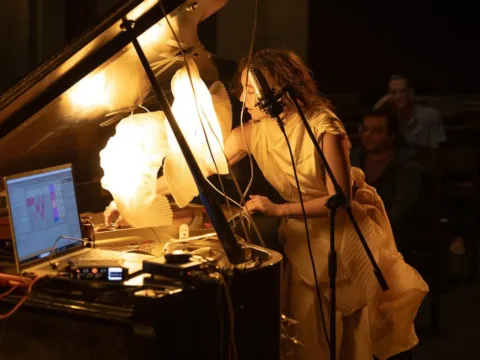
No, I haven’t really noticed others doing this. I was inspired by the legendary Black arts collective JAM Gallery. I’ve always noticed that kindness as simple as gumbo, poundcake and coffee puts a light in people’s eyes. Especially in contexts where people historically were not welcome and needed to fight just to exist. People ease up and enjoy themselves when there’s something substantial around. I’ve seen a tupperware or two.
Good food is vital to human well-being. New York’s race and class apartheid structure means there’s places in town where people are nearly barred from decent food access. New York City has tons of hungry kids and is surrounded by some of the most fertile farmland in the country. The land’s expensive though, so it’s very costly to farm properly. The system ain’t working.
You never know who might need a meal, and I know what it’s like to be a homeless, Black, queer, hungry, sex worker in a country currently structured around the Thatcherite idea that poverty is a “personality defect.” I’m Southern. I’m country. Good eatin’ is a right, not a privilege. I’m gonna show love at my shows for those who show love for me.
In what ways do you believe classical music misses the mark in attempting to build community, and how can we begin improving?
We need long, difficult conversations about class, eugenics, cultural erasure, empire, and economic stability for artists in classical music. In its 142 years, the Metropolitan Opera has debuted one Black composer, and staged two. That’s a crying shame, but by design. Lauding musical tradition marks who deserves to be heard, and the institutions that support Western classical music were funded by industries formed by killing Indigenous peoples and working Black folks to death. These major cultural institutions were often formed to match or best their European counterparts, but at what? Theft, slavery, violation? Because, what Americans on the ground excel at when their backs are against the wall is coming together to overcome the deepest troubles.
We need strong organizing that connects artists with work, food, housing, healthcare, meditation, acupuncture, yoga, mental health treatment, cultural venues, and professional development. We need to supplement the scarcity-bound competition model with a growth-minded community development model which recognizes the deep value that musicians provide to communities in being able to hear, sense and create.
We need music degrees across the country to not only be free but pay a living stipend to study and provide musicians with the means to buy their instruments. We need deep-pocketed reinvestment in music programs in America’s poorest schools, urban and rural. We need music education to embrace African, Creole, Middle Eastern, Asian, North American, Latin American, and Indigenous forms of music pedagogy. We need classes on how to listen and how to use the body in making music.
We need to use the technologies we have to address service gaps in education around the country and world. We need less gatekeeping of information and more ways for eager students to learn about the trade skills of being a musician. We need to rebuild our music press, publishing, and distribution infrastructure. We need record store/cafes. We need people to pay for music and make it easier for musicians to make a sustainable living.
We need centrally-located subsidized plentiful artist housing in every metropolitan area in America and a directory of folks, organizations and churches willing to host an ensemble for the evening when they’re passing through town. We need a list of folks that might be willing to haul an ensemble from town to town for free or a cut-rate. We need to acknowledge music lets people overcome their troubles, feeds people’s souls, and allows folks to make a way out of no way. Musicians often don’t have much money. We need to remove the stigma around poverty. There’s nothing wrong with artists doing their job, which is to uplift people and speak the truths that no one else dare say. We need to get out of this every man for himself mindset and develop organizations that allow us to work together and keep Gabriel blowing his horn.
I CARE IF YOU LISTEN is an editorially-independent program of the American Composers Forum, and is made possible thanks to generous donor and institutional support. You can support the work of ICIYL with a tax-deductible gift to ACF. For more on ACF, visit composersforum.org.