I grew up in Bogotá in the late ‘80s. Toothpaste was no longer called “toothpaste” — it was Colgate. Soda was Coca-Cola. Cereal was Cornflakes. Jeans were Levi’s. Leading brands had become so dominant that they essentially replaced the thing itself. And this is exactly what has happened with art music: Western classical music has so effectively branded itself as the default form of art music that it has effectively captured the category.
This is by no means accidental, and yet we rarely question why this happened, how it happened, or whether it is even true. The assumption has simply held. It is the result of a history of power that has been shaped by the institutions and people who create and present classical music.
So let me be unequivocal: classical music is not the only form of art music. It has, however, been extraordinarily successful at branding itself as such.
This dominance hinges on an important distinction that centuries of cultural branding have erased. Classical music is a culture: from a people, by a people, for a people. Art music, meanwhile, is a practice: a way of engaging with the material of sound.
Classical music (the culture) is particular; it has 1) a specific set of musical characteristics, 2) normative cultural rituals, and 3) a canon of works. The symphony orchestra, the string quartet, the piano, bel canto singing. Sonata form, tonal architecture, tempered tuning, voice-leading. Musicians in black, audiences in silence, applause regulated by convention. Repertoire composed mostly by European men between roughly 1600 and 1950, conserved with near-devotional intensity.
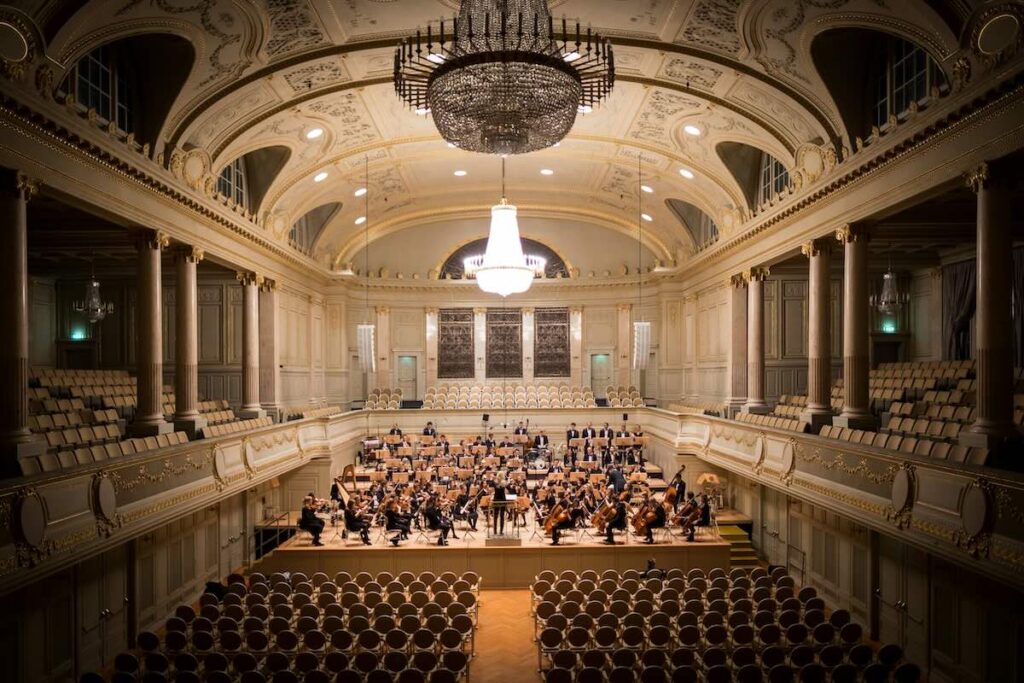
None of this is a criticism. It is a description. European classical music is one of the most sophisticated aesthetic worlds human beings have built and sustained.
But.
Art music cannot be reduced to the sounds, technologies, and rituals of one particular musical culture. As a practice, art music attempts to illuminate the human experience through sound — to address or unveil what it means to be alive in a body, in a society, in a particular historical moment, subject to love, grief, power, and longing. In other words, art music asks: how does it feel to be human, here and now?
Once art music is understood as a practice rather than a single cultural tradition, it becomes possible to recognize how many musical forms — including some labeled as folk, commercial, popular, or devotional music — have pursued this same artistic ambition. The practice of art music can therefore live in traditions as diverse as Indian classical music, the blues, Tuvan throat singing, Sardinian canto a tenore, or Sufi devotional music.
Let’s consider a few specific examples:
Puerto Rican Bomba enacts creative freedom, resistance, and the refusal to have one’s culture hijacked. It is a music/dance of remembrance in which plantation rum barrels, once embedded in the economy of slavery, are transformed into barril drums liberated by the dancer through movement, memory, and embodied agency.
Hip-hop emerged in the Bronx from the institutional neglect and poverty experienced by Black and Latino communities in the 1970s. Through sampling, DJing, and lyrical spoken word narration, people historically excluded from cultural power claimed authorship over their own stories. The artistic force behind the movement transformed hip-hop from a hyperlocal expression into a hyperglobal force. By the early ’90s, it had drawn the attention of the world to the sound of specific neighborhoods, accents, struggles, and identities.
Nirvana exposed how young audiences were emotionally exhausted by the artificiality and flair of late ‘80s rock. By replacing virtuosic display and ultra-polished rock architecture with chaotic simplicity, bare-bone authenticity, and anti-celebrity stances, their music made the true feeling of rebellious youth accessible to an entire generation.
And recently, Bad Bunny transformed one of the most visible stages in global media into a theatrical affirmation of Puerto Rican and Latino humanity. Drawing on imagery of sugarcane labor, self-built homes, power outages, and Puerto Rican sovereignty, the performance turned the Super Bowl halftime spectacle into a cinematic meditation on colonial history, resilience, belonging, and, above all, rehumanization. In the midst of Trump’s ICE crackdown, he used the most visible stage on earth to expand who gets recognized as fully human — and who gets to inhabit the symbolic and material center of “America” and the American Dream.
These examples do not share a style, geography, audience, or tradition. What they share is something deeper: they all engage sound as a way of illuminating human experience. The argument can easily be made that all of these examples constitute art music, but none of them have been admitted into the category because it has been held captive by Western classical music.
The idea that classical music and art music are one and the same did not emerge from a neutral inquiry into absolute artistic value — it arose from a specific historical arrangement. The elevation of European art was not simply a byproduct of colonization; it became a central instrument of cultural and political domination.
The wealth and power created by 16th-century European colonization cemented the courts and aristocracies of Europe, creating patronage systems that tied composers to wealth. This gave rise to bourgeois concert culture, and later to the conservatories, universities, foundations, and civic institutions that formalized European taste as the default cultural authority across much of the world.

This power has arranged the field so thoroughly that its assumptions begin to feel like common sense. A student enters the conservatory and learns what counts as rigor, what counts as mastery, and what counts as a “real” composer. By the time the student begins making judgments of their own, the frame has already been installed — and the judgments are always made within its internal boundaries. The question becomes: are Wagner’s operas better than Mozart’s? Never: is hip-hop more relevant than Bach in the 21st century?
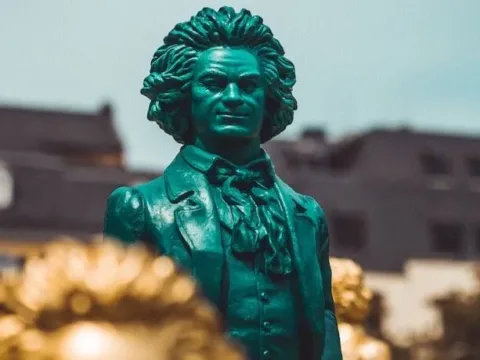
One of the most consequential ways in which these false assumptions become seemingly undisputed truths is the “godification” of the canon. The more classical music is ritualized, monumentalized, and treated as sacred and invulnerable, the more the composers of the European tradition cease to appear as historical human beings and are instead positioned as superhuman authorities. They are no longer heard first as workers within cultures, patronage systems, markets, churches, courts, and performance economies. They are heard as if they stood above all of that — outside friction, outside contingency, outside ordinary artistic struggle. Their music arrives not as art, but as revelation.
We tend to forget that these composers were trying to get paid. They were trying to secure patrons, performance, and survival. They were navigating institutions, expectations, conventions, and the limits of their moment, just as artists do now. To erase that friction is not to honor them — it is to misunderstand them. And once that misunderstanding takes hold, the music itself begins to rise above history in a false way. It becomes an object of worship. In parallel, the composer becomes not an ancestor, but a god — a figure before whom one is expected to kneel.
This worship is disastrous. It flattens the music by removing the very pressures that gave it shape. The branding behind the classical canon insulates the music from one of the most basic conditions of artistic life: the need to be heard. This is how we arrived at the arrogance captured in the phrase “Who cares if you listen?” It names something real: the possibility of music so protected by institutions, so fully legitimized, so “godified” that it no longer needs an audience to survive. It can continue because the institutions and the branding will carry it; it has been placed beyond the conditions that define human artistic life — beyond risk, beyond failure, beyond the need to be heard, answered, resisted, or loved.

As a brand, classical music has captured the category of art music — but lost force as an art form in the process. The general public associates it with art, yet most of that public has never felt the urge to attend a classical music concert. By tying artistic seriousness so tightly to the preservation of older sounds, forms, rituals, and cultural assumptions, the tradition has gradually drifted away from the social, emotional, and historical realities through which most people encounter meaning in music in their contemporary lives.
Classical music has become like decorative porcelain in a museum vitrine — beautiful, highly crafted, undeniably impressive. You stop, you acknowledge it, and you walk on. You cannot touch it, engage with it, or savor it. It might break. And so it sits there, protected behind glass, admired from a distance by a public that has learned not to reach for it.
The impact on living composers is stark. Within classical music and its institutions, the field is crowded by a godified canon that absorbs the vast majority of programming space — often 80% or more — leaving limited room for new work. The result is not a lack of living composers, but a lack of opportunity for their music to be heard.
Outside classical music institutions, the situation looks entirely different: Broadway produces new shows, record labels release new music daily, film and media commission scores continuously, and across genres, countries, and cultures, new art music is being created and circulated through multiple channels. But within the institutions devoted to classical music, the dominance of the canon constrains that same creative vitality — narrowing the space in which new art music can emerge precisely because the system is not built to make room for it.
The task now is not to destroy the tradition, or to invalidate its achievements. It is to decouple the practice of art music from the narrow historical identity of classical music culture. It is to liberate the category and allow it to breathe again. It is to treat the old composer-gods not as deities, but as ancestors: sometimes magnificent, sometimes overburdening, sometimes useful, sometimes simply baggage, but always truly human. It is to recognize, acknowledge, and celebrate the many musical practices that can carry the force, seriousness, and revelatory ambition of art music.
I CARE IF YOU LISTEN is an editorially-independent program of the American Composers Forum, and is made possible thanks to generous donor and institutional support. You can support the work of ICIYL with a tax-deductible gift to ACF. For more on ACF, visit composersforum.org.