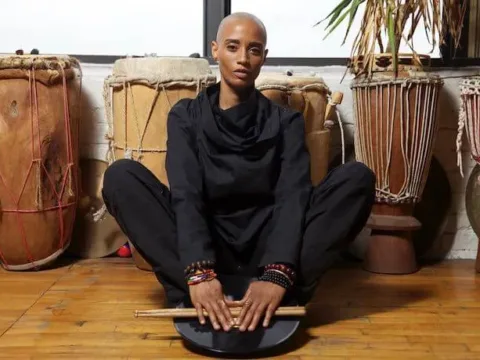
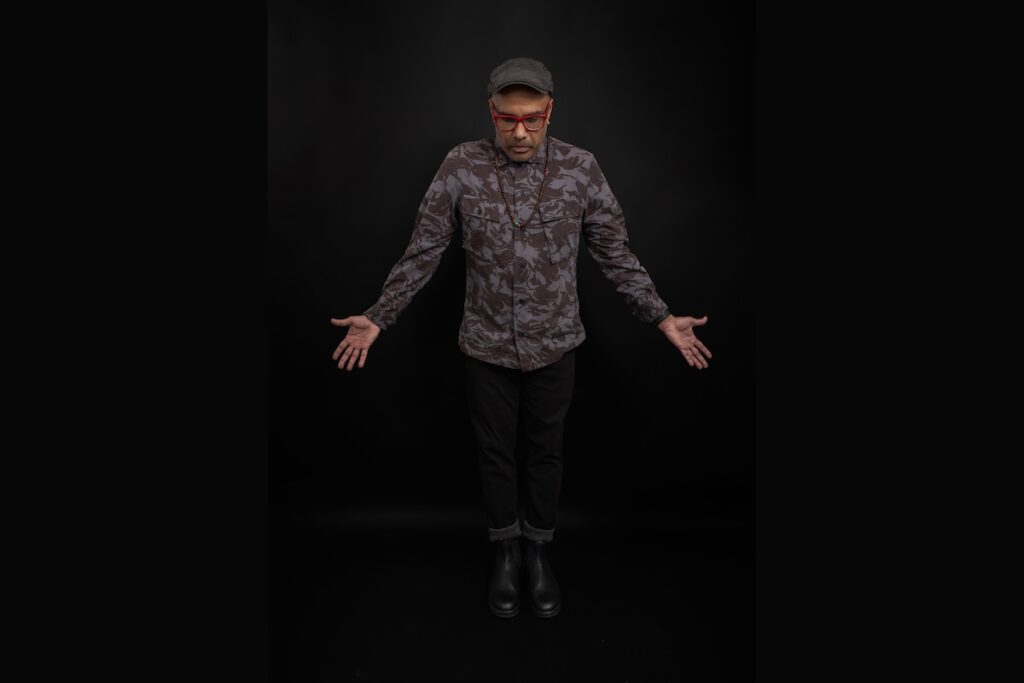
Electronic drummer, producer, educator, and clinician Ravish Momin is known for his groundbreaking recontextualisation of Western electronic music and drum machines through the lens of South Indian percussion instruments. His influences range from the underground dance music scenes of Brazil to artists such as Indian classical composer Ravi Shankhar, South African singer-songwriter Spoek Mathambo, and the Ugandan drums meets UK bass band Nihiloxica. He has led projects in the free jazz, improvisation, and electronic spheres with groups such as Turning Jewels Into Water with Val Jeanty and Trio Tarana; and he has made remixes for Portuguese multidisciplinary artist Pedro Coquenao and Moroccan producer Guedra Guedra.
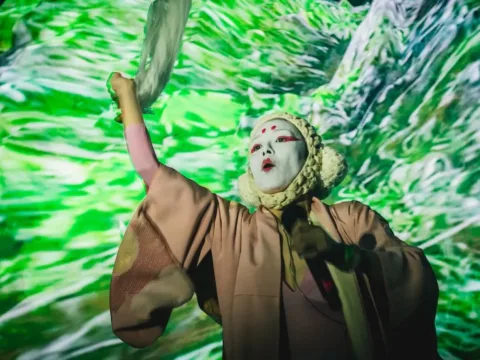
Momin is a 2026 New Music USA Creator Fund grantee in support of his solo project, Sunken Cages, which he started in 2019. As Sunken Cages, he blurs the lines of improvisation, loops, and rhythmic music to create something entirely new and ever-changing. His new album Neram Pularumbol (As The Dawn Breaks), out Aug. 7 on Mahorka, explores resynthesis with multi-genre collaborations from around the globe while maintaining a throughline of South Indian folk instruments in the electronic soundscapes. The mesmerizing video for the lead single, “Kerela,” showcases the bright inflections of percussive rhythms in the electronics, synths, and physical gestures of triggering different layers with his drumsticks. His intimate setup creates a three-dimensional output, transporting the listener to completely uncharted territory.
Momin is an advocate for innovation beyond his performance practice, too. In his recent “Money Matters” essay, he emphasizes the need for a more sustainable model of DIY touring that does not ostracize working class musicians. He also brings this philosophy and need for embodied practice into his work as a teaching artist throughout the New York City public school system.
A unique voice in sound production, Momin inspires a future of musicmaking that involves responsive collaboration, intuition, and embracing new direction. Before the release of his new album, we caught up with Momin to ask him five questions about his multifaceted practice.
How did you come up with the name Sunken Cages, and what do you see as the benefits of having a moniker for your solo practice?
A lot of my recent album titles and project names allude to climate change. My educational background is actually in environmental engineering, and I’d worked in the field for about eight years before switching over to being a music professional in 2003. Since then, I’ve wanted to incorporate environmental themes and awareness of issues into my musical projects as well.
Specifically, over the past few years, I’ve worked with this idea of water: a finite resource – as both sustenance and destruction. While the name of my duo Turning Jewels Into Water, formed in 2018, looks ahead to a time-period where water will soon become more valuable than jewels, Sunken Cages takes on a darker narrative where a cage, which was holding something captive, is now immersed underwater due to rising waters.
While I’ve thoroughly enjoyed playing in live bands in a variety of genres for the past two decades, working as a solo artist/producer gives me total freedom to be in control of all the musical elements and orchestrate/layer my own arrangements. I’ve also wanted to veer in the direction of making dance music, or music that is at least ‘dance-adjacent.’ As Sunken Cages, I’m now able to work as a hybrid producer/improviser.
Congrats on the New Music USA Creator Fund award and the upcoming album! How did you find your collaborators for the remixes on the album? Did this influence the track order of the album for the listener?
Thank you! As far as the grant goes, I’d applied for it a couple of years ago and had been rejected, so I didn’t have high hopes :) It was a great surprise, for sure! By the way, the grant is for a totally different project involving a dancer (Ishita Mili) and a video-artist (Art Jones).
The question of how I’ve found collaborators is a great one! Back in 2017, I began to seek out global artists for remote collaborations as I was dissatisfied with the global music scene in NYC and sought out artists elsewhere who were ‘resynthesizing the traditional.’ Thanks to social-media, I was able to connect with folks from Bogota to Durban to Shanghai and beyond. Over the years, I’d expanded my ties to artists in more countries, thus developing relationships with instrumentalists, vocalists, producers, and remixers from all sorts of musical backgrounds.
For this new album, I’d wanted to highlight some of the incredible women artists I’ve found inspiring as of late, and reached out to Devi Mambouka (Masma Dream World, Gabon/US), El Kontessa (Egypt), Rani Jambak (Indonesia) and Lila Tirando a Violeta (Uruguay.) I’d also invited Kush Arora (San Francisco) and Nkululeko Zungu, formerly ‘Kuza (South African vocalist based in Athens, GA).
The label, Mahorka Records, which also had a track record of working with diverse artists, connected me with additional remixers like Weldroid (Hungary/Sweden), Moki McFly (Philippines), Abu Ama (Germany), and Dolphins of Venice (Australia), making for a truly global record :) The track order simply puts the original tracks upfront followed by the remixes. One track in particular, Drum and Flowers, was treated to several remixes, which are all wildly different, and we wanted to place them near each other.
Your work holds space for the blurring and weaving of many styles and practices. How do you balance this multiplicity?
Attending lots of concerts of different genres of music during my formative years in college taught me to listen to all music without any hierarchical judgements. From free jazz to punk rock to devotional Sufi music and beyond, I found inspiration in all corners of music. Back in my 20s, I wanted to lead a global music project that brought multiple cultures together without centering my Indian background. The first project I ever led, Trio Tarana, in the early 2000s, seamlessly integrated free jazz, Indian folk melodies, and Middle Eastern modes. The instrumentation itself was unique, consisting of drumset, oud, and violin. The music never felt forced and always grew organically.
It is important to note that I did not want the music to feel culturally appropriative. I’ve always acknowledged the sources of inspiration and also credited and compensated the composers when possible. As I moved on to initiating other collaborative projects with artists from different countries and backgrounds, I’ve always carried that ethos with me.
I’m thinking of your piece you wrote for ICIYL about DIY touring. What has the response been like, and has it influenced how you’re thinking about touring your new projects?
Thank you for referencing that article. I’ve heard from countless musicians who had been frustrated about losing money on the road as a leader. While my own approach may not have been specific to their projects, the central messaging around seeking additional means of supporting the tour finances along with creating detailed budgets really resonated with them. Moreover, my article also inspired younger artists to get their music out on the road.
I’ve spent a lot of time planning tours for groups of different sizes, from duos to quintets, since 2004. For example, a ten-day tour can take upwards of four months to plan out. Most of those tours were successful or at the least broke even. For sure, I did lose money on tours occasionally on account of unforeseen circumstances like cancelled gigs or deadbeat promoters. I am proud of the tours I’d put together over the years despite not having a booking agent.
However, the article I’d written does not address the human side of things.
Working with musicians in a fast-paced environment that involves dealing with lots of different personalities, conflict resolution, diplomacy, and so forth certainly takes a heavy emotional toll, as well. After over 20 years of doing all the heavy-lifting for different groups, I needed a break and wanted to work solo. Instantly, I was no longer responsible for other musicians, and I found that very liberating! As a result, I’m more focussed on booking Sunken Cages alone.
I don’t mean to imply that I am declining touring with groups. The difference is that I now lean on delegating more complicated bookings to regional booking agencies that have recently expressed interest in projects of mine.
Your work draws from influences from all over the globe. What are you listening to now, and how have your sources of inspiration changed or expanded over the years?
Since my late teens, I’d always made a conscious attempt to listen to all types of music. I made it my mission to discover artists and genres from all over the planet from present and past times, as well. I’ve always been proud of my diverse listening playlists and even created a dedicated page on my website for my influences.
All this time, I’d never really focussed on listening to electronic dance music. My main exposure to electronic music thus far had been in the form of synth pop, industrial music, and the electro-acoustic works of Western new music composers. After discovering techno legend Jeff Mills in 2008, I went down the life-changing path of researching and learning about different styles of electronic dance music genres, including techno, house, Jersey Club, dub, and juke/footwork.
I’d say that between 2008-2018, I went through a phase of only listening to all types of electronic dance music and doing a lot of research into the origins of the genres along with identifying key/influential figures.
In the mid 2010s, I’d added Kuduro, Baile funk, and Gqom to my listening and discovered record labels like Nyege Nyege Tapes, Hakuna Kulala, and Príncipe Discos, which highlighted Pan-African artists who had infused electronic drums with their respective folkloric rhythms and blended them with forward-thinking electronics. As my tastes continued to expand, I quickly added artists from other corners of the globe, from Bogota to Tunis to Cairo to Shanghai that were also engaged in similar experimentation, to my record collection.
While I’ve returned to acoustic music again, this time around, my focus is on artists who are ‘resynthesizing the traditional’ and decolonizing traditional models of so-called global music. My current playlist includes a wide array of global artists such as Deena Abdelwahed (Tunisia), DJ Lag (South Africa), 3Phaz (Egypt), Tanya Tagaq (Canada), Saba Alizadeh (Iran), Abdullah Miniawy (Egypt), Saskia (Brazil), Rani Jambak (Indonesia), and Kibrom Birhane (Ethiopia.)
I CARE IF YOU LISTEN is an editorially-independent program of the American Composers Forum, and is made possible thanks to generous donor and institutional support. You can support the work of ICIYL with a tax-deductible gift to ACF. For more on ACF, visit composersforum.org.