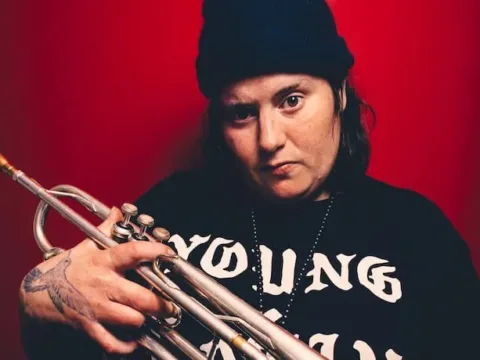
Patrick Shiroishi has a signature mode of spiritual intensity that he expresses through his saxophone. Still, to label the Los Angeles-based composer and multi-instrumentalist as merely a saxophonist feels a bit scant and reductive. His practice includes vocals, poetry, electronics, and drum machines, all bound up by a mystical ribbon that weaves through questions of identity, ancestry, the abstract, and the avant-garde. He has been described as a “monkish saxophone shredder capable of absolutely anything” who “once screamed a solo over Giacinto Scelsi.” But the bio section on his website provides nothing more than a one-sentence summary and lists no less than 17 ensembles and groups of collaborators. This suggests that Shiroishi is an artist who prefers to let the work speak for itself, and it does with abundant excellence.
A prolific recordist, Shiroishi has amassed credits on more than 77 releases since 2019 for labels as varied as Sub Pop, Astral Spirits, Cached Media, AKP Recordings, and countless others that represent the hippest of the hip. His most recent albums — Kimyō (self-released as Bon Odori on Aug. 7) and here i am no i (released Sept. 18 on We Jazz Records) — offer an incredible contrast that puts his remarkable versatility on full display.
Kimyō is a multilayered, dream-pop adjacent exploration of ancestral identity produced in collaboration with artist, composer, and producer Randall Taylor and a host of guest artists including Pauline Lay, Dylan Fujioka, Courtney Swain and otay::onii. here i am no i is a series of stark improvisations in duet with drummer Jason Nazary. Brimming with emotion, the music expresses the process of coming to terms with the death of their close friend, the late trumpeter Jaimie Branch, who died in 2022.
With two more albums on the way in late 2026 and early 2027, we asked Patrick five questions about his wide-ranging output and performance practice.
Your output intersects so many musical and cultural paradigms, from dream-pop to spiritual jazz, contemporary classical, and electronics; is there a unifying thread that draws these varied projects together for you?
The act of discovering new music has/is one of the great joys of life. I’ve discovered and fallen in love with so many artists from different places and genres over the many, many years. I have genuine interest in spiritual jazz, contemporary classical, black metal, grindcore, noise, brutal prog, pop, hardcore, and I’ve been lucky enough to befriend and build sincere relationships with musicians in these fields.
I think from all of this listening, elements from all of this have naturally seeped into the music that I create, especially in my solo practice … joy in digging in is what draws all of it together, that all of these things are in me and are points that I can reference.
Regarding your recent release, Kimyō, I love the story about how you and Randall Taylor proposed a collaboration while shouting at each other across a noisy room as you packed up after a gig. There’s such a beautiful spontaneity to it — is this how all your collaborations are born?
In a way, there is some truth to that! Some back story to that night –– Randall and I have been fans of each other’s music for a while via social media. Oort Smog was on tour and when we hit Portland, Randall came out to the show and hung out. We played on Valentine’s Day night (I don’t know how we missed that when we were booking the tour haha) and so it was a pretty light night, but that made for extra time to hang, shoot the shit, and get a little deep.
I think that’s where the spark happened; having a good time is soooo important. I want to be able to hang the fuck out with someone who I’m making music with, especially vulnerable music. So when Randall shouted that at the end of the night, it was an easy yes. I’m proud to say I love the work that we created, love the places we were able to touch on, and that Randall is a dear friend.
You’ve previously shared that you resisted embracing your Japanese ancestry in your youth, but you’ve ultimately explored and celebrated it in projects like Kimyō, Forgetting is Violence, and earlier work dedicated to your grandparents. What finally pushed you in this direction?
Growing up and being alive in this beautiful yet cruel world. When I used to listen to punk music in early high school, it was primarily because of the energy and feeling it gave me. I didn’t understand why these bands were all talking about the government or class struggle or this DIY mentality. Now it’s like, how can you not have these things influencing or being part of your music?
Don’t get me wrong, I love a record about devastating heartbreak; and yes, I write music that has nothing to do with family or current events at all. But at least from the standpoint of my solo music, it’s just that: what is affecting me in my world, my surroundings, my family and friends. I’ve found that by looking inward, I’m able to process things and become a better version of myself, as well as connecting with people that have similar experiences along the way.
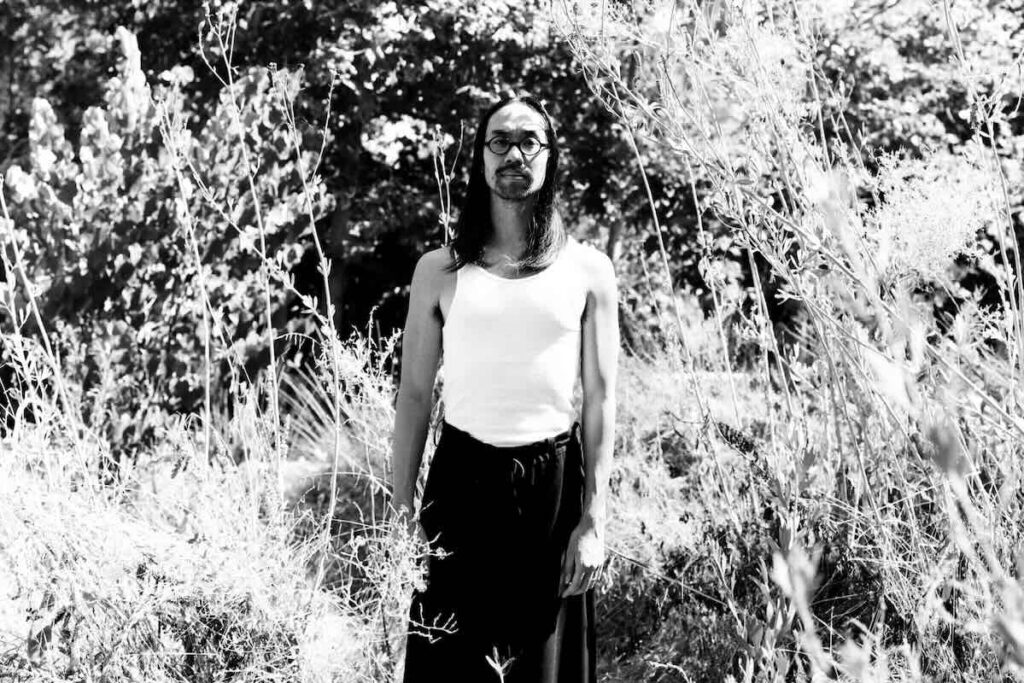
How has examining your cultural heritage contributed to shaping your artistic choices, both in terms of the work you create and your approach to performing it?
I think it all points to being the most authentic version of myself –– how I was raised, what my parents and grandparents and ancestors went through/did to bring me into this world. In my 30s, I was doing a lot of this reflecting and connecting with that being a focal point, this source of investigating and manifesting it into the work/music.
Approaching my 40s and recently becoming a father, I think these next few years will be a different kind of investigating and bring about different ways in how I create and perform music. I have no idea what that is going to look like, I am both nervous and excited to see what that becomes.
Many of your collaborations bear distinct names like Bon Odori, Upsilon Acrux, Oort Smog, We Bow to No Masters, Fuubutsushi, and The Armed. When do you feel it’s most critical to choose a name for a group, rather than just listing the personnel?
That’s a great question –– for the most part all of these groups were formed in a sort of “band” framework in mind. We Bow to No Masters came out of conversations and improvising with a direct issue we wanted to address. I think it’s about having this focal point compared to just improvising together that makes a name feel more critical.
But then again, sometimes a band name will get in the way of a casual listener if they don’t know who’s a part of a group and maybe not check it out … who knows what the right move is, but you just gotta do what you feel is right in the moment.
I CARE IF YOU LISTEN is an editorially-independent program of the American Composers Forum, and is made possible thanks to generous donor and institutional support. You can support the work of ICIYL with a tax-deductible gift to ACF. For more on ACF, visit composersforum.org.