In the landscape of modern opera performance, everyone seems to be fighting an uphill battle. Composers without generational wealth have few opportunities to see their music workshopped and performed. Singers seeking training and performance opportunities often rely on acceptance to Young Artist Programs, which can be both time intensive and prohibitively expensive. These costs come on top of education at both the undergraduate and graduate level. These days, even the Metropolitan Opera is struggling to keep the lights on.
When opportunities are hard to come by and traditional institutions have established internal barriers to access, artists have to create their own spaces to experiment within the genre. And further, when institutions prove themselves unable or unwilling to address larger issues of race, class, and gender, it’s up to individual artists to move the culture forward at a grassroots level.
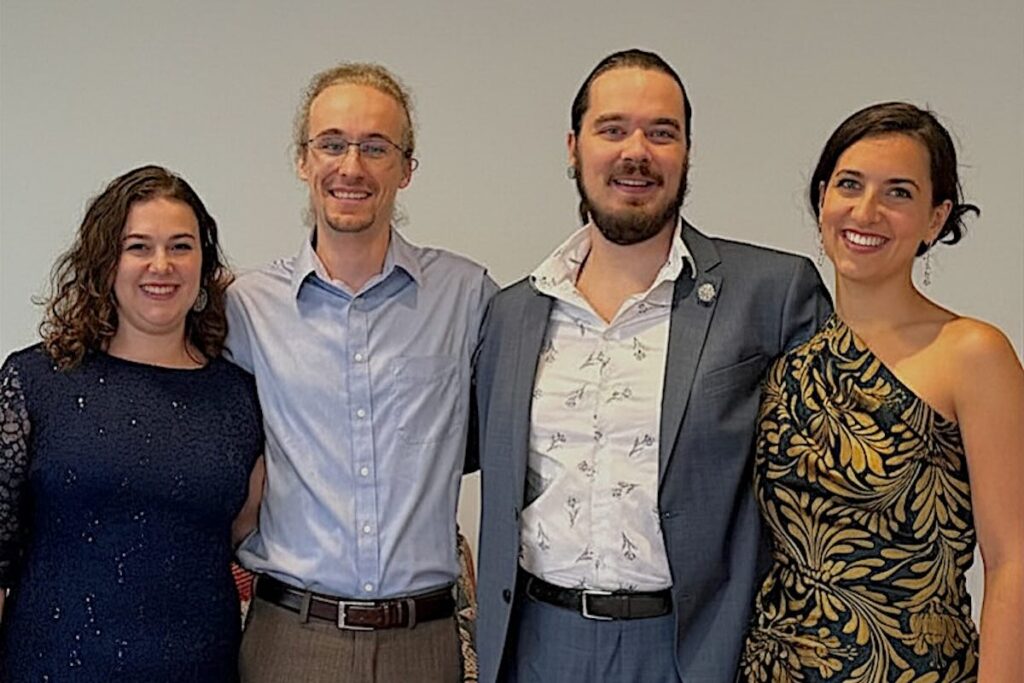
Enter TellTale Opera Theatre, a new collective in Baltimore who are dedicated to developing and presenting new works unbound by traditional definitions of genre and opera. Led by vocalist Ben Ross, composer/vocalist Meg Huskin, composer Michael Mills, and Vocalist/Stage Director Elisheva Pront, the group began hosting events in 2024 featuring a mixture of works selected from open calls, and works produced by TellTale themselves. Alongside a commitment to DIY spirit, TellTale has made a pledge to prioritize works created by historically marginalized artists. We caught up with the group just after a workshop performance of two new operas to learn more about their ethos.
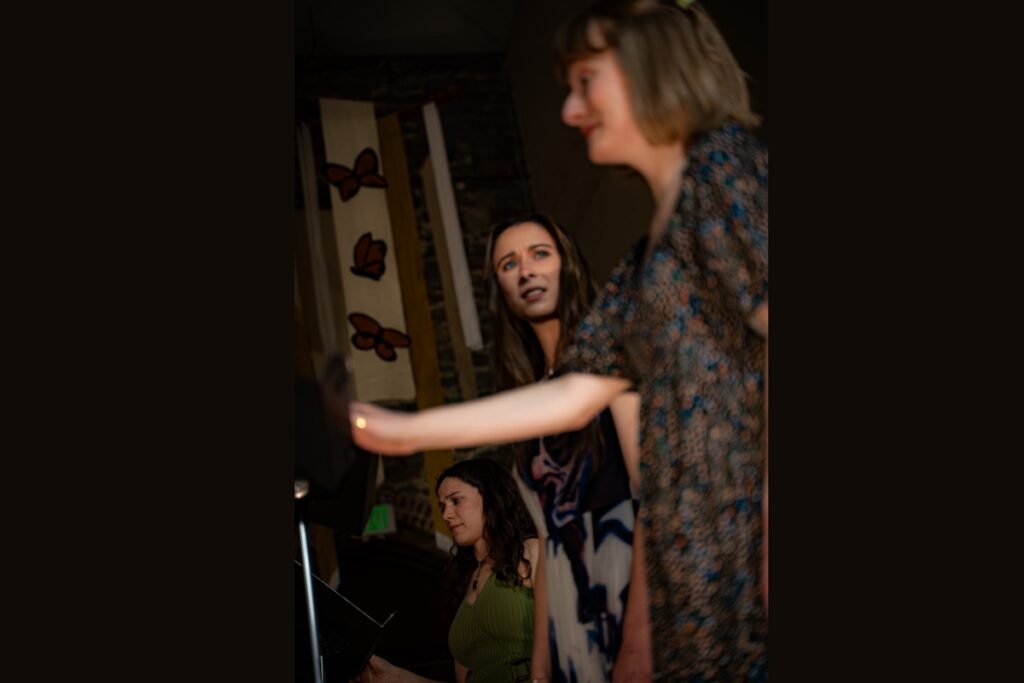
Your website mentions using an expansive definition of an opera. Are there any specific operas, composers, or performing groups that you’ve looked to as a model or inspiration?
For sure. We had the courage to try this out because we saw others doing it, and thought “why not us?”
One thing we’re really inspired by is the Chicago storefront opera scene. Ben and Meg (two of our founders) spent several years in Chicago before moving to Baltimore. They were both active in the opera community there, which is full of energized small companies producing incredible chamber-sized work in black boxes, churches, warehouses, and even cemeteries! We were especially inspired by Thompson Street Opera Company and Chicago Fringe Opera, both of which are dedicated to presenting contemporary works on a small-ish scale.
Since you are writing new operas and receiving submissions for new operas to be performed, are you noticing any particular narrative themes emerging?
It’s interesting; everyone has a story to tell. Even with folks who think they could never create opera, if you give them a little encouragement, they’ll share ideas that make you say, “That’s brilliant! That has to be on stage.”
Historically, opera hasn’t always been seen as the most hospitable place for our kind of contemporary storytelling. Because it’s often understood as such a grand medium, it attracts grand storytelling about gods, kings, and impossible life or death situations. As a company however, we’ve been attracted to smaller-scale stories, which can be equally as grand, but not nearly so visible. They’re rooted in the experiences of our artists, whether it’s a family drama, a second-generation immigrant story, a queer awakening – they’re based on true experiences that are just as emotionally rich. As long as these stories are honest and true to the folks that tell them, they’re ripe to be transformed with music, staging, sets, and a little of everything to become opera.
Baltimore boasts a rich tapestry of DIY music and performance. How do you see TellTale being part of the broader genre-fluid community in the city?
Baltimore has an energy these days that’s really exciting to be a part of. It seems like everyone you meet is making something and looking to collaborate, and not just in music! Visual art, dance, straight theatre, puppetry – as we grow we’re hoping to pull in more interdisciplinary collaborations. But there’s also an undeniable value in just living somewhere where folks are self-producing. There’s mutual support, a kind of “You came to my show, I’ll go to yours” attitude. We’ve only been around for a couple years, but several of our shows have been sold out. I’d say we’re lucky, but that’s just Baltimore showing up for us. Our goal always is to show up for Baltimore in kind.
What community partnerships have you established so far, and how do you hope these collaborations will play out in the future?
The idea for TellTale Opera Theatre came about while we were still grad students at the Peabody Institute. As students, we had access to rehearsal space, equipment, and some institutional encouragement. Professor and soprano Tony Arnold is a great champion of ours, and we owe a lot to her “Opera Etudes” course. Since graduating, we’ve had to build a larger support network that continues to grow and sustain our work. We’ve partnered with 2640 Space, a noncommercial, collectively-managed space for radical politics & grassroots culture, as a venue for several of our shows. They are a great asset to the performance community here, and we love working with them.
We’ve also benefited from working with lots of local artists – we had the opportunity to present something alongside Magdelena Ensemble, an early-music group who also has Peabody roots. That partnership came about through our Sandbox Opera Showcase program, which commissions mini-operas from Storytellers whose artistic practice exists outside of the realm of traditional operatic work. For that project, soprano Mira Fu-En Huang devised a work utilizing both American and Chinese folk song to depict a third-culture upbringing, performed on traditional instruments. It was a wonderful success, and is a testament to the operatic potential that exists just outside of these perceived genre constraints.
We’re actually running another round of the Sandbox now, for premieres in 2027. The selected artists will be announced in a few weeks, so stay tuned!
Your bio mentions “scrappiness” and “storefront budgets.” Are there ways that operating on a smaller scale feels freeing?
Ha, that’s a nice way to put it. When we first came together, we had no idea if anyone would donate or fund us, or even if there was an appetite here for contemporary opera (as we’ve since discovered, yes there is!)
However, we believed in our collective vision, that we could create something interesting with some help from our friends and sheer force of will. “Scrappy” has become something of a mantra for us whenever we feel that pinch. To us, “scrappy” means that the most important thing is making the work exist, and that we’ve created an environment where we and our collaborators can take creative risks. Not everything needs to be polished and perfect… we approach each project as an opportunity to do the best we can with whatever resources we have.
“Scrappy” also reminds us to pull from our own individual expertise. In school, we were categorized neatly: Ben and Elisheva as vocalists, and Meg and Michael as composers. But with TellTale, we’ve learned to be more than that. We’re also producers, marketers, grant writers, and a million other things. Elisheva Pront is a stage director to watch. Meg Huskin is a great soprano. Michael Mills is a pianist and technology wizard. And when Ben Ross isn’t traveling the country to perform with regional opera companies and choirs, they’re holding down our budget and leading our board. We complement each other – as friends, as artists, and as opera makers.
I CARE IF YOU LISTEN is an editorially-independent program of the American Composers Forum, and is made possible thanks to generous donor and institutional support. You can support the work of ICIYL with a tax-deductible gift to ACF. For more on ACF, visit composersforum.org.