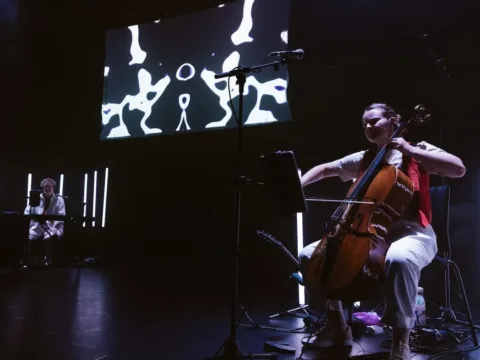
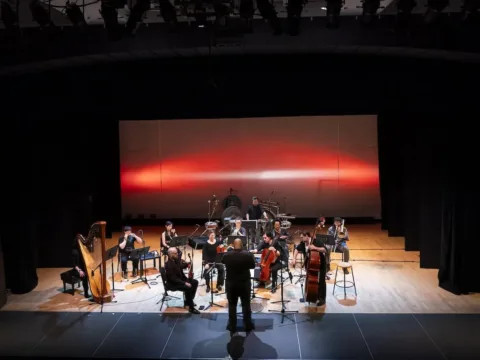
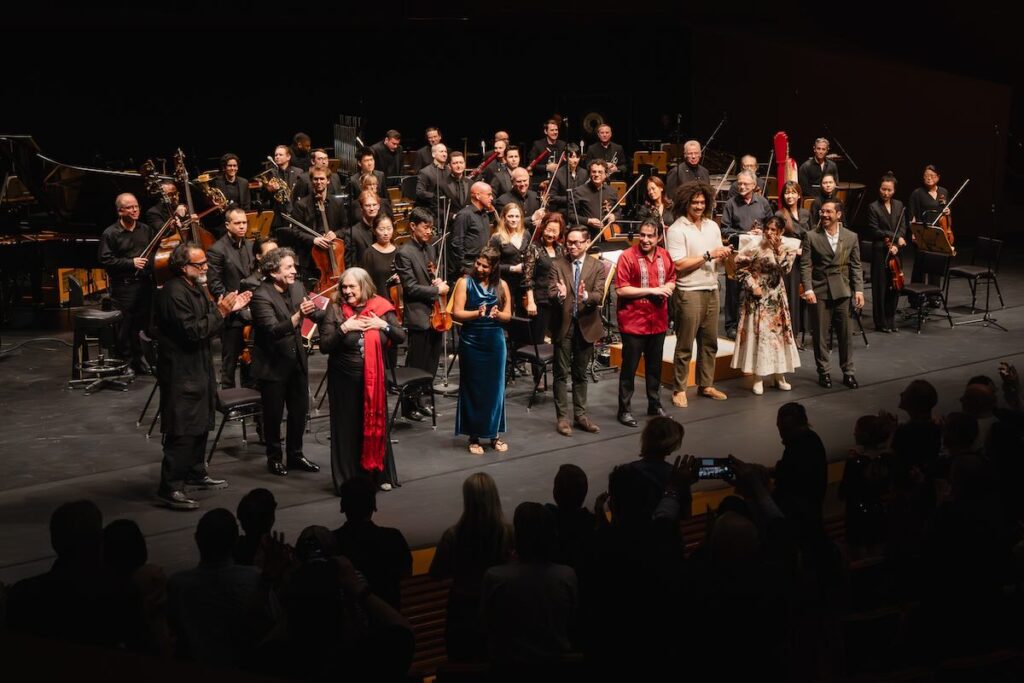
An important part of preserving history is cementing it in our cultural memory, reintroducing and reinforcing it to new and returning audiences. On March 7, the Los Angeles Philharmonic did just that. Led by Gustavo Dudamel and curated by Gabriela Ortiz, The Great Wall of Los Angeles featured six commissions inspired by Judy Baca’s mural of the same name, exploring the city’s dense history through multiple artistic mediums, while a film by Academy Award-winning filmmaker Alejandro G. Iñárritu played above. More than 50 years after its creation, Baca’s mural inspired a new crop of artists to revitalize stories of the past that remain relevant today.
For example: while most people seated in Walt Disney Concert Hall on that Saturday afternoon were likely aware of the aggressive Immigration and Customs Enforcement (ICE) raids that have rocked the Los Angeles community, how many knew of the 500,000 Mexican Americans who were deported during the Great Depression? They now know that nearly a century later, many of the same talking points are being used to justify inhumane immigration practices.
During Estevan Olmos’ Sin Terra Sin Voz the film pans over the depictions of these Mexican Americans in chains and working class people striking for a living wage. By contrast, the piece starts out with an upbeat jazz tune that blossoms into a snare-heavy jam while colorful lights flash over the mural’s images of the Dunbar Hotel, a focal point for Black Angelenos in the Central Avenue jazz scene. A tranquil English horn solo floats above the orchestra as a mother and child wander through the mural’s reference to the Dust Bowl migrations of the 1930s, a depiction of resilience that gives the piece its quiet power.
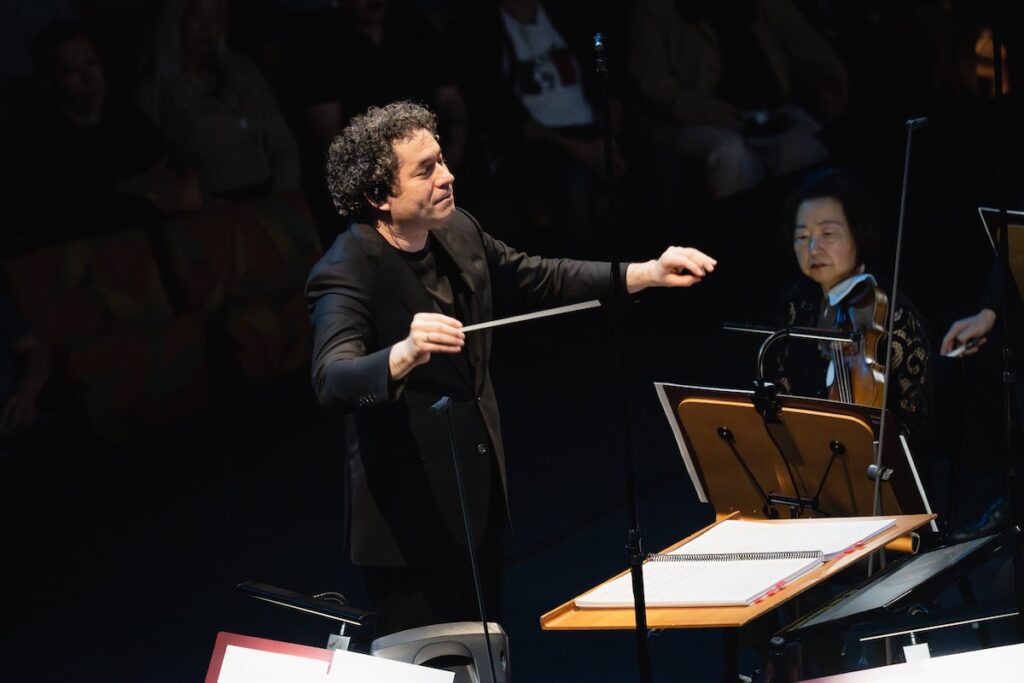
In ¡AGUAS!, Nicolás Lell Benavides takes aim at the Zoot Suit Riots that heavily impacted young Latinos, especially Mexican Americans. Mambo was the music of choice for many of the men who were targeted, and Lell Benavides uses the style’s fast-paced rhythms and brass vibrato as the foundation for the piece. The opening drum solo gives way to an even more varied line up of percussion, from whistles to ratchets to cowbells while the concertmaster engages in a call and response with the rest of the strings.
The start of Xavier Muzik’s God, the Brand, is the first time the mural is obscured from view in the film. The piece leans into the juxtaposition of past and present: a mix of short passages and lyrical melodies with quiet moments interrupted by sudden bursts of low brass. We hear solos from across the string section: viola to open the piece, concertmaster, and a (mostly) pizzicato moment to shine from the double bass. As the work progresses, archival footage of Baca walking alongside the original blank wall is intercut with recent clips of her in front of the completed work.
Baca is also featured walking alongside the mural in the dark holding a torch during Viet Cuong’s Ladders. Cuong took inspiration from a piece of LGBTQ+ history featured in the mural: The Daughters of Bilitis, the first lesbian civil rights group in the United States, and their publication The Ladder. Strings and piano play a lively jig, later joined by a drumset, while images of athletes and entertainers flash across the screen. The contrast of the joyful music and the mural filmed in darkness calls to mind a sobering reality of why these organizations are needed: there was a time when the only safe place for queer people to express themselves freely was in the shadows. The texture of the orchestra thins to reveal a rapid passage in the winds, but the piece remains upbeat and pulsating with life before fading to a quiet finish.
Westward expansion, largely made possible by the Chinese immigrants who built railroads, was tackled in Nina Shekhar’s Westbound. The piece is percussive, mimicking the dangerous conditions and labor. The orchestra stomps as they play, the strings use snap pizzicato, and metal percussion instruments clink loudly like tools, all of which adds depth to the experience. A deep low brass fanfare and distorted images of the mural darkened the tone as the film reveals starkly different realities for those who built the trains versus those who ride them.
The idea of movement, both literally and figuratively, showed up many times throughout the concert. But the story behind Juhi Bansal’s A Lone Voice in the Darkness is different. Focusing on California’s Indigenous history, the piece centers the “lone woman,” a member of the Nicoleño tribe who is said to have survived in solitude for 18 years after her tribe was displaced. The one song she was able to pass along in the last few weeks of her life is what opened the concert, a trio of cellos blending in bright, lyrical harmonies while the winds fiercely blew air through their instruments, producing no pitch. The beautiful melody is eventually overtaken by this chaos as the rest of the orchestra joins in to conceal it, ultimately reemerging before fading away.
The Great Wall of Los Angeles truly embodied the idea that everything that is old becomes new again. Conflicts reinvent themselves, and present day issues are almost always foreshadowed. The same is true for art. The commissioned composers and Iñárritu not only carried the torch from Baca in uplifting the history of Los Angeles – they created an opportunity for new audiences to engage in the original work of art as well. Here, a work of art chronicled history while becoming history itself. A testament that the symbiotic relationships between artists is what keeps our stories alive.
I CARE IF YOU LISTEN is an editorially-independent program of the American Composers Forum, and is made possible thanks to generous donor and institutional support. You can support the work of ICIYL with a tax-deductible gift to ACF. For more on ACF, visit composersforum.org.