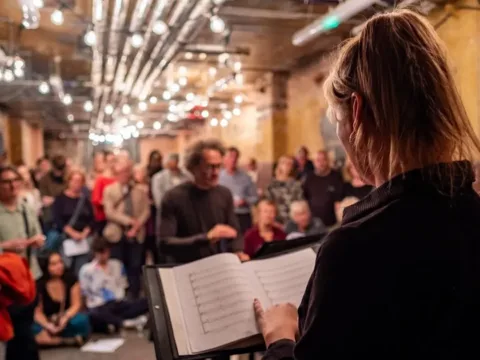
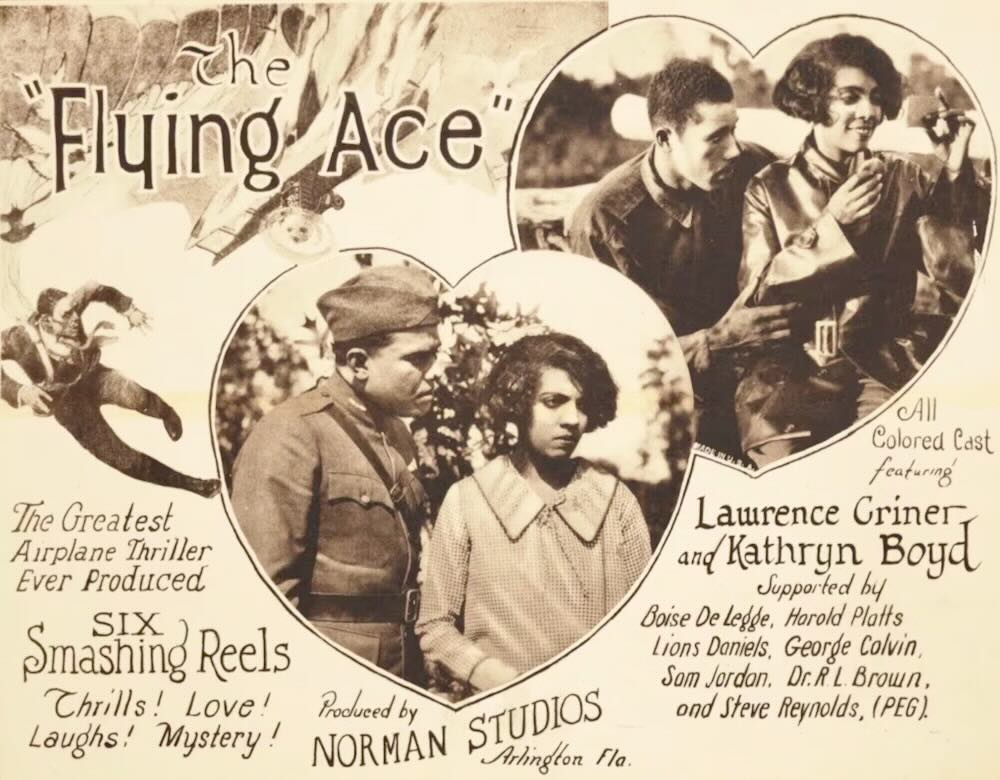
In the summer of 2022, Tony Nickle, the Vice President and Artistic Administrator of the Jacksonville Symphony, sat down with Tarik O’Regan. The composer was in town for the premiere of his new Jacksonville Symphony commission, and he had visited the Kummer Museum of Art and Gardens in his downtime. There was one exhibit that stuck with him: posters of films with all-Black casts made by Norman Studios in the 1920s. It could be a fascinating project to see if any films had survived and commission a new score for them, O’Regan suggested.
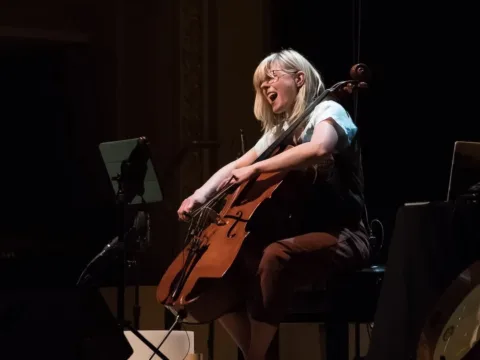
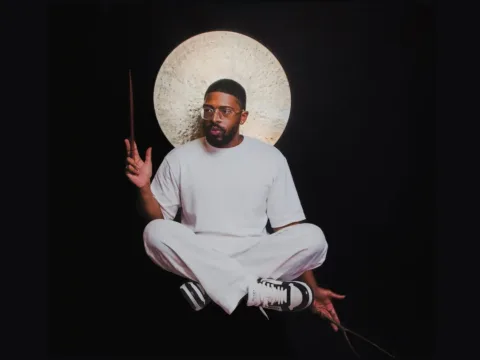
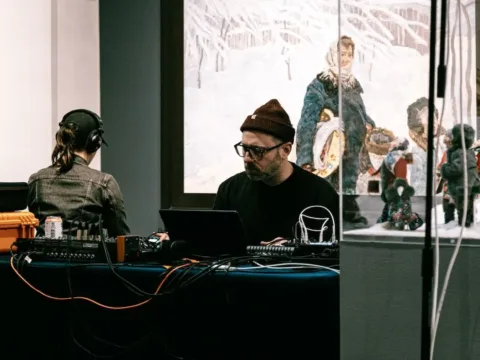
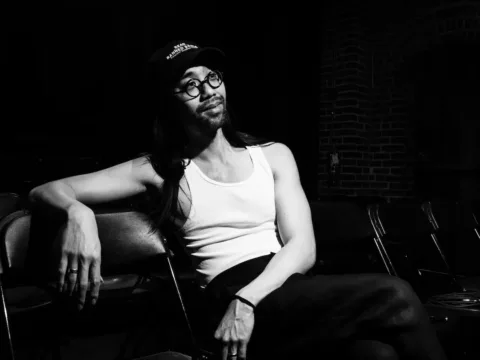
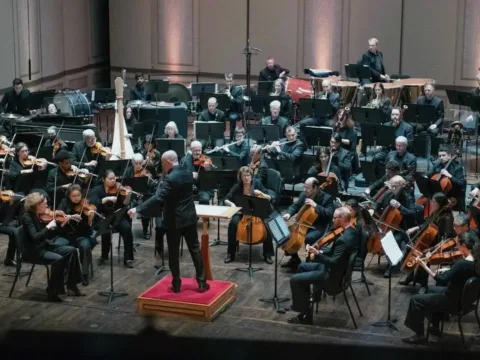
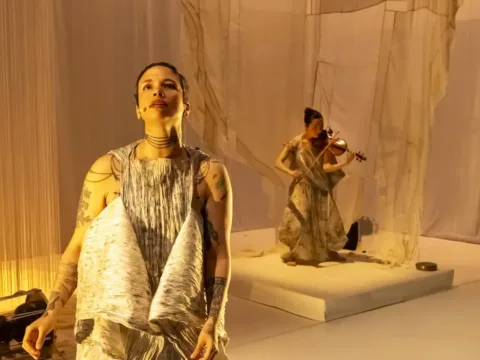
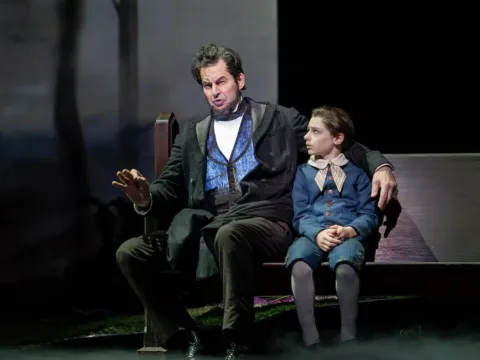
Soon after, Nickle learned about The Flying Ace, currently the only intact Norman Studios film. And now on Nov. 14, the Jacksonville Symphony under music director Courtney Lewis will present a screening of the film with a brand new score composed by Carlos Simon, Jongnic Bontemps, Kathryn Bostic, Nathalie Joachim, Allison Loggins-Hull, and Levi Taylor.
Nowadays, we expect a film score to be written by a single composer. But during the silent film era, before the technological merging of sound and image, you’d hear a live group of musicians playing preexisting material from a photoplay book or improvising material to enhance the story.
Though there was historical precedent to involve multiple artists in the new score, Nickle’s decision to commission several composers stemmed from other factors.
“Part of [the decision] was artistic, just the dynamism of the different voices,” he shared in a Zoom interview. “But also, we were striving for some pretty big names among these composers … so, it actually worked out for the best to have each composer writing about eight and a half to ten minutes of music.”
Blessedly, each composer that Nickle wanted to commission ended up being hired for the project. That included Simon, who served as the lead composer and aided Nickle in solidifying their composer wishlist. The Flying Ace is a continuation of Simon’s creative relationship with the Jacksonville Symphony: the orchestra had most recently co-commissioned a new work, Zodiac Symphonic Suite, which premiered in June 2025.
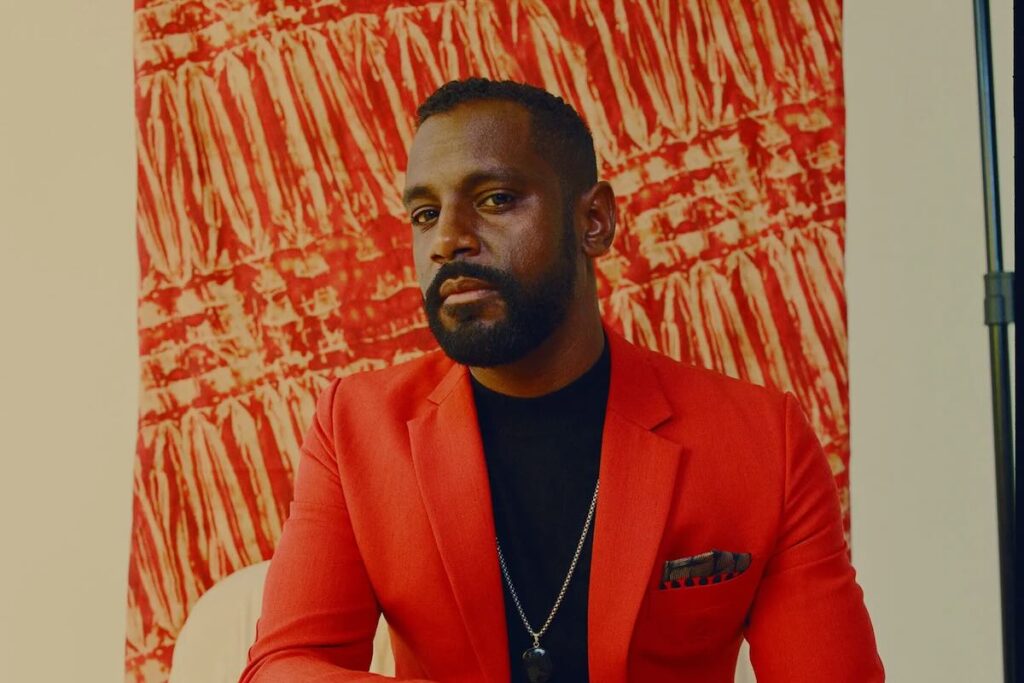
“I love writing music for film. It’s always been a passion of mine,” Simon shared. “It’s one of the reasons I got into music. There’s something about writing music that serves a purpose or action in telling a story. When I saw how incredible the film was, it was an automatic ‘yes’ to serve and to bring a group of composers on board that I know would really lend itself to the story that was being told on the screen.”
The Flying Ace is a melodrama that follows WWI pilot, veteran, and former railway detective Billy Stokes, who returns home and solves the mystery of a missing man and a stolen briefcase holding $25,000. Stokes and his colleague, Peg, identify the trio of criminals and bring them to justice, rescuing Stokes’ love interest, Ruth, and clearing her father’s name in the process.
The story for The Flying Ace is neatly organized into six reels, and each composer was responsible for scoring one reel. Though he composed the main thematic material, Simon was less interested in setting the parameters than letting his peers put their mark on the film’s narrative.
“These are composers I trust. I know their music and know that they would really serve the film and use the themes I created to help,” he explained. “It’s amazing how each of the composers has used their own voice, but still, throughout the different reels, there seems to be a level of cohesiveness.”
“I am thrilled to be one of the composers scoring the incredible and iconic film,” Bostic shared. “The Flying Ace places us in a world where African American actors have roles that were unheard of at that time. The film and the score are universal in theme and intention, and I appreciate the wide range of opportunity to be part of its musical narrative.”
“My first reaction to seeing The Flying Ace was just being in awe of the ingenuity,” Joachim said. “I can’t imagine having this new technology of film — and without sound — and thinking about how to depict a story is a really cool thing. It just made me feel excited about the ingenuity of that time and their imagination.”
The new score avoids overtly replicating the heightened emotionality of the actors on screen. But there is no lack of expressivity, intensity, or telegraphing of something underhanded at work. One pleasant change is in the depiction of Stokes’ friend, Peg, a disabled veteran who is clearly positioned as the comic relief in the story. But musically, there is no making fun of Peg, and thus the humanity that was bestowed to his abled-bodied neighbors is also bestowed to him.
While lacking the innovative stunts of its cinematic contemporary Wings (1927), The Flying Ace is a significant artifact of African American cinema and interracial collaboration. Richard E. Norman, the founder of Norman Studios, was a white man who decided to make films with all-Black casts in non-stereotypical roles. Alongside peers such as Oscar Micheaux and Alice Guy-Blaché, the production of all-Black films with ordinary, sometimes mundane plots was a radical response to the racist portrayals that were foundational to minstrelsy and early modern comedy — portrayals that were further codified or straight-up removed with the rise of the Hollywood studio system.
Which makes the Jacksonville Symphony’s direct engagement with their city’s history all the more essential. In addition to commissioning a new score, the symphony partnered with Norman Studios, which is now a nonprofit museum on the site of the original production campus.
“The week of the premiere, we’re doing three big community engagement events and a couple school visits with the composers,” Nickle shared. “One of the community events is at Norman Studios, and we’ll have a panel conversation led by the president of the organization plus a couple of composers. So that’s going to be really exciting for a lot of people in the public who have never seen this museum where a lot of artifacts are preserved and the building where the movies were actually shot.”
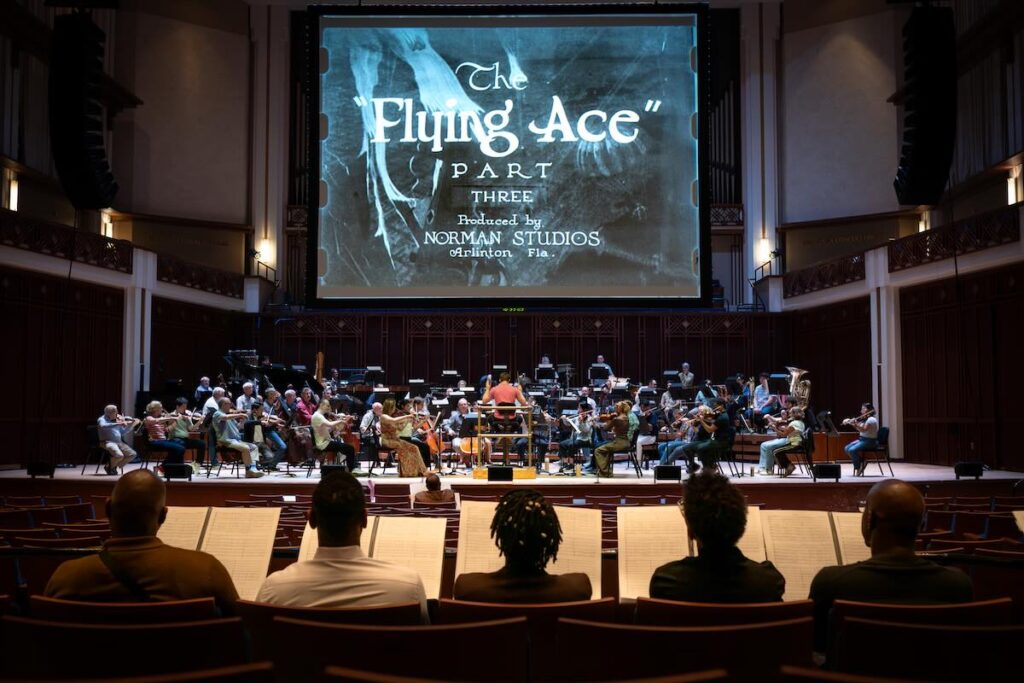
If you can’t make it to Jacksonville, you can still see The Flying Ace; a 2010 restoration of the film is available to view on the Library of Congress website and is included in Pioneers of African American Cinema (2015). But hopefully, you will be able to see The Flying Ace paired with its new score in your hometown. After the Jacksonville Symphony’s one-year exclusivity agreement has elapsed, the score will be available to rent through Bill Holab Music. Nickle hopes the licensing agreement they established with the composers will allow the project to be shared and adapted by other orchestras in the United States and Europe.
The same year The Flying Ace was completed, aviator Bessie Coleman had written to Richard E. Norman. She knew about his films and wondered if he might be interested in adapting a biography of her life. Unfortunately, Coleman was killed during a mechanical malfunction prior to her Jacksonville air show. But perhaps, either intentionally or not, a sliver of her life is present in the wide-eyed wonder of aspiring aviator Ruth.
Like Coleman, the composers of The Flying Ace continue to break apart the limited imaginations of their peers. Be it 1926 or 2026, it is magical to see Black people doing the simplest things. When existing needs no excuse or reason; when you realize literal and metaphorical flight has never been impossible.
I CARE IF YOU LISTEN is an editorially-independent program of the American Composers Forum, and is made possible thanks to generous donor and institutional support. You can support the work of ICIYL with a tax-deductible gift to ACF. For more on ACF, visit composersforum.org.