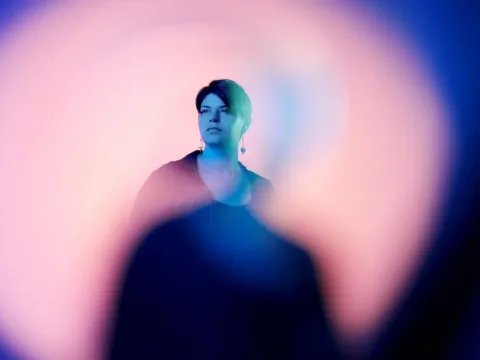
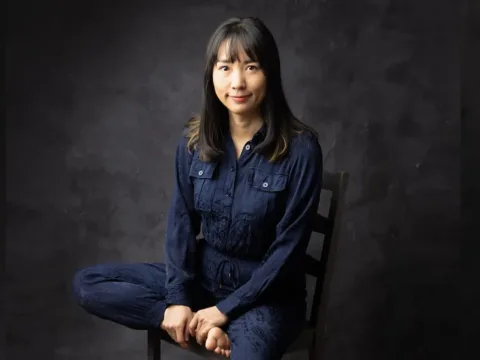
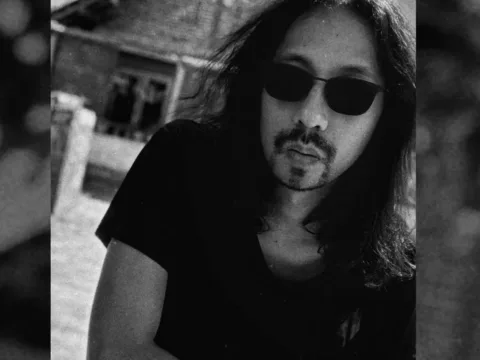
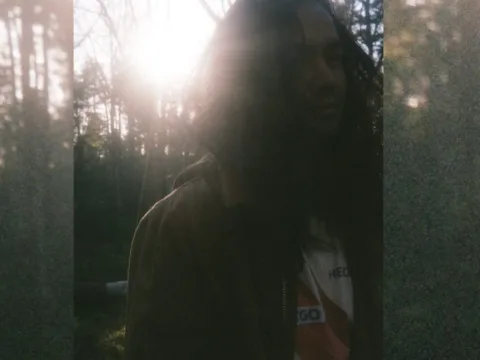
Denver, Colorado born Xavier Emmanuel (he/him) is a multi-hyphenate artist/scholar and PhD candidate in Creative Practice and Critical Inquiry at the Harvard University Department of Music. His work as a musician, scholar, and multi-hyphenate artist situates music as a lens to explore sonic and systemic organizations of labor, emotion, movement, behavior, and bodies in time.
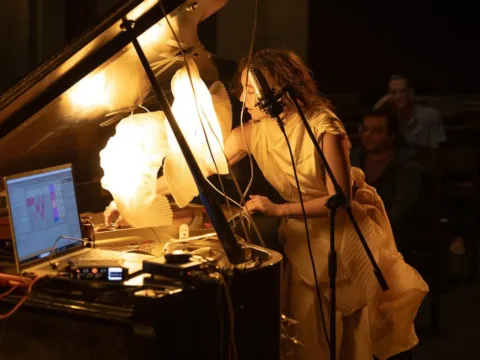
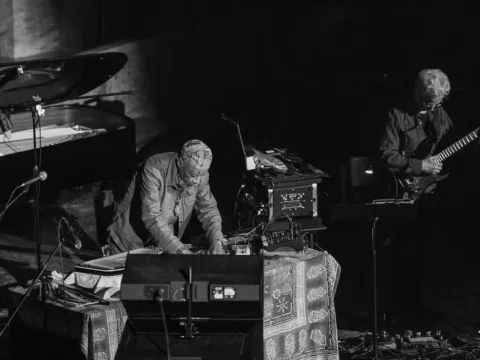
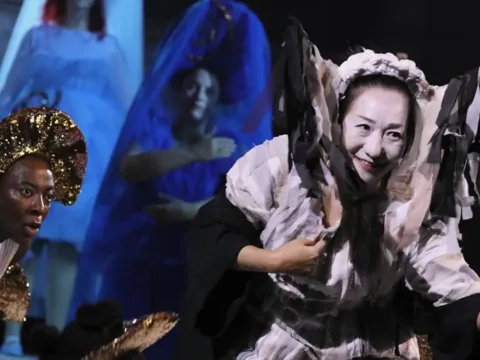
Emmanuel’s creative work has been featured in solo and group performances and exhibitions throughout the wider area of New York City, at the Harvard Art Museums, Stanford University’s Center for Computer Research in Music and Acoustics, Princeton University’s School of Architecture, Nigeria’s 2024 Lagos Biennial, and across the greater area of his home state of Colorado among other national and international venues.
Emmanuel has given lectures about his research at New York University, St. Olaf College, and el Centro de Estudos e Revalorização da Música Angolana. His creative work has received awards and recognition from Lyrical Lemonade, the American Institute for Graphic Arts, the New York University Alpine Fellowship, and Colorado State University among others.
Hi, my name is Xavier Emmanuel and I was born in Denver, Colorado. I am a poet and a composer which, basically amounts into being a singer-songwriter and a producer, and so, I do those among many other interdisciplinary artistic pursuits. My academic work is centered around exploring structures of time and repetition in relation to, you know, how we acquire a sense of self, and how we come to establish identity amongst our fellow living, contemporary people. I am making this playlist called “We Rise from Sameness” to speak to some of what fascinates me about repetition in sonic and visual aesthetics.
I think we all have a kind of understanding about repetition as the foundation of so much of our world. We could take a moment to consider the way a repeated structure of atoms comes to form molecules, and molecules come to substantiate substance itself and so on. Yet at the same time, materials and substances are constantly changing; our world transforms amid so much movement and that movement, on some level, is making sound. So this is all to say that I’m excited to use this playlist to explore what or rather how our sense of self, emerges from sameness, and how we find ways to track and create sameness and difference amid repetition. Thanks.
Transient by Les Halles
I often find myself drawn to personify music as a dialogue between instruments; however, I think, in regard to Les Halles’ piece, that kind of metaphor centers human constructs of aliveness in a way that is, at least for now, a tad reductive. Transient paints an ecosystem that is at once pre and post-human. It teems with uncontacted life in a way that invites us to dwell among it.
Throughout the piece we are serenaded by a pleasant medley of pan flutes and (possibly) field recordings that illustrate a moment where certain imperceptible forces of nature are at play with one another. The overdubbing of pan flute notes produces a phasing effect that seems to dissolve and construct instrumental individuality at once – providing a foundation upon which new bodies and their familiar sounds may emerge from a structure that is both fluid and crystalline. To me this piece resonates at a frequency of, “in the beginning there was light.”
Space 1 by Nala Sinephro
The soundscape of Nala Sinephro’s Space 1 is brought into being by a culmination of synthesizers, a harp, and field recordings of birds and crickets. In supplement to the work’s title, the atmosphere of reverbed and delayed harp playing orients our attention toward a more local cosmos – a kind of liminal geography where space and its uninhabitable dark learns to foster a quiet kind of living that I have only experienced in the woods of Camden, Mississippi. I like to think about the way Mississippi wanders among the stars.
“Limerence” by Yves Tumor
I like Yves Tumor’s “Limerance” because it carves out a home in someone else’s world. The piece is constructed from synthesizer arpeggios with an eighth note delay effect that causes the tone to replay one eighth note after its initial introduction. A listener’s sense of time is readjusted as past notes are continually brought into the present, allowing us to situate ourselves as spectators or quiet participants in the song’s social setting. The repetitive nature of the work sidles our attention into empathetic understanding and listening. If, but for a few moments, we are not invited to be part, but already members, of this home.
East Village by Elijah Fox
East Village by Elijah Fox is another repetitive piece (I love musical repetition) that primarily relies on the popular 5-6-4 chord progression. I believe I first encountered this piece right after I moved out of New York City. Without knowing the title, the song immediately brought me to reminisce on my commute to and from classes at New York University. I still miss living in New York. It was one of the first places I felt at home within myself. Perhaps, upon moving, that sense of self began a search for another kind of shell. I think the repetitive framework of this song offered itself as a surrogate to my sense of belonging.
“Beech” by Knxwledge
“Beech” by Knxwledge is a remix of Télépopmusik’s “Brighton Beach” which is composed of synthesizer and minimal percussive elements that accentuate the potency of Angela McCluskey’s vocals. Knxlwedge’s remix of the piece features a much heavier organization of percussive sounds that equally uphold her voice. However, what draws me to this song is the question posed by the lyrics. McCluskey asks, “why can’t you go find yourself and make me want to know you?” I didn’t know how to answer that question for a long time. I found my answer upon letting go of the question.
“Tamagotchi” by Xavley
Talking about my work has been a challenge for me for a long time. While I was writing this song I turned to the songs of pop artists like Charlie xcx whose lyrics (particularly those oriented around mundane objects [Everything is Romantic]) remind me of poems by Gertrude Stein or Harryette Mullen’s Recyclopedia. A salient commonality between each of those bodies of literature is the way in which writing about objects can serve as a common point of social and semantic orientation in this strange metaphysical plane where our sense of similarity and difference are equally constructed on perceptions of visual and sonic repetition.
“Blckrthnnite” by Xavley
This piece began as a poem which soon carried into the lyrics of the song. The lyrics, which explore contrasts of spirituality and materialism, were initially built from Audre Lorde’s “Litany for Survival” and Rainer Maria Rilke’s first “Duino Elegy.” As of now, those two writers substantiate the foundation of my lyrical, poetic, and academic writing. I admire the way each speaks toward that realm of connection—a kind of pre-creative essence— which precedes aesthetics as the mediator for our capacity to be empathetic.
I CARE IF YOU LISTEN is an editorially-independent program of the American Composers Forum, and is made possible thanks to generous donor and institutional support. You can support the work of ICIYL with a tax-deductible gift to ACF. For more on ACF, visit composersforum.org.